


Idioms for easy include a piece of cake, plain sailing, and second nature. Each suits a different kind of easy....
Continue Reading →71 Idioms for Hard Work in English (With Meanings & Examples)

⚡️ Key Takeaways
The most common idioms for hard work are burn the midnight oil, go the extra mile, roll up your sleeves, work your fingers to the bone and pull your weight.
They are not interchangeable. Go the extra mile is a compliment. Work like a dog is a complaint. Say the second one to your boss and you sound resentful, not committed.
English sorts these idioms by what kind of effort you mean: working hard, working late, getting started, doing more than required, and being buried under it all.
Idioms for hard work include burn the midnight oil, go the extra mile, roll up your sleeves, work your fingers to the bone and pull out all the stops. English has dozens of them, and they do not all mean the same thing.
A student of mine found this out the expensive way. She was preparing for a performance review at a bank in Frankfurt, and she wanted to tell her manager how much effort she had put into a difficult quarter. What she said was, “I have been working like a dog.” Her manager’s face changed. She thought she had said I am dedicated. What her manager heard was I am exhausted, underpaid and quietly furious. The phrase she wanted was I have gone the extra mile. One idiom, two completely different careers.
So here are 71 real idioms for hard work, with a short meaning, a longer explanation, three examples and three alternatives for each. Pay attention to the tone notes. That is where the money is.
What Is an Idiom for Hard Work?
An idiom is a group of words whose meaning you cannot work out from the words themselves. “Burn the midnight oil” has nothing to do with fire or oil. It means working late into the night.
English has an unusual number of idioms for effort, and most of them come from the same three places: the body (your back, your fingers, your elbows), animals that were once made to work (dogs, horses, beavers), and the tools of old jobs (the grindstone, the plough, the oil lamp).
Take keep your nose to the grindstone. A grindstone was a rotating stone used to sharpen blades, and the image is of someone bent over it so closely that their face nearly touches it. In real English, it simply means to keep working steadily without stopping.
71 Idioms for Hard Work (With Meanings and Examples)
Here is the full list at a glance. The detail follows underneath.
| Idiom | In short | |
|---|---|---|
| 1 | Work your fingers to the bone | Work extremely hard, to exhaustion |
| 2 | Work like a dog | Work very hard (usually a complaint) |
| 3 | Work like a Trojan | Work tirelessly and bravely |
| 4 | Work like a horse | Do heavy, relentless work |
| 5 | Work your socks off | Work extremely hard (British) |
| 6 | Work your tail off | Work extremely hard (American) |
| 7 | Bust a gut | Make an enormous effort |
| 8 | Break your back | Work to physical exhaustion |
| 9 | Sweat blood | Work with painful effort |
| 10 | Blood, sweat and tears | Enormous effort over time |
| 11 | Do the donkey work | Do the boring, heavy part |
| 12 | Do the heavy lifting | Do the hardest part of a job |
| 13 | Put your back into it | Use real physical effort |
| 14 | Put your shoulder to the wheel | Commit fully to a task |
| 15 | Elbow grease | Physical effort |
| 16 | Hard graft | Sustained hard work (British) |
| 17 | Burn the midnight oil | Work late into the night |
| 18 | Burn the candle at both ends | Overwork early and late |
| 19 | Pull an all-nighter | Work through the whole night |
| 20 | Work around the clock | Work continuously |
| 21 | Work all hours | Work at every hour available |
| 22 | The daily grind | Repetitive everyday work |
| 23 | Back to the grindstone | Return to hard work |
| 24 | Keep your nose to the grindstone | Keep working steadily |
| 25 | Roll up your sleeves | Prepare to work hard |
| 26 | Knuckle down | Start working seriously |
| 27 | Buckle down | Start applying yourself |
| 28 | Get down to business | Start the real work |
| 29 | Get stuck in | Start with energy (British) |
| 30 | Pull your socks up | Improve your effort |
| 31 | Hit the books | Study hard |
| 32 | Hit the ground running | Start fast and effectively |
| 33 | Take the bull by the horns | Face the hard task directly |
| 34 | Chip away at something | Make slow, steady progress |
| 35 | Go the extra mile | Do more than required |
| 36 | Go above and beyond | Exceed what was expected |
| 37 | Bend over backwards | Try extremely hard to help |
| 38 | Pull out all the stops | Use every resource available |
| 39 | Give it 110 percent | Give more than your maximum |
| 40 | Go all out | Hold nothing back |
| 41 | Move heaven and earth | Do everything possible |
| 42 | Leave no stone unturned | Search or try exhaustively |
| 43 | Jump through hoops | Complete difficult demands |
| 44 | Give it your best shot | Try as hard as you can |
| 45 | Plug away at something | Keep working patiently |
| 46 | Beaver away | Work busily and quietly |
| 47 | Slog away | Work on despite the difficulty |
| 48 | Soldier on | Continue despite hardship |
| 49 | An eager beaver | Someone keen to work |
| 50 | Pull your weight | Do your fair share |
| 51 | Put in the hours | Commit real time to something |
| 52 | A workhorse | A reliable, tireless worker |
| 53 | Have your work cut out | Face a difficult task ahead |
| 54 | Have your hands full | Be fully occupied |
| 55 | Have a lot on your plate | Have too many responsibilities |
| 56 | Firing on all cylinders | Working at full capacity |
| 57 | Snowed under | Buried in work |
| 58 | Up to your eyes in work | Overwhelmed with work |
| 59 | Run yourself ragged | Exhaust yourself with effort |
| 60 | Burn yourself out | Work until you collapse |
| 61 | Spread yourself too thin | Take on more than you can do |
| 62 | Pay your dues | Do the hard years first |
| 63 | Earn your stripes | Prove yourself through work |
| 64 | Cut your teeth on something | Gain first experience doing it |
| 65 | No pain, no gain | Effort is the price of results |
| 66 | Practice makes perfect | Repetition creates skill |
| 67 | Rome wasn't built in a day | Big things take time |
| 68 | Many hands make light work | Shared work is easier |
| 69 | The early bird catches the worm | Starting early brings rewards |
| 70 | Slow and steady wins the race | Consistency beats speed |
| 71 | You reap what you sow | You get out what you put in |
1. Work your fingers to the bone
Meaning
In short: Work extremely hard, to the point of exhaustion.
In detail: Strong and slightly dramatic, and it usually carries a note of sacrifice or resentment. People often use it about parents and past generations rather than about themselves at work.
Examples in a sentence
- My grandmother worked her fingers to the bone to raise five children.
- I worked my fingers to the bone on that project and nobody noticed.
- She has worked her fingers to the bone for that company for twenty years.
Other ways to say it: work like a dog, break your back, sweat blood.
2. Work like a dog
Meaning
In short: Work very hard.
In detail: Informal, and almost always a complaint. It carries tiredness and a hint of unfairness, which is exactly why it is the wrong choice in a performance review or an interview.
Examples in a sentence
- I have been working like a dog all week and I am shattered.
- He works like a dog and still cannot afford the rent.
- We worked like dogs to get the shop open on time.
Other ways to say it: work your socks off, work your fingers to the bone, work like a horse.
3. Work like a Trojan
Meaning
In short: Work tirelessly and bravely.
In detail: British and admiring, from the warriors of Troy. Unlike “work like a dog”, this one is a compliment, and it is usually said about someone else.
Examples in a sentence
- She worked like a Trojan to get the report finished.
- The volunteers worked like Trojans all weekend.
- He has worked like a Trojan since the day he joined.
Other ways to say it: work like a horse, be a workhorse, work your socks off.
4. Work like a horse
Meaning
In short: Do heavy, relentless work.
In detail: Neutral to admiring, and it emphasises strength and stamina rather than suffering. It suits physical work and long, demanding projects.
Examples in a sentence
- He works like a horse on that farm and never complains.
- She has worked like a horse to build the business.
- They worked like horses through the whole harvest.
Other ways to say it: work like a Trojan, be a workhorse, put your back into it.
5. Work your socks off
Meaning
In short: Work extremely hard.
In detail: British and informal, and warmer than “work like a dog”. It suggests real effort without the resentment, so it is safe among colleagues.
Examples in a sentence
- The whole team worked their socks off for this launch.
- I worked my socks off and still missed the deadline.
- He works his socks off every single day.
Other ways to say it: work your tail off, bust a gut, go all out.
6. Work your tail off
Meaning
In short: Work extremely hard.
In detail: The American twin of “work your socks off”. Informal and common. There are ruder versions of this idiom, so this is the one to use at work.
Examples in a sentence
- She worked her tail off to get that promotion.
- We worked our tails off and it paid off.
- He has been working his tail off since January.
Other ways to say it: work your socks off, bust a gut, put in the hours.
7. Bust a gut
Meaning
In short: Make an enormous effort.
In detail: Informal and physical. It is often used in the negative, as in “don’t bust a gut”, meaning do not exhaust yourself over something that is not worth it.
Examples in a sentence
- I busted a gut to finish that presentation on time.
- Do not bust a gut over it. It is only a draft.
- They busted a gut getting the place ready.
Other ways to say it: break your back, go all out, work your socks off.
8. Break your back
Meaning
In short: Work to the point of physical exhaustion.
In detail: Strong and often resentful, like “work like a dog”. It suits situations where the effort was not appreciated or not rewarded.
Examples in a sentence
- I broke my back for that company and they let me go anyway.
- He is breaking his back to keep the family fed.
- We broke our backs moving the furniture up four flights.
Other ways to say it: work your fingers to the bone, sweat blood, bust a gut.
9. Sweat blood
Meaning
In short: Work with painful, extreme effort.
In detail: Very strong and slightly dramatic. It suggests suffering as well as effort, and it works best about one specific difficult task.
Examples in a sentence
- I sweated blood over that thesis for three years.
- She sweated blood to get the funding approved.
- We sweated blood on that pitch and lost it anyway.
Other ways to say it: blood, sweat and tears, break your back, bust a gut.
10. Blood, sweat and tears
Meaning
In short: Enormous effort over a long time.
In detail: Neutral and slightly formal, from a famous wartime speech. It describes what something cost you, so it usually appears looking back at a finished thing.
Examples in a sentence
- That restaurant is ten years of blood, sweat and tears.
- It took blood, sweat and tears, but the building is finally open.
- Behind every overnight success is a lot of blood, sweat and tears.
Other ways to say it: sweat blood, hard graft, work your fingers to the bone.
11. Do the donkey work
Meaning
In short: Do the boring, heavy part of a job.
In detail: British and informal, and rarely a compliment about the task. It suggests someone else got the interesting work and the credit.
Examples in a sentence
- I did all the donkey work and he presented it to the client.
- Somebody has to do the donkey work before the fun part starts.
- She is tired of doing the donkey work for the whole team.
Other ways to say it: do the heavy lifting, do the grunt work, do the legwork.
12. Do the heavy lifting
Meaning
In short: Do the hardest part of a job.
In detail: Neutral and very common at work, and usually respectful. It can be literal or, far more often, entirely figurative.
Examples in a sentence
- The data team did the heavy lifting on this report.
- She did the heavy lifting and let the others take the applause.
- I need someone to do the heavy lifting on the budget.
Other ways to say it: do the donkey work, carry the load, put in the hours.
13. Put your back into it
Meaning
In short: Use real physical effort.
In detail: Informal, and usually said as an instruction. It can sound encouraging or bossy depending entirely on who says it and how.
Examples in a sentence
- Put your back into it or we will be here all night.
- If you put your back into it, you will finish by six.
- They finally put their backs into it and shifted the piano.
Other ways to say it: put your shoulder to the wheel, give it some elbow grease, get stuck in.
14. Put your shoulder to the wheel
Meaning
In short: Commit fully to a task.
In detail: Slightly old-fashioned and formal, from pushing a stuck cart. You will meet it in speeches and writing more than in conversation.
Examples in a sentence
- Everyone put their shoulder to the wheel and the project was saved.
- It is time to put our shoulders to the wheel.
- He put his shoulder to the wheel and got the department back on track.
Other ways to say it: roll up your sleeves, put your back into it, knuckle down.
15. Elbow grease
Meaning
In short: Physical effort, especially cleaning or repairing.
In detail: Informal and cheerful. It is a noun, so you apply it, use it, or give something a bit of it.
Examples in a sentence
- The old table came up beautifully with a bit of elbow grease.
- No machine will fix that. It needs elbow grease.
- With some paint and plenty of elbow grease, the flat looked new.
Other ways to say it: hard graft, put your back into it, good old-fashioned work.
16. Hard graft
Meaning
In short: Sustained hard work.
In detail: British and informal, and respectful. It suggests honest effort over time rather than a single push, and it is common in the north of England.
Examples in a sentence
- There is no shortcut. It is just hard graft.
- Ten years of hard graft built that business.
- He is not the most talented, but nobody matches him for hard graft.
Other ways to say it: blood, sweat and tears, elbow grease, the daily grind.
17. Burn the midnight oil
Meaning
In short: Work late into the night.
In detail: Neutral and safe at work, from the days when people worked by oil lamp. It suggests focus and dedication rather than suffering, which makes it one of the few safe idioms for an interview.
Examples in a sentence
- We have been burning the midnight oil to get the proposal finished.
- She burned the midnight oil for weeks before the exam.
- No more burning the midnight oil. Go home.
Other ways to say it: pull an all-nighter, work all hours, work around the clock.
18. Burn the candle at both ends
Meaning
In short: Overwork by starting early and finishing late.
In detail: Neutral, but always a warning. It describes an unsustainable pattern, so it is usually said with concern rather than admiration.
Examples in a sentence
- He has been burning the candle at both ends and it shows.
- You cannot burn the candle at both ends forever.
- I burned the candle at both ends all through my twenties.
Other ways to say it: run yourself ragged, burn yourself out, work all hours.
19. Pull an all-nighter
Meaning
In short: Work through the entire night.
In detail: Informal and very common among students. It describes one specific night, not a habit.
Examples in a sentence
- I pulled an all-nighter and finished the essay at six in the morning.
- We pulled an all-nighter before the launch.
- Three all-nighters in one week is not a plan.
Other ways to say it: burn the midnight oil, stay up all night working, work through the night.
20. Work around the clock
Meaning
In short: Work continuously, day and night.
In detail: Neutral and slightly formal. It often describes teams rather than individuals, and it appears constantly in news reports about emergencies.
Examples in a sentence
- Engineers worked around the clock to restore power.
- The team worked around the clock for two weeks.
- We are working around the clock to fix the problem.
Other ways to say it: work all hours, burn the midnight oil, work day and night.
21. Work all hours
Meaning
In short: Work at every hour available.
In detail: British and informal, and it usually carries a note of complaint or worry. Often extended as “work all hours of the day and night”.
Examples in a sentence
- She works all hours and never sees her children.
- He has been working all hours since the promotion.
- I am not working all hours for that salary.
Other ways to say it: work around the clock, burn the candle at both ends, work every hour God sends.
22. The daily grind
Meaning
In short: Repetitive everyday work.
In detail: Neutral to negative. It describes the dull routine of working life rather than a difficult task, and it is often used with a sigh.
Examples in a sentence
- Back to the daily grind on Monday.
- She left her job to escape the daily grind.
- The holiday was a welcome break from the daily grind.
Other ways to say it: the nine to five, the rat race, the same old routine.
23. Back to the grindstone
Meaning
In short: Return to hard work.
In detail: Informal and cheerfully resigned. It is nearly always said after a break, a holiday or a weekend, and it usually opens a sentence.
Examples in a sentence
- Lovely weekend. Back to the grindstone tomorrow.
- Lunch is over. Back to the grindstone.
- Back to the grindstone after two weeks in Greece.
Other ways to say it: back to work, back to the daily grind, back to it.
24. Keep your nose to the grindstone
Meaning
In short: Keep working steadily without stopping.
In detail: Neutral, and it describes discipline rather than intensity. It is often used as advice, especially to students and new employees.
Examples in a sentence
- Keep your nose to the grindstone and you will pass.
- He has kept his nose to the grindstone all year.
- If you keep your nose to the grindstone, the promotion will come.
Other ways to say it: knuckle down, plug away at it, stay focused.
25. Roll up your sleeves
Meaning
In short: Prepare to do hard work.
In detail: Neutral, positive and extremely common. It describes the moment before the work, and it signals willingness rather than complaint, which makes it safe everywhere.
Examples in a sentence
- Time to roll up our sleeves and get this finished.
- She rolled up her sleeves and rebuilt the whole department.
- Everyone rolled up their sleeves and we cleared it in a day.
Other ways to say it: get stuck in, knuckle down, get down to business.
26. Knuckle down
Meaning
In short: Start working seriously.
In detail: Informal, and often said after a period of not working hard enough. It carries a gentle push, so it is common from teachers and managers.
Examples in a sentence
- If you knuckle down now, you can still pass.
- He finally knuckled down in his final year.
- I need to knuckle down and finish this.
Other ways to say it: buckle down, get down to business, pull your socks up.
27. Buckle down
Meaning
In short: Start applying yourself properly.
In detail: The American twin of “knuckle down”. Informal and encouraging, and usually followed by “to” plus the task.
Examples in a sentence
- It is time to buckle down and study.
- She buckled down and got the work done in three days.
- We need to buckle down to the accounts this week.
Other ways to say it: knuckle down, get down to business, get to work.
28. Get down to business
Meaning
In short: Start the real work.
In detail: Neutral and safe in any meeting. It marks the end of small talk, so it often appears right after everyone sits down.
Examples in a sentence
- Right, let us get down to business.
- Enough introductions. Time to get down to business.
- They got down to business straight away and finished early.
Other ways to say it: get to work, roll up your sleeves, get cracking.
29. Get stuck in
Meaning
In short: Start something with energy and enthusiasm.
In detail: British and informal. It suggests diving in without hesitating, and it works for work, food and problems alike.
Examples in a sentence
- Do not wait for instructions. Just get stuck in.
- She got stuck in from her first day.
- We got stuck in and cleared the whole garden.
Other ways to say it: roll up your sleeves, get cracking, dive in.
30. Pull your socks up
Meaning
In short: Improve your effort.
In detail: British and always a criticism. It is what a manager or teacher says when your work has not been good enough, so it is never something you say about yourself with pride.
Examples in a sentence
- He needs to pull his socks up or he will not last the year.
- I was told to pull my socks up, and I did.
- The team pulled their socks up after that defeat.
Other ways to say it: knuckle down, raise your game, shape up.
31. Hit the books
Meaning
In short: Study hard.
In detail: Informal and American in origin, now used everywhere by students. It describes intense study, usually before an exam.
Examples in a sentence
- I cannot come out. I have to hit the books.
- She hit the books for a solid month before the IELTS exam.
- Exams are in two weeks, so it is time to hit the books.
Other ways to say it: burn the midnight oil, knuckle down, study hard.
32. Hit the ground running
Meaning
In short: Start something fast and effectively.
In detail: Neutral and very common in job interviews, which makes it one of the most useful idioms here. It says you will not need weeks to get going.
Examples in a sentence
- She hit the ground running in her first week.
- We need someone who can hit the ground running.
- He hit the ground running and closed two deals in a month.
Other ways to say it: get stuck in, get up to speed quickly, start strong.
33. Take the bull by the horns
Meaning
In short: Face a difficult task directly.
In detail: Neutral and admiring. It suggests courage rather than effort, and it fits a task you have been avoiding.
Examples in a sentence
- I finally took the bull by the horns and asked for a raise.
- She took the bull by the horns and rewrote the whole system.
- Somebody had to take the bull by the horns, so I did.
Other ways to say it: grasp the nettle, face it head on, get stuck in.
34. Chip away at something
Meaning
In short: Make slow, steady progress on a big task.
In detail: Neutral and encouraging. It is the idiom for work that cannot be finished in one push, which makes it useful for language learners, oddly enough.
Examples in a sentence
- I am chipping away at the backlog, a few emails a day.
- She chipped away at the debt for four years and cleared it.
- Just chip away at it. You do not have to finish today.
Other ways to say it: plug away at something, slow and steady wins the race, keep at it.
35. Go the extra mile
Meaning
In short: Do more than is required of you.
In detail: Neutral, positive and safe everywhere, including interviews and reviews. This is the idiom my student needed. It says dedication without saying exhaustion.
Examples in a sentence
- She always goes the extra mile for her clients.
- Going the extra mile is what got him promoted.
- We went the extra mile on this one and the customer noticed.
Other ways to say it: go above and beyond, pull out all the stops, bend over backwards.
36. Go above and beyond
Meaning
In short: Exceed what was expected of you.
In detail: Neutral and slightly formal, from the military phrase “above and beyond the call of duty”. Common in praise, references and performance reviews.
Examples in a sentence
- He went above and beyond during the crisis.
- The team went above and beyond, and it did not go unnoticed.
- She goes above and beyond every single time.
Other ways to say it: go the extra mile, go all out, exceed expectations.
37. Bend over backwards
Meaning
In short: Try extremely hard to help or please someone.
In detail: Informal, and it often carries a hint of frustration when the effort was not appreciated. It is nearly always about doing something for another person.
Examples in a sentence
- We bent over backwards to accommodate them and they still complained.
- She bends over backwards for her students.
- I have bent over backwards for that man.
Other ways to say it: go the extra mile, move heaven and earth, jump through hoops.
38. Pull out all the stops
Meaning
In short: Use every resource available.
In detail: Neutral and energetic, from the stops on a church organ. It suits an occasion or a campaign rather than daily work.
Examples in a sentence
- They pulled out all the stops for the wedding.
- We pulled out all the stops to win that contract.
- She pulled out all the stops and the event was extraordinary.
Other ways to say it: go all out, leave no stone unturned, give it 110 percent.
39. Give it 110 percent
Meaning
In short: Give more than your maximum.
In detail: Informal and mathematically impossible, which is the point. It is common in sport and in motivational speech, and to some ears it now sounds like a cliché.
Examples in a sentence
- The whole squad gave it 110 percent.
- I gave it 110 percent and I have no regrets.
- Do not tell me to give 110 percent. Tell me what you need done.
Other ways to say it: go all out, give it your best shot, leave everything on the field.
40. Go all out
Meaning
In short: Hold nothing back.
In detail: Informal and neutral. It works for effort, spending and celebration, so context decides the meaning.
Examples in a sentence
- We went all out on the pitch and won the account.
- She goes all out for her daughter’s birthday every year.
- If we are doing this, let us go all out.
Other ways to say it: pull out all the stops, give it 110 percent, go above and beyond.
41. Move heaven and earth
Meaning
In short: Do absolutely everything possible.
In detail: Strong, slightly formal and often used about helping someone else. It is a promise more often than a description.
Examples in a sentence
- I would move heaven and earth to get her that operation.
- They moved heaven and earth to get the visa approved in time.
- He moved heaven and earth to keep the factory open.
Other ways to say it: bend over backwards, leave no stone unturned, do whatever it takes.
42. Leave no stone unturned
Meaning
In short: Search or try exhaustively.
In detail: Formal and thorough. It is common in investigations, job searches and legal contexts, and it emphasises completeness rather than speed.
Examples in a sentence
- We will leave no stone unturned in finding the cause.
- She left no stone unturned in her research.
- The police say they are leaving no stone unturned.
Other ways to say it: pull out all the stops, move heaven and earth, cover every base.
43. Jump through hoops
Meaning
In short: Complete difficult or unnecessary demands.
In detail: Informal and usually resentful. The effort here is imposed by someone else, often pointlessly, so it points at bureaucracy rather than dedication.
Examples in a sentence
- I had to jump through hoops to get the licence approved.
- They make you jump through hoops for a simple refund.
- We jumped through every hoop and still got rejected.
Other ways to say it: bend over backwards, go through the wringer, tick every box.
44. Give it your best shot
Meaning
In short: Try as hard as you can.
In detail: Informal, warm and encouraging. It accepts that you might not succeed, which is why it is often said before something difficult rather than after it.
Examples in a sentence
- I do not know if I will pass, but I will give it my best shot.
- Give it your best shot and see what happens.
- She gave it her best shot and came second.
Other ways to say it: give it your all, go all out, do your utmost.
45. Plug away at something
Meaning
In short: Keep working patiently at something.
In detail: Informal and quietly positive. It suggests slow, unglamorous progress on something difficult, with no drama attached.
Examples in a sentence
- I am still plugging away at my thesis.
- She plugged away at the language for years and now she is fluent.
- Keep plugging away. It will come.
Other ways to say it: chip away at something, beaver away, keep at it.
46. Beaver away
Meaning
In short: Work busily and quietly.
In detail: British and affectionate. It describes someone getting on with their work in the background without making a noise about it.
Examples in a sentence
- She has been beavering away at that spreadsheet all morning.
- They were beavering away in the back office while we argued.
- He beavered away for months and then produced something brilliant.
Other ways to say it: plug away at something, work quietly, get on with it.
47. Slog away
Meaning
In short: Keep working despite how hard or dull it is.
In detail: British and informal, with tiredness built in. A “slog” is a noun as well, as in “it was a long slog”.
Examples in a sentence
- I have been slogging away at this all week.
- She slogged away at the accounts until midnight.
- It was a hard slog, but we got there.
Other ways to say it: plug away at something, grind away, soldier on.
48. Soldier on
Meaning
In short: Continue despite difficulty or discomfort.
In detail: Neutral and quietly admiring. It suggests carrying on when most people would stop, often while ill, tired or discouraged.
Examples in a sentence
- He had flu, but he soldiered on and finished the shift.
- We lost two team members and soldiered on regardless.
- She soldiered on for months without any support.
Other ways to say it: press on, keep going, plug away at something.
49. An eager beaver
Meaning
In short: Someone who is very keen to work.
In detail: Informal, and it sits somewhere between a compliment and a tease. It can imply the person is a little too enthusiastic, so tone decides it.
Examples in a sentence
- The new intern is a real eager beaver.
- Look at the eager beavers, in at seven in the morning.
- He was such an eager beaver that he made the rest of us look slow.
Other ways to say it: a go-getter, a hard worker, a keen bean.
50. Pull your weight
Meaning
In short: Do your fair share of the work.
In detail: Neutral, and it appears most often in the negative. Saying someone is not pulling their weight is a serious criticism at work.
Examples in a sentence
- Everyone here pulls their weight.
- He is not pulling his weight and the rest of us are covering for him.
- If you pull your weight, nobody will have a problem with you.
Other ways to say it: do your bit, carry your share, hold up your end.
51. Put in the hours
Meaning
In short: Commit real time to something.
In detail: Neutral and respectful. It emphasises time rather than talent, and it is a good, safe idiom for interviews.
Examples in a sentence
- She did not get lucky. She put in the hours.
- If you put in the hours, the results follow.
- He has put in the hours and it shows in his work.
Other ways to say it: put in the legwork, do the heavy lifting, work hard.
52. A workhorse
Meaning
In short: A reliable, tireless worker.
In detail: Neutral to positive, though it hints at unglamorous work. It can describe a person or a machine, and it praises reliability over brilliance.
Examples in a sentence
- She is the workhorse of the department.
- He is not flashy, but he is a workhorse.
- That old van is a workhorse. It has never let us down.
Other ways to say it: work like a horse, a safe pair of hands, the backbone of the team.
53. Have your work cut out
Meaning
In short: Face a difficult task ahead.
In detail: Neutral, and always about a challenge that is coming, not one that is finished. Usually appears as “have your work cut out for you”.
Examples in a sentence
- With three weeks to launch, we have our work cut out.
- She has her work cut out with that class.
- You have your work cut out for you, but it can be done.
Other ways to say it: have a mountain to climb, have a lot on your plate, face an uphill battle.
54. Have your hands full
Meaning
In short: Be fully occupied.
In detail: Neutral and gentle. It is very common about parents and small children, and it explains why someone cannot take on more.
Examples in a sentence
- She has her hands full with three children under five.
- I would help, but I have my hands full this week.
- He has his hands full running two departments.
Other ways to say it: have a lot on your plate, be snowed under, be flat out.
55. Have a lot on your plate
Meaning
In short: Have too many responsibilities at once.
In detail: Informal and sympathetic. It is often used to excuse someone, or to explain politely why you cannot help.
Examples in a sentence
- Go easy on him. He has a lot on his plate at the moment.
- I have a lot on my plate this month, so I will pass.
- She has a lot on her plate with the move and the new job.
Other ways to say it: have your hands full, be snowed under, be stretched thin.
56. Firing on all cylinders
Meaning
In short: Working at full capacity and performing well.
In detail: Neutral and positive, from engines. It describes effective effort, not just busy effort, so it is a compliment.
Examples in a sentence
- The team is firing on all cylinders this quarter.
- She is firing on all cylinders since she came back.
- We are not firing on all cylinders yet, but we are close.
Other ways to say it: at full tilt, running at full speed, on top form.
57. Snowed under
Meaning
In short: Buried in work.
In detail: Neutral and very common, especially in email. It is the polite, professional way to say you cannot take on anything else.
Examples in a sentence
- I am completely snowed under this week.
- She was snowed under with applications.
- We are snowed under, so the report will have to wait.
Other ways to say it: up to your eyes in work, have a lot on your plate, be swamped.
58. Up to your eyes in work
Meaning
In short: Overwhelmed with work.
In detail: British and informal. Also heard as “up to your ears” and “up to your neck”, and the image is of drowning in it.
Examples in a sentence
- I am up to my eyes in work until Friday.
- He is up to his eyes in paperwork.
- We were up to our eyes in orders before Christmas.
Other ways to say it: snowed under, swamped, drowning in work.
59. Run yourself ragged
Meaning
In short: Exhaust yourself through effort.
In detail: Informal and always negative. It describes damage, not dedication, and it is usually said with concern by someone else.
Examples in a sentence
- She has run herself ragged looking after everyone else.
- Do not run yourself ragged over this.
- He ran himself ragged and ended up ill.
Other ways to say it: burn yourself out, burn the candle at both ends, wear yourself out.
60. Burn yourself out
Meaning
In short: Work until you collapse physically or mentally.
In detail: Neutral in form, serious in meaning. “Burnout” is now a recognised medical concept, so treat this one with care rather than using it lightly.
Examples in a sentence
- He burned himself out in his first two years at the firm.
- Slow down or you will burn yourself out.
- She left the job before she burned out completely.
Other ways to say it: run yourself ragged, burn the candle at both ends, work yourself into the ground.
61. Spread yourself too thin
Meaning
In short: Take on more than you can do well.
In detail: Neutral and cautionary. The problem here is not the hours but the number of commitments, so the fix is doing less, not working harder.
Examples in a sentence
- You are spreading yourself too thin. Pick two projects.
- She spread herself too thin and none of it went well.
- I have spread myself too thin this term.
Other ways to say it: have too many irons in the fire, take on too much, overcommit.
62. Pay your dues
Meaning
In short: Do the hard, unglamorous years first.
In detail: Neutral and slightly moralising. It is what senior people say about junior ones, and it implies that respect must be earned through time.
Examples in a sentence
- He paid his dues in the kitchen before he ran one.
- She has paid her dues and deserves the promotion.
- Nobody starts at the top. You pay your dues.
Other ways to say it: earn your stripes, work your way up, put in the years.
63. Earn your stripes
Meaning
In short: Prove yourself through hard work.
In detail: Neutral and admiring, from military rank. It suggests you now have the right to be taken seriously.
Examples in a sentence
- She earned her stripes on the night shift.
- He earned his stripes covering the war in his twenties.
- You earn your stripes in this job, you do not get given them.
Other ways to say it: pay your dues, prove yourself, cut your teeth.
64. Cut your teeth on something
Meaning
In short: Gain your first experience doing something.
In detail: Neutral, and it always points back at the beginning of a career. It is usually said with a certain pride about where you started.
Examples in a sentence
- She cut her teeth on local newspapers.
- I cut my teeth on small projects like this one.
- He cut his teeth in a busy restaurant kitchen at seventeen.
Other ways to say it: learn your trade, get your start, earn your stripes.
65. No pain, no gain
Meaning
In short: Effort is the price of results.
In detail: Informal and common in sport and fitness. Said sincerely it is motivating, and said too often it sounds like a poster on a gym wall.
Examples in a sentence
- My legs are ruined, but no pain, no gain.
- She reminded the team that there is no gain without pain.
- No pain, no gain, as my coach used to say every single morning.
Other ways to say it: you have to earn it, nothing worth having comes easy, hard work pays off.
66. Practice makes perfect
Meaning
In short: Repetition creates skill.
In detail: Neutral and encouraging, and extremely common in language classrooms. Some people prefer “practice makes progress”, which is kinder and more honest.
Examples in a sentence
- Your pronunciation is improving. Practice makes perfect.
- Practice makes perfect, so use one new idiom every day.
- He plays for an hour every evening, because practice makes perfect.
Other ways to say it: practice makes progress, repetition is the mother of skill, keep at it.
67. Rome wasn’t built in a day
Meaning
In short: Big things take time.
In detail: Neutral and reassuring. It is said to someone who is frustrated by slow progress, and it excuses the pace rather than the effort.
Examples in a sentence
- You have been learning for a month. Rome wasn’t built in a day.
- The business is growing slowly, but Rome wasn’t built in a day.
- Be patient with yourself. Rome wasn’t built in a day.
Other ways to say it: slow and steady wins the race, good things take time, chip away at it.
68. Many hands make light work
Meaning
In short: Shared work is easier work.
In detail: Neutral and cheerful, and often used to persuade people to help. Its opposite is “too many cooks spoil the broth”, which is worth knowing at the same time.
Examples in a sentence
- If we all help, we will be finished by noon. Many hands make light work.
- Many hands make light work, so bring your brother.
- The whole street turned out, and many hands made light work of it.
Other ways to say it: teamwork makes the dream work, all hands on deck, pull together.
69. The early bird catches the worm
Meaning
In short: Starting early brings rewards.
In detail: Neutral and a little smug when said by a morning person. It is about being first rather than working hardest.
Examples in a sentence
- I applied the day it was posted. The early bird catches the worm.
- She is at her desk at six, and the early bird catches the worm.
- Book now. The early bird catches the worm.
Other ways to say it: first come, first served, get in early, strike while the iron is hot.
70. Slow and steady wins the race
Meaning
In short: Consistency beats speed.
In detail: Neutral and reassuring, from Aesop’s fable of the tortoise and the hare. It is the natural answer to anyone panicking about how slowly they are progressing.
Examples in a sentence
- Twenty minutes a day is enough. Slow and steady wins the race.
- He was not the fastest, but slow and steady wins the race.
- Do not rush the revision. Slow and steady wins the race.
Other ways to say it: Rome wasn’t built in a day, chip away at it, little and often.
71. You reap what you sow
Meaning
In short: You get out what you put in.
In detail: Formal and biblical, and it cuts both ways. It is used about rewards for effort and about consequences for bad behaviour, so listen for the tone.
Examples in a sentence
- She worked for this for ten years. You reap what you sow.
- He treated people badly, and now nobody will help him. You reap what you sow.
- Put the effort in now. You reap what you sow.
Other ways to say it: what goes around comes around, you get out what you put in, hard work pays off.
For more idioms that work the same way, see our lists of animal idioms, colorful idioms in English and happy idioms.
Tips for Using These Idioms Naturally
Know which ones are complaints: Work like a dog, break your back, jump through hoops and do the donkey work all carry resentment. Go the extra mile, put in the hours, hit the ground running and burn the midnight oil carry dedication. In an interview or a review, only ever use the second group. This is the single most useful thing on this page.
Get the preposition right: You plug away at something, chip away at something, cut your teeth on something, and put your back into it. Change the small word and the idiom stops working.
Do not translate an idiom from your own language: Almost every language has a phrase about working like an animal, and almost none of them survive the trip into English. Pick an English idiom from this list instead.
Use one at a time: “I rolled up my sleeves, burned the midnight oil and went the extra mile” reads like a test answer, not a sentence. One idiom per thought is plenty. Our business English guide has more on sounding natural at work, and if your team needs this at scale, Preply runs corporate language training too.
Watch the region: Get stuck in, pull your socks up, hard graft, work your socks off and up to your eyes are British. Buckle down, work your tail off and hit the books are American. Neither is wrong, but they tell people where you learned your English. Speaking with native English speakers or in conversational English lessons is the fastest way to build an ear for it, and our English speaking guide goes deeper.
Practice What You Learned
Three quick exercises. Answer everything, then hit "Check my answers" for your score.
1. Fill in the blank
Choose the idiom that completes each sentence.
2. Pick the right idiom
Which idiom fits the situation best?
3. Dedication or complaint?
Some of these idioms say committed. Others say exhausted and resentful. Tap the tone each one carries.
Subscribe to
Our Newsletter
Join over 370,000 readers enjoying my free, weekly (ish) email newsletter where I share what I’m reading and what I’ve learned in the worlds of productivity, business and life.
By submitting this form, you’ll be signed up to my free newsletter. I may also send you other emails about my courses. You can opt-out at any time. For more information, see our privacy policy.
In this article:
- 1) What Is an Idiom for Happy?
- 2) 71 Idioms for Hard Work (With Meanings and Examples)
- 3) Tips for Using These Idioms Naturally
- 4) Practice What You Learned

Audrey Kinslow
Read Next

59 Idioms for Death in English (With Meanings & Examples)
Idioms for death include pass away, kick the bucket, and six feet under. Some are gentle and some are jokes....
Continue Reading →
70 Idioms about Resilience in English (With Meanings & Examples)
Idioms for resilience include roll with the punches, dig deep, and bounce back. English splits resilience into three skills. Here...
Continue Reading →
67 Idioms for Loyalty in English (With Meanings & Examples)
Idioms 67 Idioms for Loyalty in English (With Meanings & Examples) Audrey Kinslow / July 29, 2026 / Share: X-twitter...
Continue Reading →
67 Idioms for Being Stuck in English (With Meanings & Examples)
Idioms for being stuck include stuck in a rut, in limbo, and a catch-22. Each names a different kind of...
Continue Reading →
69 Idioms about Respect in English (With Meanings & Examples)
Idioms about respect include look up to someone, command respect, and hear someone out. In English, respect is shown by...
Continue Reading →
62 Idioms about Regret in English (With Meanings & Examples)
Idioms about regret include kick yourself, miss the boat, and burn your bridges. Some name what you did, others what...
Continue Reading →
60 Idioms for Rough in English (With Meanings & Examples)
Idioms for rough include a rough patch, rough around the edges, and take the rough with the smooth. Here are...
Continue Reading →
74 Idioms about Winning in English (With Meanings & Examples)
Idioms about winning include win hands down, come out on top, and in the bag. Some celebrate and some gloat....
Continue Reading →71 Idioms for Hard Work in English (With Meanings & Examples)
Popular idioms for hard work include burn the midnight oil, pull your weight, and go the extra mile. Here are...
Continue Reading →
49 Idioms for Happy in English (With Meanings & Examples)
Popular idioms for happy include on cloud nine, over the moon, and in seventh heaven. Here are 49 English expressions...
Continue Reading →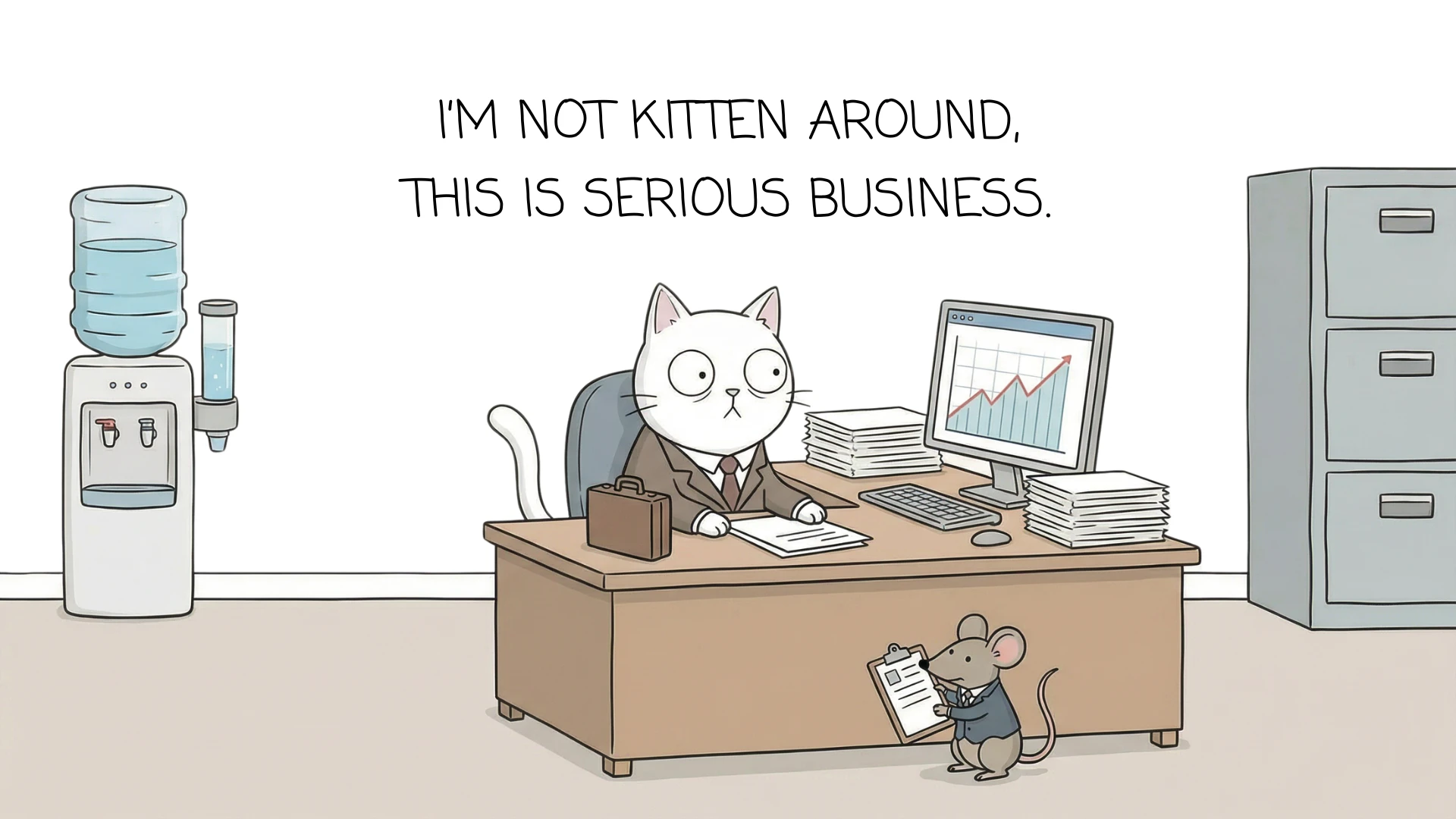
199+ Cat Puns & Jokes That Are Paws-itively Hilarious
Get your daily dose of meow-mentum with 199+ cat puns and jokes that are paws-itively hilarious, clever, and irresistibly shareable.
Continue Reading →Subscribe to
Our Newsletter
Join a growing community of more than 1,000+ friendly readers.


Each week, I share actionable productivity tips, practical life advice, and highlights from my favourite books, directly to your inbox. It’s free to join, and always will be.
By submitting this form, you’ll be signed up to my free newsletter, which sometimes includes mentions of my books, apps and courses. You can opt-out at any time with no hard feelings 😉 Here’s our privacy policy if you like reading.
Each week, I share practical idioms, real-life example sentences, and simple tips to help you sound more like a native speaker. It’s free to join, and always will be.
By submitting this form, you’ll be signed up to my free newsletter, which sometimes includes mentions of my books, apps and courses. You can opt-out at any time with no hard feelings 😉 Here’s our privacy policy if you like reading.