

Idioms for easy include a piece of cake, plain sailing, and second nature. Each suits a different kind of easy....
Continue Reading →49 Idioms for Happy in English (With Meanings & Examples)
⚡️ Key Takeaways
The most common idioms for happy are on cloud nine, over the moon, on top of the world, walking on air and grinning from ear to ear.
These idioms are not interchangeable. Tickled pink means quietly pleased. Over the moon means you can hardly sit still.
Some are British, some are American, and a few sound old-fashioned to native speakers today.
Reading the list is the easy part. Say each one out loud in a sentence about your own life, and it will stay.
Idioms for happy include on cloud nine, over the moon, walking on air, tickled pink and happy as a clam. English has dozens of them, and each one carries a slightly different level of joy.
Below are 49 real idioms for happiness, with a short meaning, a longer explanation, three example sentences and three alternatives for each. Pick a few, use them this week, and your English will sound far more natural.
What Is an Idiom for Happy?
An idiom is a group of words with a meaning you cannot work out from the words themselves. “Break a leg” has nothing to do with legs. It means good luck.
English has an unusual number of idioms for happiness, most of them built on the same picture: happiness lifts you up. You float, you fly, you rise above the clouds.
Take on cloud nine. Literally, it describes sitting on a numbered cloud, which makes no sense. In real English, it means you are so happy that nothing can touch you.
49 Idioms for Happy (With Meanings and Examples)
Here is the full list at a glance. The detail follows underneath.
| Idiom | In short | |
|---|---|---|
| 1 | On cloud nine | Extremely happy |
| 2 | Over the moon | Delighted by good news |
| 3 | In seventh heaven | Perfectly, blissfully happy |
| 4 | On top of the world | Happy and confident after a win |
| 5 | Walking on air | So happy your feet barely touch the ground |
| 6 | Walking on sunshine | Bright, energetic happiness |
| 7 | On a high | Happy and excited after something good |
| 8 | Thrilled to bits | Very pleased (British) |
| 9 | Chuffed to bits | Very pleased and a bit proud (British) |
| 10 | Pleased as punch | Very pleased, often with yourself |
| 11 | Tickled pink | Quietly delighted |
| 12 | Tickled to death | Extremely amused or pleased |
| 13 | Cock-a-hoop | Openly, loudly delighted |
| 14 | In raptures | Overwhelmed with delight |
| 15 | Beside yourself with joy | So happy you lose your composure |
| 16 | Bursting with joy | Too happy to keep it in |
| 17 | Jump for joy | React with visible delight |
| 18 | Happy as a clam | Content and untroubled (American) |
| 19 | Happy as Larry | Perfectly happy (British, dated) |
| 20 | Happy as a lark | Cheerful and carefree |
| 21 | Happy as a pig in mud | Blissfully happy in your element |
| 22 | Happy as a sandboy | Extremely happy (British, old) |
| 23 | Merry as a cricket | Lively and cheerful (old-fashioned) |
| 24 | Like a dog with two tails | Visibly overjoyed (British) |
| 25 | Like a kid in a candy store | Excited and delighted by choice |
| 26 | Like the cat that got the cream | Pleased with yourself |
| 27 | Grin like a Cheshire cat | Smile widely and knowingly |
| 28 | Grinning from ear to ear | Smiling as widely as possible |
| 29 | Have a spring in your step | Walk with visible cheerfulness |
| 30 | Bright-eyed and bushy-tailed | Cheerful and full of energy |
| 31 | Happy camper | Someone content with the situation |
| 32 | A happy bunny | Someone pleased (usually used in the negative) |
| 33 | Full of the joys of spring | Cheerful and full of energy |
| 34 | In high spirits | Cheerful and upbeat |
| 35 | In good spirits | Positive, even in a hard situation |
| 36 | Happy-go-lucky | Carefree by nature |
| 37 | In your element | Happy doing what you are good at |
| 38 | Living the dream | Living the life you always wanted |
| 39 | Feel like a million dollars | Feel wonderful (American) |
| 40 | Paint the town red | Go out and celebrate |
| 41 | Have a blast | Enjoy yourself enormously |
| 42 | Have a whale of a time | Have a fantastic time |
| 43 | Have the time of your life | Enjoy the best moment you can remember |
| 44 | Kick up your heels | Let go and enjoy yourself |
| 45 | Living it up | Enjoy life fully, often expensively |
| 46 | Whoop it up | Celebrate loudly |
| 47 | Made my day | Turned an ordinary day into a good one |
| 48 | Music to my ears | Exactly what you wanted to hear |
| 49 | Warm the cockles of your heart | Give you a quiet, deep happiness |
1. On cloud nine
Meaning
In short: Extremely happy.
In detail: Used for happiness that follows a specific event, like a promotion or good exam results. Neutral in register, so it works in conversation, in an email and in an essay. Common in both British and American English.
Examples in a sentence
- I passed my driving test on the first try, so I have been on cloud nine all day.
- She has been on cloud nine since the baby was born.
- We got the apartment. My husband is on cloud nine.
Other ways to say it: in seventh heaven, over the moon, on top of the world.
2. Over the moon
Meaning
In short: Delighted, usually about good news.
In detail: Slightly more British than American, and very common in sport and in the news. It always points at a cause, so there is normally an “about” attached to it.
Examples in a sentence
- We are over the moon about the wedding.
- He was over the moon when the team won.
- My parents were over the moon about my results.
Other ways to say it: on cloud nine, thrilled to bits, delighted.
3. In seventh heaven
Meaning
In short: Perfectly, blissfully happy.
In detail: Stronger and a little more poetic than on cloud nine. It suggests a state that lasts, not a single moment. Fine in speech, common in writing.
Examples in a sentence
- Give him a guitar and a quiet room and he is in seventh heaven.
- She was in seventh heaven during the whole trip to Japan.
- With the kids finally asleep, I was in seventh heaven.
Other ways to say it: on cloud nine, in your element, blissfully happy.
4. On top of the world
Meaning
In short: Happy and confident, usually after an achievement.
In detail: This one carries confidence as well as happiness, so it fits after a success rather than after a quiet, pleasant afternoon. Neutral register.
Examples in a sentence
- After the presentation went well, I felt on top of the world.
- She has been on top of the world since the promotion.
- Winning that match put the whole team on top of the world.
Other ways to say it: on cloud nine, riding high, on a high.
5. Walking on air
Meaning
In short: So happy that your feet hardly touch the ground.
In detail: Used for a happiness that lasts for hours or days after good news. Often follows love, engagement or a long-awaited result. Slightly literary but very common in speech.
Examples in a sentence
- She has been walking on air since he proposed.
- I got the scholarship. I have been walking on air ever since.
- He walked on air for a week after the interview.
Other ways to say it: floating on air, on cloud nine, treading on air.
6. Walking on sunshine
Meaning
In short: Bright, energetic happiness.
In detail: Comes from a well-known song, so it sounds playful rather than formal. Use it in casual conversation and messages, not in a work report.
Examples in a sentence
- New job, new city. I am walking on sunshine.
- She came back from holiday walking on sunshine.
- Give me good coffee and a free Saturday and I am walking on sunshine.
Other ways to say it: on cloud nine, full of the joys of spring, walking on air.
7. On a high
Meaning
In short: Happy and excited after something good happened.
In detail: Informal, and usually temporary. It describes the energy right after a success, which is why people often add “still” to it.
Examples in a sentence
- We are still on a high after the concert.
- She was on a high for days after the results came out.
- The whole office is on a high since we signed the deal.
Other ways to say it: on top of the world, riding high, buzzing.
8. Thrilled to bits
Meaning
In short: Very pleased.
In detail: British and warm. “To bits” simply makes “thrilled” stronger. Common when talking about a gift, a result or someone else’s good news.
Examples in a sentence
- She was thrilled to bits with the present.
- We are thrilled to bits for you both.
- He was thrilled to bits when he heard he had been picked.
Other ways to say it: over the moon, chuffed to bits, delighted.
9. Chuffed to bits
Meaning
In short: Very pleased, with a note of pride.
In detail: British and informal. It carries a hint of modest pride, so it fits well after your own small success. It will sound odd in American English.
Examples in a sentence
- I am chuffed to bits with how the garden turned out.
- He was chuffed to bits to be asked.
- My mum was chuffed to bits with the photos.
Other ways to say it: thrilled to bits, pleased as punch, made up.
10. Pleased as punch
Meaning
In short: Very pleased, often with yourself.
In detail: Slightly old-fashioned but still widely understood. It usually describes visible, satisfied pride. Casual register.
Examples in a sentence
- He was pleased as punch with his exam results.
- She showed us the cake, pleased as punch.
- Grandad was pleased as punch when we all turned up.
Other ways to say it: chuffed to bits, tickled pink, like the cat that got the cream.
11. Tickled pink
Meaning
In short: Quietly delighted.
In detail: This is a gentle, warm happiness, not an explosion of joy. It usually comes from a compliment, a surprise or a kind gesture. Do not use it for enormous news.
Examples in a sentence
- She was tickled pink by the birthday card.
- I was tickled pink to be invited.
- He is tickled pink that you remembered his name.
Other ways to say it: pleased as punch, delighted, chuffed.
12. Tickled to death
Meaning
In short: Extremely amused or pleased.
In detail: Stronger than tickled pink and more American. Despite the word “death”, it is completely positive and quite informal.
Examples in a sentence
- He was tickled to death by the kids’ drawings.
- I was tickled to death when I heard the news.
- She is tickled to death with the new puppy.
Other ways to say it: tickled pink, over the moon, thrilled.
13. Cock-a-hoop
Meaning
In short: Openly, loudly delighted.
In detail: British and a little old-fashioned, so you will meet it in newspapers and books more often than in speech. It often carries a suggestion of showing off.
Examples in a sentence
- The fans were cock-a-hoop after the final.
- He was cock-a-hoop about beating his brother at chess.
- The whole village was cock-a-hoop when the team came home.
Other ways to say it: over the moon, jubilant, triumphant.
14. In raptures
Meaning
In short: Overwhelmed with delight.
In detail: Formal and quite strong. It is common in reviews and writing about art, music or food, and often appears as “go into raptures over”.
Examples in a sentence
- The critics were in raptures over her performance.
- He went into raptures about the meal.
- She was in raptures when she saw the sea.
Other ways to say it: in seventh heaven, ecstatic, blown away.
15. Beside yourself with joy
Meaning
In short: So happy that you lose your composure.
In detail: A strong, slightly formal expression. It is used for huge, life-changing news. The same structure works with other emotions, as in “beside himself with worry”.
Examples in a sentence
- She was beside herself with joy when the adoption was approved.
- They were beside themselves with joy at the news.
- I was beside myself with joy and could not stop crying.
Other ways to say it: overjoyed, over the moon, bursting with joy.
16. Bursting with joy
Meaning
In short: So happy you cannot keep it in.
In detail: Vivid and emotional, common in speeches, cards and social posts. It suggests happiness that has to be shared with someone.
Examples in a sentence
- We are bursting with joy to announce our engagement.
- She was bursting with joy on graduation day.
- He came home bursting with joy about the offer.
Other ways to say it: beside yourself with joy, overjoyed, brimming with happiness.
17. Jump for joy
Meaning
In short: React with visible delight.
In detail: Describes the reaction rather than the feeling, and it is often used with “could” for something you did not literally do. Neutral, very common.
Examples in a sentence
- I could have jumped for joy when I saw my grade.
- The children jumped for joy at the sight of the snow.
- She jumped for joy when the visa was approved.
Other ways to say it: leap for joy, be over the moon, punch the air.
18. Happy as a clam
Meaning
In short: Content and untroubled.
In detail: American and warm. It describes calm, comfortable contentment, not wild excitement. The full old version was “happy as a clam at high tide”, when clams cannot be dug up.
Examples in a sentence
- Give him a book and a sofa and he is happy as a clam.
- She was happy as a clam in her new school.
- The cat sat in the sun, happy as a clam.
Other ways to say it: happy as Larry, content, in your element.
19. Happy as Larry
Meaning
In short: Perfectly happy.
In detail: British and Australian, and it sounds dated to many younger speakers. Understandable everywhere, but it may sound strange in an American conversation.
Examples in a sentence
- He is happy as Larry now that he has retired.
- She was happy as Larry with a cup of tea and the crossword.
- Give the dog a walk and he is happy as Larry.
Other ways to say it: happy as a clam, content as anything, chuffed.
20. Happy as a lark
Meaning
In short: Cheerful and carefree.
In detail: Comes from the bird’s morning song, so it suits light, everyday cheerfulness. Neutral and a little literary.
Examples in a sentence
- She was singing in the kitchen, happy as a lark.
- He is happy as a lark whenever the sun comes out.
- The kids were happy as larks all afternoon.
Other ways to say it: happy as a clam, in high spirits, cheerful.
21. Happy as a pig in mud
Meaning
In short: Blissfully happy in your element.
In detail: Informal and humorous. It suggests messy, complete enjoyment, so keep it for friends rather than for a client email.
Examples in a sentence
- He was happy as a pig in mud with his tools out.
- Put her in a bookshop and she is happy as a pig in mud.
- We were happy as pigs in mud on that campsite.
Other ways to say it: in your element, happy as a clam, in seventh heaven.
22. Happy as a sandboy
Meaning
In short: Extremely happy.
In detail: British and old, from the boys who once sold sand to pubs. You will meet it in older books and occasionally in speech. Safe to recognise, risky to use.
Examples in a sentence
- He was as happy as a sandboy in the workshop.
- She spent the day in the garden, happy as a sandboy.
- The children were happy as sandboys on the beach.
Other ways to say it: happy as Larry, in your element, delighted.
23. Merry as a cricket
Meaning
In short: Lively and cheerful.
In detail: Old-fashioned, and it appears in classic literature far more often than in modern speech. Worth knowing so that you understand it, and worth avoiding if you want to sound current.
Examples in a sentence
- The old man was merry as a cricket all evening.
- She woke up merry as a cricket.
- The whole room was merry as a cricket by midnight.
Other ways to say it: in high spirits, cheerful, full of the joys of spring.
24. Like a dog with two tails
Meaning
In short: Visibly overjoyed.
In detail: British and affectionate. It describes happiness that everyone can see, since one wagging tail is already a strong sign.
Examples in a sentence
- He was like a dog with two tails when the baby arrived.
- She has been like a dog with two tails since the offer came through.
- Give him the car keys and he is like a dog with two tails.
Other ways to say it: over the moon, grinning from ear to ear, thrilled to bits.
25. Like a kid in a candy store
Meaning
In short: Excited and delighted, usually by choice or abundance.
In detail: American, and it always suggests too many good options at once. The British version is “like a kid in a sweet shop”.
Examples in a sentence
- At the record fair he was like a kid in a candy store.
- She was like a kid in a candy store in that shoe shop.
- Give me a full library and I am like a kid in a candy store.
Other ways to say it: like a kid in a sweet shop, in your element, spoilt for choice.
26. Like the cat that got the cream
Meaning
In short: Very pleased with yourself.
In detail: British, and it carries a hint of smugness. Use it about someone who is quietly enjoying a win, not about pure innocent joy.
Examples in a sentence
- He walked out of the meeting like the cat that got the cream.
- She looked like the cat that got the cream all evening.
- After beating us at cards, he was like the cat that got the cream.
Other ways to say it: pleased as punch, smug, like the cat that got the canary.
27. Grin like a Cheshire cat
Meaning
In short: Smile very widely, often knowingly.
In detail: From Alice in Wonderland. It suggests a smile that seems to know something, so it is not always purely innocent happiness.
Examples in a sentence
- He was grinning like a Cheshire cat when I asked about the interview.
- She grinned like a Cheshire cat and said nothing.
- Why are you grinning like a Cheshire cat?
Other ways to say it: grinning from ear to ear, beaming, smiling broadly.
28. Grinning from ear to ear
Meaning
In short: Smiling as widely as you possibly can.
In detail: Neutral and extremely common. It describes what happiness looks like from the outside, so it works well when you are describing someone else.
Examples in a sentence
- She came out of the exam grinning from ear to ear.
- He was grinning from ear to ear in every photo.
- The whole team was grinning from ear to ear.
Other ways to say it: smiling from ear to ear, beaming, grinning like a Cheshire cat.
29. Have a spring in your step
Meaning
In short: Walk with visible cheerfulness.
In detail: Gentle and neutral. It suggests happiness with energy behind it, and it is often used when someone notices a change in you.
Examples in a sentence
- You have a real spring in your step today.
- She left the office with a spring in her step.
- Ever since he started running, he has had a spring in his step.
Other ways to say it: walking on air, full of the joys of spring, bright-eyed and bushy-tailed.
30. Bright-eyed and bushy-tailed
Meaning
In short: Cheerful and full of energy.
In detail: Informal and often used about mornings. It can be affectionate or lightly sarcastic, depending on your tone.
Examples in a sentence
- She arrived bright-eyed and bushy-tailed at seven in the morning.
- I need coffee before I am bright-eyed and bushy-tailed.
- The new interns were bright-eyed and bushy-tailed on day one.
Other ways to say it: full of the joys of spring, in high spirits, raring to go.
31. Happy camper
Meaning
In short: Someone who is content with the situation.
In detail: American and informal. It is very often used in the negative, as “not a happy camper”, to say that someone is annoyed.
Examples in a sentence
- New laptop, new desk. He is a happy camper.
- Once the wifi was fixed, everyone was a happy camper.
- Feed the kids on time and they are happy campers.
Other ways to say it: happy as a clam, content, satisfied.
32. A happy bunny
Meaning
In short: Someone who is pleased.
In detail: British, informal, and used in the negative almost every time. “Not a happy bunny” is far more common than the positive form.
Examples in a sentence
- The train was cancelled, so I was not a happy bunny.
- She got the seat by the window, so she is a happy bunny.
- He is not a happy bunny about the new schedule.
Other ways to say it: happy camper, pleased, content.
33. Full of the joys of spring
Meaning
In short: Cheerful and full of energy.
In detail: British and warm, with a hint of teasing when someone is unusually cheerful. It describes energy and mood together, not a reaction to one event.
Examples in a sentence
- You are full of the joys of spring this morning.
- She came back from her holiday full of the joys of spring.
- He is full of the joys of spring since he started dating someone.
Other ways to say it: in high spirits, bright-eyed and bushy-tailed, walking on sunshine.
34. In high spirits
Meaning
In short: Cheerful and upbeat.
In detail: Neutral and safe in almost any context, including work. It often describes a group rather than one person.
Examples in a sentence
- The team was in high spirits before the match.
- Everyone was in high spirits at the party.
- Despite the rain, we were in high spirits all weekend.
Other ways to say it: in good spirits, cheerful, upbeat.
35. In good spirits
Meaning
In short: Positive, often in a difficult situation.
In detail: Slightly quieter than “in high spirits”, and very common in news reports about someone who is ill or recovering. Neutral and polite.
Examples in a sentence
- She is in good spirits after the operation.
- He was tired but in good spirits.
- Despite the delays, the passengers stayed in good spirits.
Other ways to say it: in high spirits, positive, upbeat.
36. Happy-go-lucky
Meaning
In short: Carefree by nature.
In detail: This one describes a personality, not a mood, so it is one of the few idioms here that applies to a person all the time.
Examples in a sentence
- He is a happy-go-lucky guy who never worries about money.
- Her happy-go-lucky attitude makes her easy to travel with.
- I wish I were more happy-go-lucky about deadlines.
Other ways to say it: carefree, easy-going, laid-back.
37. In your element
Meaning
In short: Happy because you are doing what you are good at.
In detail: Neutral and useful at work. It links happiness to skill and comfort, so it fits when someone is thriving rather than simply pleased.
Examples in a sentence
- In front of a class, she is in her element.
- He is in his element in the kitchen.
- Give me a spreadsheet and I am in my element.
Other ways to say it: in your comfort zone, in seventh heaven, in your happy place.
38. Living the dream
Meaning
In short: Living the life you always wanted.
In detail: Informal, and used sincerely or sarcastically depending on tone. Said flatly on a Monday morning, it means the opposite.
Examples in a sentence
- Working from a beach in Lisbon. He is living the dream.
- She quit her job to paint full time and she is living the dream.
- Three meetings before nine. Living the dream.
Other ways to say it: on top of the world, in your element, having it all.
39. Feel like a million dollars
Meaning
In short: Feel wonderful.
In detail: American and informal. It often describes how you feel after looking after yourself, so it mixes happiness with health and confidence. The British version is “feel like a million bucks” or “like a million pounds”.
Examples in a sentence
- After a good night’s sleep I feel like a million dollars.
- New haircut, new suit, and he felt like a million dollars.
- She came back from the spa feeling like a million dollars.
Other ways to say it: on top of the world, feel like a new person, feel great.
40. Paint the town red
Meaning
In short: Go out and celebrate.
In detail: Describes the celebration, not the feeling. It suggests a big night out, so it does not fit a quiet dinner with one friend.
Examples in a sentence
- We are going to paint the town red on Saturday.
- They painted the town red after the graduation.
- It is my birthday, so let us paint the town red.
Other ways to say it: whoop it up, live it up, hit the town.
41. Have a blast
Meaning
In short: Enjoy yourself enormously.
In detail: American, informal and extremely common, especially in the past tense when describing an event.
Examples in a sentence
- We had a blast at the festival.
- Have a blast on your trip.
- The kids had a blast at the party.
Other ways to say it: have a whale of a time, have the time of your life, have a great time.
42. Have a whale of a time
Meaning
In short: Have a fantastic time.
In detail: More British than American, and friendly. The whale simply stands for something very large.
Examples in a sentence
- The children had a whale of a time at the zoo.
- We had a whale of a time in Barcelona.
- She had a whale of a time at her leaving party.
Other ways to say it: have a blast, have the time of your life, enjoy yourself hugely.
43. Have the time of your life
Meaning
In short: Enjoy the best moment you can remember.
In detail: Stronger than the two above, because it compares this experience to everything else in your life. Neutral register.
Examples in a sentence
- I had the time of my life at that concert.
- They are having the time of their lives in Australia.
- She had the time of her life on her wedding day.
Other ways to say it: have a blast, have a whale of a time, live your best life.
44. Kick up your heels
Meaning
In short: Let go and enjoy yourself.
In detail: Informal and slightly old-fashioned. It suggests dancing, relaxing and forgetting your responsibilities for a night.
Examples in a sentence
- After exams, it is time to kick up our heels.
- They kicked up their heels at the reunion.
- Come out with us and kick up your heels for once.
Other ways to say it: let your hair down, paint the town red, live it up.
45. Living it up
Meaning
In short: Enjoying life fully, often expensively.
In detail: Informal. It hints at luxury or excess, so it fits holidays, celebrations and spending, not a quiet happy afternoon.
Examples in a sentence
- They are living it up in Dubai.
- He spent the bonus living it up in New York.
- We lived it up for a week and then came home broke.
Other ways to say it: paint the town red, whoop it up, splash out.
46. Whoop it up
Meaning
In short: Celebrate loudly.
In detail: American and very informal. It is loud and cheerful by definition, so it does not work for quiet happiness.
Examples in a sentence
- The fans whooped it up until well past midnight.
- We whooped it up when the results came in.
- They were whooping it up in the garden all evening.
Other ways to say it: paint the town red, live it up, celebrate.
47. Made my day
Meaning
In short: Turned an ordinary day into a good one.
In detail: Neutral, warm and very common. It is one of the most useful expressions here because it works as a reply to a compliment, a message or a small kindness.
Examples in a sentence
- Your message made my day.
- That coffee you brought me made my day.
- Seeing her at the airport made my day.
Other ways to say it: put a smile on my face, cheered me up, was the highlight of my day.
48. Music to my ears
Meaning
In short: Exactly what you wanted to hear.
In detail: Neutral and safe at work. It is a reaction to information, so it always follows something someone said or announced.
Examples in a sentence
- The meeting is cancelled? That is music to my ears.
- Hearing that the loan was approved was music to my ears.
- Your offer is music to my ears.
Other ways to say it: just what I wanted to hear, made my day, good news to me.
49. Warm the cockles of your heart
Meaning
In short: Give you a quiet, deep happiness.
In detail: Old-fashioned and affectionate. It describes the gentle feeling you get from kindness or a touching story, not excitement.
Examples in a sentence
- Stories like that warm the cockles of your heart.
- It warmed the cockles of my heart to see them together again.
- His thank-you letter warmed the cockles of her heart.
Other ways to say it: melt your heart, warm your heart, touch you deeply.
Tips for Using These Idioms Naturally
Get the preposition right. The small words carry the idiom, and changing one breaks it. You are on cloud nine, not in cloud nine. You are over the moon, not on the moon.
Do not translate an idiom from your own language. Almost every language has a happiness idiom that makes no sense in English. Translate the feeling, not the words, and pick an English idiom from the list instead.
Match the idiom to the room. “I was tickled pink to receive your email” is warm and fine. “We whooped it up after the audit” is not. Keep the celebration idioms for friends and use in good spirits, in high spirits, made my day and music to my ears at work.
Use one idiom at a time. “I was over the moon and walking on air, like a dog with two tails” sounds like a test, not a sentence. One idiom per thought is plenty.
Watch the region. Happy as Larry, chuffed to bits and cock-a-hoop are British. Happy as a clam, happy camper and feel like a million dollars are American. Using the wrong one is not a mistake, but it will make people ask where you learned your English.
Practice What You Learned
Three quick exercises. Answer everything, then hit "Check my answers" for your score.
1. Fill in the blank
Choose the idiom that completes each sentence.
2. Pick the right idiom
Which idiom fits the situation best?
3. British or American?
Tap the flag that matches where each idiom is mostly used.
Subscribe to
Our Newsletter
Join over 370,000 readers enjoying my free, weekly (ish) email newsletter where I share what I’m reading and what I’ve learned in the worlds of productivity, business and life.
By submitting this form, you’ll be signed up to my free newsletter. I may also send you other emails about my courses. You can opt-out at any time. For more information, see our privacy policy.

Audrey Kinslow
Read Next
59 Idioms for Death in English (With Meanings & Examples)
Idioms for death include pass away, kick the bucket, and six feet under. Some are gentle and some are jokes....
Continue Reading →
70 Idioms about Resilience in English (With Meanings & Examples)
Idioms for resilience include roll with the punches, dig deep, and bounce back. English splits resilience into three skills. Here...
Continue Reading →
67 Idioms for Loyalty in English (With Meanings & Examples)
Idioms 67 Idioms for Loyalty in English (With Meanings & Examples) Audrey Kinslow / July 29, 2026 / Share: X-twitter...
Continue Reading →
67 Idioms for Being Stuck in English (With Meanings & Examples)
Idioms for being stuck include stuck in a rut, in limbo, and a catch-22. Each names a different kind of...
Continue Reading →
69 Idioms about Respect in English (With Meanings & Examples)
Idioms about respect include look up to someone, command respect, and hear someone out. In English, respect is shown by...
Continue Reading →
62 Idioms about Regret in English (With Meanings & Examples)
Idioms about regret include kick yourself, miss the boat, and burn your bridges. Some name what you did, others what...
Continue Reading →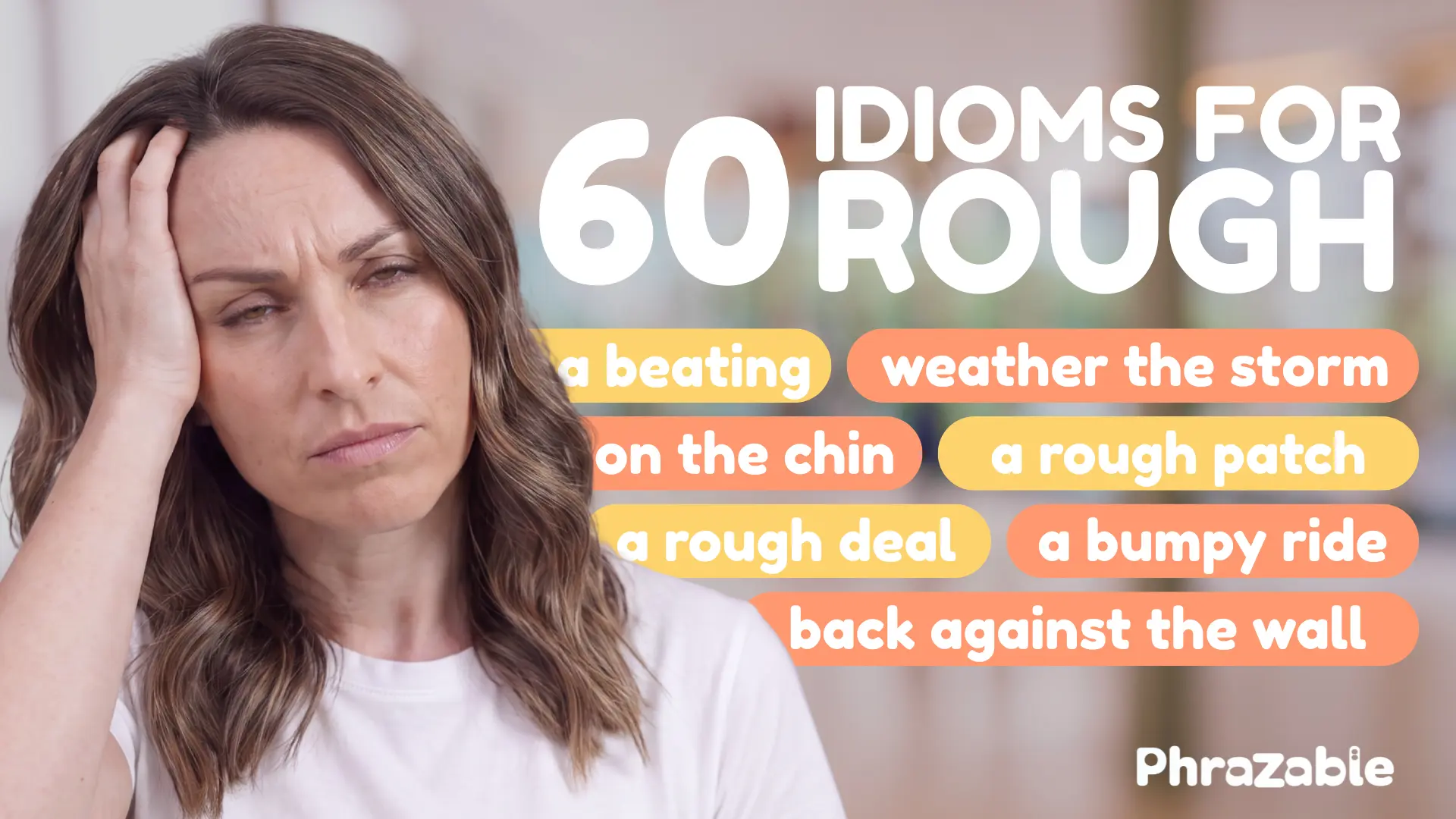
60 Idioms for Rough in English (With Meanings & Examples)
Idioms for rough include a rough patch, rough around the edges, and take the rough with the smooth. Here are...
Continue Reading →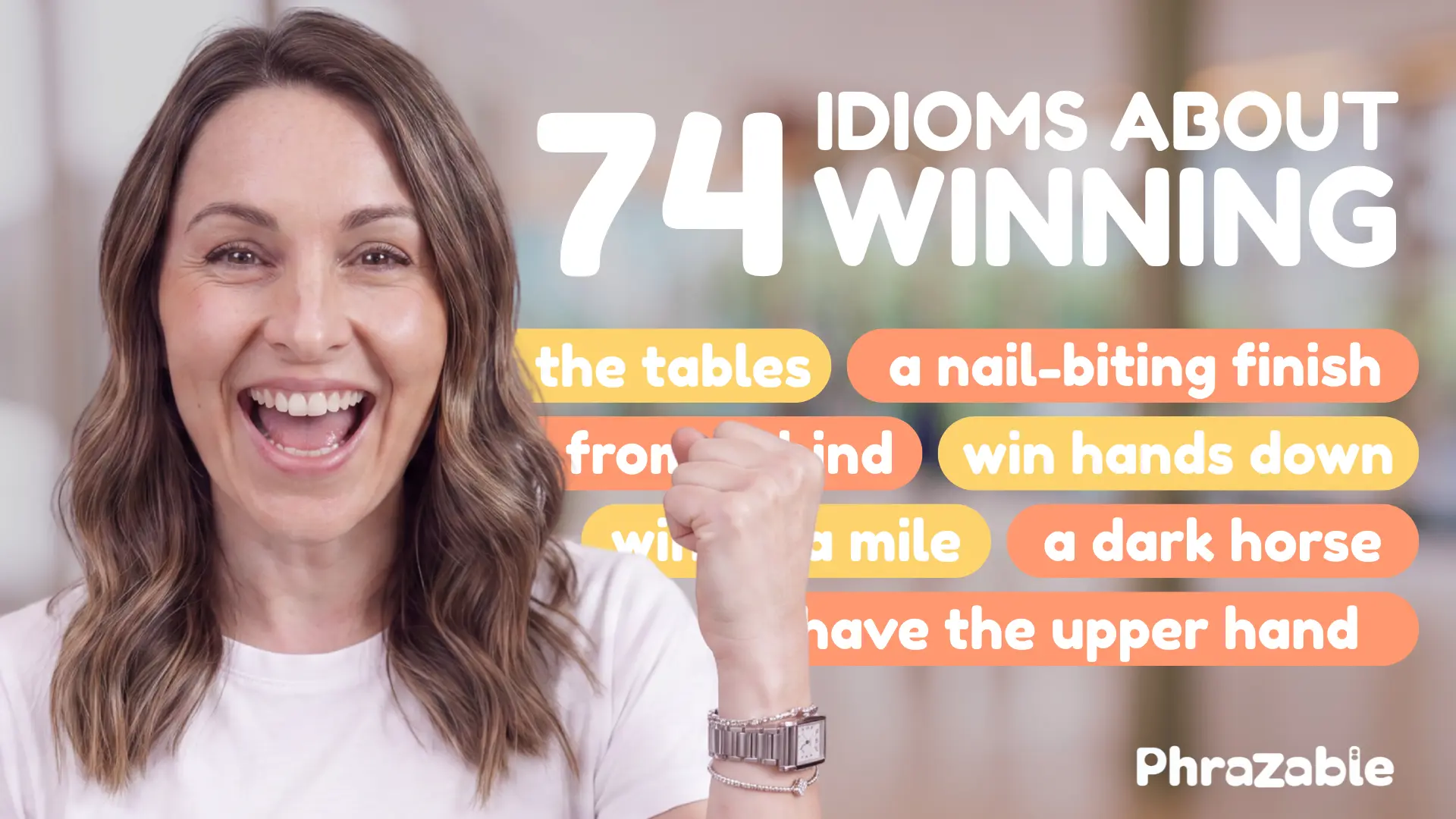
74 Idioms about Winning in English (With Meanings & Examples)
Idioms about winning include win hands down, come out on top, and in the bag. Some celebrate and some gloat....
Continue Reading →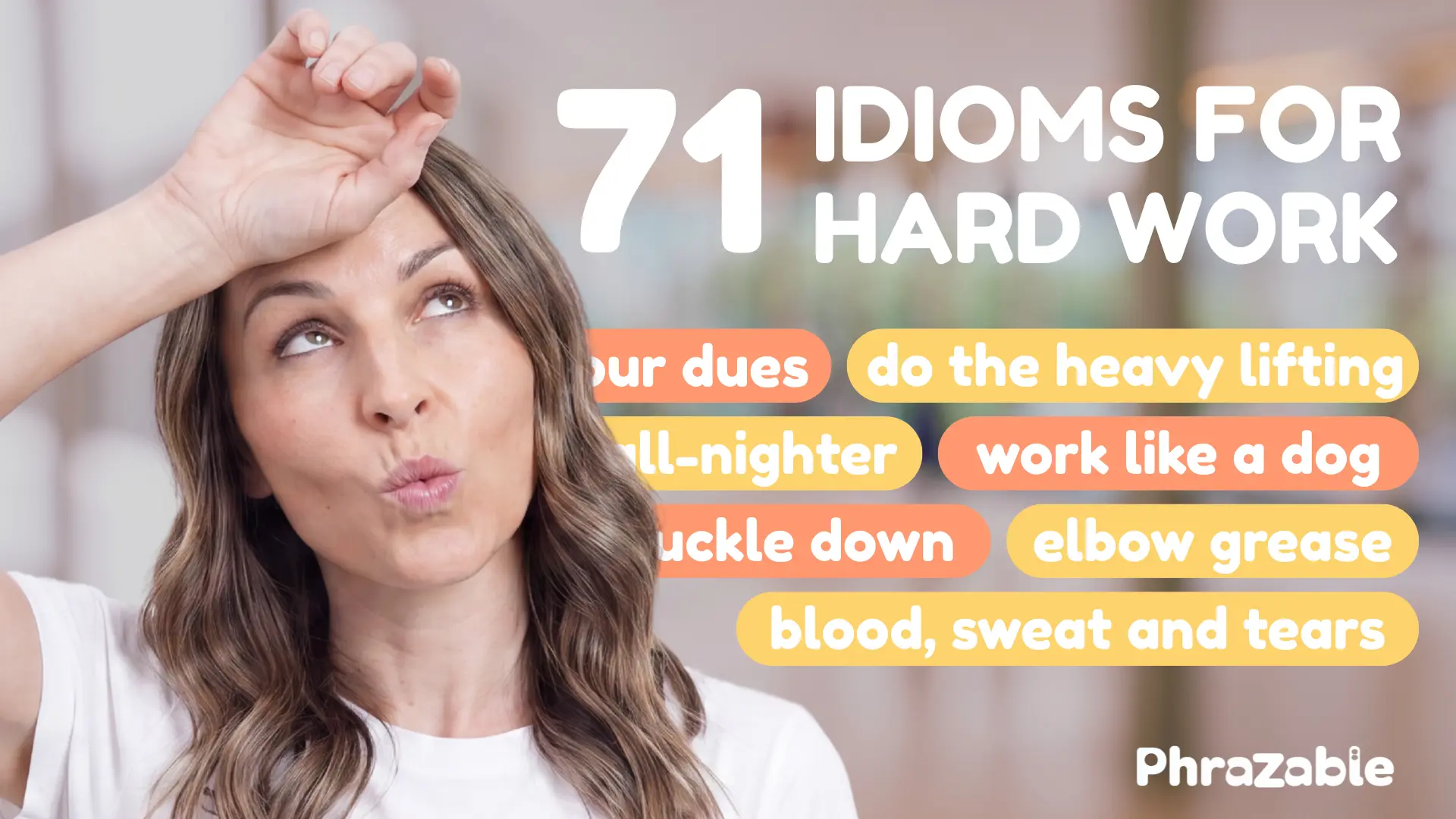
71 Idioms for Hard Work in English (With Meanings & Examples)
Popular idioms for hard work include burn the midnight oil, pull your weight, and go the extra mile. Here are...
Continue Reading →49 Idioms for Happy in English (With Meanings & Examples)
Popular idioms for happy include on cloud nine, over the moon, and in seventh heaven. Here are 49 English expressions...
Continue Reading →
199+ Cat Puns & Jokes That Are Paws-itively Hilarious
Get your daily dose of meow-mentum with 199+ cat puns and jokes that are paws-itively hilarious, clever, and irresistibly shareable.
Continue Reading →Subscribe to
Our Newsletter
Join a growing community of more than 1,000+ friendly readers.


Each week, I share actionable productivity tips, practical life advice, and highlights from my favourite books, directly to your inbox. It’s free to join, and always will be.
By submitting this form, you’ll be signed up to my free newsletter, which sometimes includes mentions of my books, apps and courses. You can opt-out at any time with no hard feelings 😉 Here’s our privacy policy if you like reading.
Each week, I share practical idioms, real-life example sentences, and simple tips to help you sound more like a native speaker. It’s free to join, and always will be.
By submitting this form, you’ll be signed up to my free newsletter, which sometimes includes mentions of my books, apps and courses. You can opt-out at any time with no hard feelings 😉 Here’s our privacy policy if you like reading.