

Idioms for easy include a piece of cake, plain sailing, and second nature. Each suits a different kind of easy....
Continue Reading →67 Idioms for Being Stuck in English (With Meanings & Examples)
⚡️ Key Takeaways
The most common idioms for being stuck are stuck in a rut, hit a brick wall, back to square one, in limbo and a catch-22.
English distinguishes between kinds of stuck. In a rut means you are moving and going nowhere. In limbo means you are not moving at all, and it is not your fault.
A catch-22 is not just a difficult situation. It is a trap where the only thing that would free you is the thing you are not allowed to have.
Back to square one and back to the drawing board sound identical and are not. One is a loss, the other is a fresh start.
What is the difference between being in a rut and being in limbo?
They both mean stuck, and a dictionary will tell you very little. But an English speaker hears two completely different situations. In a rut, you are moving. You get up, you go to work, you come home, and nothing changes, and the moving is the problem. In limbo, you are not moving at all. You are waiting for a decision, a visa, a result, and someone else is holding it.
One is a life that needs shaking. The other is a life on pause. The first is your responsibility. The second is not.
This is what English does with “stuck”. It refuses to have one word for it. Instead it has phrases for stuck-and-repeating (a vicious circle, Groundhog Day), stuck-at-an-obstacle (hit a brick wall, at a dead end), stuck-with-no-good-options (a catch-22, damned if you do), stuck-and-waiting (in limbo, up in the air), and stuck-in-the-wrong-life (a square peg in a round hole, a dead-end job).
Naming which one you are in is genuinely the first step out of it. So here are 67 real idioms for being stuck, with a short meaning, a longer explanation, three examples and three alternatives for each.
What Is an Idiom for Being Stuck?
An idiom is a group of words whose meaning you cannot work out from the words themselves. “Stuck in a rut” has nothing to do with mud. It means living a repetitive life that is going nowhere.
A rut is the deep groove a cartwheel cuts into a dirt road. Once your wheel is in it, the road decides where you go, and steering out of it takes real force. That is the whole metaphor, and it is a good one.
The rest of these idioms come from the same practical places: roads (hit a wall, a dead end, back to square one), water (treading water, out of your depth, dead in the water), machinery (spinning your wheels, grind to a halt), and games (a stalemate, back to the drawing board).
67 Idioms for Being Stuck (With Meanings and Examples)
Here is the full list at a glance. The detail follows underneath.
| Idiom | In short | |
|---|---|---|
| 1 | Stuck in a rut | Trapped in a repetitive routine that is going nowhere. |
| 2 | Spinning your wheels | Working hard and making no progress. |
| 3 | Treading water | Doing just enough to stay where you are. |
| 4 | Going nowhere fast | Making a lot of effort with no result. |
| 5 | At a standstill | Completely stopped. |
| 6 | Dead in the water | Finished, with no chance of moving forward. |
| 7 | Grind to a halt | Slow down gradually until you stop completely. |
| 8 | Marking time | Filling time without making progress. |
| 9 | Twiddling your thumbs | Doing nothing because you cannot do anything. |
| 10 | Chasing your tail | Being busy without achieving anything. |
| 11 | Running on the spot | Working hard and staying exactly where you are. |
| 12 | Make no headway | Fail to make any progress. |
| 13 | Hit a wall | Reach the point where you cannot continue. |
| 14 | Hit a brick wall | Be completely blocked. |
| 15 | Bang your head against a brick wall | Keep trying something that will never work. |
| 16 | Reach an impasse | Reach a point where no progress is possible. |
| 17 | At a deadlock | Blocked because neither side will give way. |
| 18 | A stalemate | A situation where neither side can win. |
| 19 | A dead end | A route with no way forward. |
| 20 | Back to square one | Back at the beginning, with all progress lost. |
| 21 | Back to the drawing board | Start again with a new plan. |
| 22 | Break the deadlock | Find the move that gets things going again. |
| 23 | A catch-22 | A trap where the only solution is blocked by the problem itself. |
| 24 | A vicious circle | A cycle where each problem creates the next. |
| 25 | A no-win situation | A situation where every option is bad. |
| 26 | Damned if you do, damned if you don't | Criticised whichever choice you make. |
| 27 | Between the devil and the deep blue sea | Caught between two equally dangerous options. |
| 28 | Fall between two stools | Fail because you tried to satisfy two things at once. |
| 29 | Paint yourself into a corner | Get yourself into a position with no way out, through your own decisions. |
| 30 | Backed into a corner | Forced into a position with no options left. |
| 31 | Have your hands tied | Be unable to act, because of rules or authority. |
| 32 | No way out | No escape from the situation. |
| 33 | In limbo | Stuck waiting, with no decision and no control. |
| 34 | Up in the air | Undecided and uncertain. |
| 35 | On hold | Paused, waiting to be restarted. |
| 36 | In a holding pattern | Circling, waiting for permission to move. |
| 37 | Left hanging | Left without an answer you were promised. |
| 38 | Leave someone in the lurch | Abandon someone when they need you. |
| 39 | On the back burner | Postponed in favour of more urgent things. |
| 40 | At a loose end | Having nothing to do and no direction. |
| 41 | In no man's land | In an undefined space between two positions. |
| 42 | In a bind | In a difficult situation with limited options. |
| 43 | In a jam | In trouble, needing help. |
| 44 | In a fix | In an awkward, difficult situation. |
| 45 | In a tight spot | In a difficult position with very little room to move. |
| 46 | Out of your depth | Facing something beyond your ability. |
| 47 | In over your head | Involved in something too difficult or too big. |
| 48 | Up to your neck in it | Deeply involved in trouble or work. |
| 49 | Boxed in | Restricted, with no room to manoeuvre. |
| 50 | Hemmed in | Surrounded and unable to move freely. |
| 51 | Mired in something | Trapped in something slow and difficult. |
| 52 | A square peg in a round hole | Somebody in a role that does not suit them at all. |
| 53 | A dead-end job | A job with no prospects for advancement. |
| 54 | A stick-in-the-mud | A person who refuses to change or try anything new. |
| 55 | Groundhog Day | A situation that repeats identically, day after day. |
| 56 | Stuck in first gear | Moving, but far too slowly. |
| 57 | Rearranging the deckchairs on the Titanic | Making small changes while ignoring a disaster. |
| 58 | Dig yourself into a hole | Make your situation worse through your own actions. |
| 59 | When you're in a hole, stop digging | Stop making things worse. |
| 60 | Break the cycle | Interrupt a repeating pattern. |
| 61 | Turn over a new leaf | Start behaving better, from now on. |
| 62 | A clean slate | A fresh start with the past wiped away. |
| 63 | Change tack | Try a completely different approach. |
| 64 | Cut your losses | Stop and accept the loss rather than losing more. |
| 65 | Get the ball rolling | Start something moving. |
| 66 | Take the plunge | Finally commit to a big decision. |
| 67 | Light at the end of the tunnel | The first sign that a difficult period is ending. |
1. Stuck in a rut
Meaning
In short: Trapped in a repetitive routine that is going nowhere.
In detail: Neutral and extremely common, and it usually describes a life rather than a project. It carries a quiet suggestion that you could get out if you chose to.
Examples in a sentence
- I have been stuck in a rut for two years.
- The relationship is in a rut.
- He got out of the rut by moving cities.
Other ways to say it: in a rut, in a groove, going through the motions.
2. Spinning your wheels
Meaning
In short: Working hard and making no progress.
In detail: American and informal, from a car stuck in mud. The effort is real, and the movement is not, which is what makes it so frustrating.
Examples in a sentence
- We spent three months spinning our wheels.
- I am spinning my wheels on this project.
- Stop spinning your wheels and ask for help.
Other ways to say it: tread water, get nowhere, run on the spot.
3. Treading water
Meaning
In short: Doing just enough to stay where you are.
In detail: Neutral and slightly tired, from swimming. It suggests survival without progress, and it is common about businesses and careers.
Examples in a sentence
- The company is treading water.
- I am treading water until the new job starts.
- We have been treading water since the funding stopped.
Other ways to say it: stand still, mark time, hold steady.
4. Going nowhere fast
Meaning
In short: Making a lot of effort with no result.
In detail: Informal and ironic. The “fast” is the joke, and the phrase is often used about conversations and negotiations.
Examples in a sentence
- This discussion is going nowhere fast.
- We are going nowhere fast with this supplier.
- My career was going nowhere fast, so I left.
Other ways to say it: get nowhere, spin your wheels, run into the sand.
5. At a standstill
Meaning
In short: Completely stopped.
In detail: Neutral and factual. It is used about traffic, talks and construction, and it describes a total halt rather than slow progress.
Examples in a sentence
- The negotiations are at a standstill.
- Traffic is at a standstill on the motorway.
- Work came to a standstill in December.
Other ways to say it: at a halt, stopped dead, frozen.
6. Dead in the water
Meaning
In short: Finished, with no chance of moving forward.
In detail: Neutral and final, from a ship with no engine. It is much stronger than “stuck”, because it means the thing is over.
Examples in a sentence
- Without the funding, the project is dead in the water.
- The bill is dead in the water.
- The deal was dead in the water by Friday.
Other ways to say it: finished, going nowhere, sunk.
7. Grind to a halt
Meaning
In short: Slow down gradually until you stop completely.
In detail: Neutral and mechanical. It describes a slow death rather than a sudden one, which is why it fits bureaucracies so well.
Examples in a sentence
- The whole process ground to a halt over one signature.
- Production ground to a halt in March.
- The talks slowly ground to a halt.
Other ways to say it: come to a stop, stall, seize up.
8. Marking time
Meaning
In short: Filling time without making progress.
In detail: Neutral and military in origin, from soldiers marching on the spot. It suggests waiting for something else to happen.
Examples in a sentence
- I am just marking time until the contract ends.
- The department is marking time until the merger.
- He marked time in that job for six years.
Other ways to say it: tread water, bide your time, wait it out.
9. Twiddling your thumbs
Meaning
In short: Doing nothing because you cannot do anything.
In detail: Informal and slightly comic. It usually implies you are waiting for someone else, and you are not pleased about it.
Examples in a sentence
- I sat twiddling my thumbs for two hours.
- We are twiddling our thumbs until legal approves it.
- Nobody is paying you to twiddle your thumbs.
Other ways to say it: sit around, kick your heels, do nothing.
10. Chasing your tail
Meaning
In short: Being busy without achieving anything.
In detail: Informal and exhausting, from a dog turning in circles. This is busy-stuck, which is the worst kind.
Examples in a sentence
- I have been chasing my tail all week.
- We are chasing our tails and the deadline is Friday.
- Stop chasing your tail and make a list.
Other ways to say it: run around in circles, spin your wheels, be busy doing nothing.
11. Running on the spot
Meaning
In short: Working hard and staying exactly where you are.
In detail: British and neutral. It emphasises effort with no forward movement.
Examples in a sentence
- The economy is running on the spot.
- I feel like I am running on the spot in this role.
- We have been running on the spot for a year.
Other ways to say it: tread water, spin your wheels, get nowhere.
12. Make no headway
Meaning
In short: Fail to make any progress.
In detail: Neutral and slightly formal, from sailing. It is common in reports and news about negotiations.
Examples in a sentence
- We are making no headway with the landlord.
- The talks made no headway.
- After two months, they had made no headway at all.
Other ways to say it: get nowhere, make no progress, stall.
13. Hit a wall
Meaning
In short: Reach the point where you cannot continue.
In detail: Informal, and it works for projects and for people. Runners hit the wall, and so do exhausted employees.
Examples in a sentence
- I hit a wall at about three in the afternoon.
- We hit a wall on the technical side.
- She hit a wall after six months of it.
Other ways to say it: hit a brick wall, run out of steam, come up against it.
14. Hit a brick wall
Meaning
In short: Be completely blocked.
In detail: Informal and emphatic. The obstacle is total, and it is usually somebody else’s decision.
Examples in a sentence
- We hit a brick wall with the planning department.
- Every request hits a brick wall.
- The investigation hit a brick wall in 2019.
Other ways to say it: come up against a brick wall, be blocked, be stonewalled.
15. Bang your head against a brick wall
Meaning
In short: Keep trying something that will never work.
In detail: Informal and despairing. The point is that the effort is pointless and you are the only one being hurt by it.
Examples in a sentence
- Asking him to change is banging your head against a brick wall.
- I have been banging my head against a brick wall for a year.
- Stop banging your head against a brick wall and go around it.
Other ways to say it: waste your breath, get nowhere, flog a dead horse.
16. Reach an impasse
Meaning
In short: Reach a point where no progress is possible.
In detail: Formal and common in negotiation and diplomacy. It is the professional way to say that nobody will move.
Examples in a sentence
- The talks reached an impasse.
- We are at an impasse over the price.
- The impasse lasted three weeks.
Other ways to say it: reach a deadlock, be at a stalemate, be stuck.
17. At a deadlock
Meaning
In short: Blocked because neither side will give way.
In detail: Neutral and formal. It is about two parties, not one, which is what separates it from a personal obstacle.
Examples in a sentence
- The union and the employer are at a deadlock.
- The vote ended in deadlock.
- Somebody has to break the deadlock.
Other ways to say it: at an impasse, at a stalemate, in a standoff.
18. A stalemate
Meaning
In short: A situation where neither side can win.
In detail: Neutral, from chess, where a stalemate ends the game as a draw. It suggests permanence rather than a pause.
Examples in a sentence
- The conflict has settled into a stalemate.
- We are in a stalemate and neither of us will apologise.
- The negotiation ended in stalemate.
Other ways to say it: a deadlock, an impasse, a standoff.
19. A dead end
Meaning
In short: A route with no way forward.
In detail: Neutral and literal or figurative. It is common about investigations, careers and lines of enquiry.
Examples in a sentence
- Every lead turned out to be a dead end.
- The research hit a dead end.
- That conversation was a dead end.
Other ways to say it: a blind alley, a cul-de-sac, nowhere to go.
20. Back to square one
Meaning
In short: Back at the beginning, with all progress lost.
In detail: Informal and disheartening. It means the work you did is gone, and that is what makes it different from starting again by choice.
Examples in a sentence
- The buyer pulled out, so we are back to square one.
- Six months of work, and back to square one.
- If he says no, it is back to square one.
Other ways to say it: back to the beginning, start from scratch, lose all progress.
21. Back to the drawing board
Meaning
In short: Start again with a new plan.
In detail: Neutral and constructive, and it is not the same as back to square one. This one is hopeful. The old plan failed, so you design a better one, and the knowledge is not wasted.
Examples in a sentence
- They rejected the design, so it is back to the drawing board.
- Back to the drawing board, and this time we listen to the users.
- The first attempt failed. Back to the drawing board.
Other ways to say it: rethink it, start again, try a new approach.
22. Break the deadlock
Meaning
In short: Find the move that gets things going again.
In detail: Neutral and positive. It is the phrase for the person who finally solves a stuck negotiation.
Examples in a sentence
- Her compromise broke the deadlock.
- We need something to break the deadlock.
- One phone call broke the deadlock after three weeks.
Other ways to say it: break the impasse, unblock it, get things moving.
23. A catch-22
Meaning
In short: A trap where the only solution is blocked by the problem itself.
In detail: Neutral, from Joseph Heller’s novel, and frequently misused. It is not just a hard choice. It is a circular trap: you need experience to get a job, and a job to get experience. The rule that would free you is the rule that holds you.
Examples in a sentence
- No job without experience, no experience without a job. A perfect catch-22.
- You need an address to open a bank account and a bank account to rent a flat. Catch-22.
- It is a catch-22 and nobody in the system can see it.
Other ways to say it: a vicious circle, a no-win situation, an impossible bind.
24. A vicious circle
Meaning
In short: A cycle where each problem creates the next.
In detail: Neutral and structural. It describes a loop rather than a trap, and the loop feeds itself.
Examples in a sentence
- Debt, stress, poor sleep, more debt. It is a vicious circle.
- We are in a vicious circle of cuts and falling quality.
- The only way out of a vicious circle is to break it somewhere.
Other ways to say it: a vicious cycle, a downward spiral, a self-feeding loop.
25. A no-win situation
Meaning
In short: A situation where every option is bad.
In detail: Neutral and plain. It is the simplest phrase here, and it is safe in any setting.
Examples in a sentence
- Whatever I choose, somebody is angry. It is a no-win situation.
- The manager was in a no-win situation.
- There is no good answer here. It is a no-win.
Other ways to say it: a lose-lose, a hopeless position, damned either way.
26. Damned if you do, damned if you don’t
Meaning
In short: Criticised whichever choice you make.
In detail: Informal and weary. It focuses on the blame rather than the outcome, which is what separates it from “no-win situation”.
Examples in a sentence
- Speak up and you are difficult, stay quiet and you are weak. Damned if you do.
- Parents are damned if they do and damned if they do not.
- It is a damned-if-you-do situation and I am tired of it.
Other ways to say it: a no-win situation, you cannot win, either way you lose.
27. Between the devil and the deep blue sea
Meaning
In short: Caught between two equally dangerous options.
In detail: Slightly old-fashioned and nautical. It is the older, more colourful ancestor of “between a rock and a hard place”.
Examples in a sentence
- Sell now and lose money, wait and lose more. The devil and the deep blue sea.
- She was caught between the devil and the deep blue sea.
- It is the devil and the deep blue sea, and we have to pick one.
Other ways to say it: between a rock and a hard place, caught both ways, no good options.
28. Fall between two stools
Meaning
In short: Fail because you tried to satisfy two things at once.
In detail: British and neutral. It describes something that is not quite one thing and not quite the other, and so it works for neither.
Examples in a sentence
- The product falls between two stools. It is too expensive for students and too basic for firms.
- The report falls between two stools.
- Trying to please both audiences, it fell between two stools.
Other ways to say it: neither one thing nor the other, satisfy nobody, miss both targets.
29. Paint yourself into a corner
Meaning
In short: Get yourself into a position with no way out, through your own decisions.
In detail: Neutral and slightly critical. The point is that you did this to yourself, one reasonable step at a time.
Examples in a sentence
- He painted himself into a corner with all those promises.
- We painted ourselves into a corner on price.
- Do not paint yourself into a corner in the first meeting.
Other ways to say it: back yourself into a corner, trap yourself, leave yourself no room.
30. Backed into a corner
Meaning
In short: Forced into a position with no options left.
In detail: Neutral, and here somebody else did it to you. That is the difference from the phrase above.
Examples in a sentence
- They backed us into a corner with that deadline.
- Backed into a corner, she resigned.
- People do dangerous things when they are backed into a corner.
Other ways to say it: be cornered, be forced into it, have no options.
31. Have your hands tied
Meaning
In short: Be unable to act, because of rules or authority.
In detail: Neutral and extremely common in customer service. It is a way of saying “I would help you and I am not allowed to”.
Examples in a sentence
- I would love to refund you, but my hands are tied.
- The regulator has its hands tied.
- His hands were tied by the contract.
Other ways to say it: be powerless, be unable to act, be constrained.
32. No way out
Meaning
In short: No escape from the situation.
In detail: Neutral and heavy. It is strong, so use it for real entrapment and not for a difficult afternoon.
Examples in a sentence
- He felt there was no way out.
- The contract left us with no way out.
- There is always a way out, even when it does not look like it.
Other ways to say it: be trapped, have no escape, be cornered.
33. In limbo
Meaning
In short: Stuck waiting, with no decision and no control.
In detail: Neutral and precise. The key point is that it is not your fault. Someone else holds the decision, and you are simply waiting.
Examples in a sentence
- My visa application has left me in limbo for eight months.
- The project is in limbo until the board meets.
- We are in limbo, and nobody will tell us anything.
Other ways to say it: in a holding pattern, up in the air, on hold.
34. Up in the air
Meaning
In short: Undecided and uncertain.
In detail: Informal and neutral. It describes plans that have not been settled, not necessarily anything bad.
Examples in a sentence
- Our holiday plans are up in the air.
- The whole restructure is up in the air.
- Everything is up in the air until Friday.
Other ways to say it: undecided, unsettled, to be confirmed.
35. On hold
Meaning
In short: Paused, waiting to be restarted.
In detail: Neutral and practical. It implies a deliberate pause, and it usually implies it will resume.
Examples in a sentence
- The project is on hold until the new year.
- My whole life has been on hold since the diagnosis.
- We put the hiring on hold.
Other ways to say it: paused, suspended, shelved.
36. In a holding pattern
Meaning
In short: Circling, waiting for permission to move.
In detail: Neutral, from aircraft circling an airport. It suggests active waiting rather than idleness, which is the exhausting part.
Examples in a sentence
- We have been in a holding pattern for a month.
- The team is in a holding pattern until the funding clears.
- Life feels like one long holding pattern.
Other ways to say it: in limbo, treading water, waiting for the green light.
37. Left hanging
Meaning
In short: Left without an answer you were promised.
In detail: Informal and resentful. Somebody has failed to come back to you, and the phrase blames them.
Examples in a sentence
- They left me hanging for three weeks after the interview.
- Do not leave the client hanging.
- We were left hanging with no explanation.
Other ways to say it: be left waiting, be ignored, be strung along.
38. Leave someone in the lurch
Meaning
In short: Abandon someone when they need you.
In detail: Neutral in form and critical in use. It is stronger than leaving someone hanging, because it implies real harm.
Examples in a sentence
- He quit with no notice and left us in the lurch.
- I will not leave you in the lurch.
- They left the whole team in the lurch.
Other ways to say it: abandon someone, let someone down, drop someone.
39. On the back burner
Meaning
In short: Postponed in favour of more urgent things.
In detail: Neutral, from cooking. It suggests the thing is not dead, just not now, and it is very common at work.
Examples in a sentence
- The redesign is on the back burner until Q3.
- My novel has been on the back burner for four years.
- We put it on the back burner and never came back to it.
Other ways to say it: shelved, deprioritised, parked.
40. At a loose end
Meaning
In short: Having nothing to do and no direction.
In detail: British and mild, and it can be pleasant or unsettling. The American version is “at loose ends”.
Examples in a sentence
- I am at a loose end this weekend.
- He has been at a loose end since he retired.
- If you are at a loose end, come round.
Other ways to say it: at loose ends, with time on your hands, unoccupied.
41. In no man’s land
Meaning
In short: In an undefined space between two positions.
In detail: Neutral and slightly bleak, from the ground between two trenches. It describes belonging to neither side.
Examples in a sentence
- The role sits in no man’s land between design and engineering.
- Freelancers are in a kind of legal no man’s land.
- We are in no man’s land until the merger completes.
Other ways to say it: in between, in limbo, neither one thing nor the other.
42. In a bind
Meaning
In short: In a difficult situation with limited options.
In detail: Informal and American in flavour. It is mild enough to use about everyday problems.
Examples in a sentence
- I am in a bit of a bind. Can you cover Friday?
- The delay put us in a real bind.
- She was in a bind and asked for help.
Other ways to say it: in a jam, in a fix, in a tight spot.
43. In a jam
Meaning
In short: In trouble, needing help.
In detail: Informal and friendly. It is the phrase you use when you are asking a favour.
Examples in a sentence
- I am in a jam. Could you lend me the car?
- He got himself into a jam with the tax office.
- We were in a jam and she saved us.
Other ways to say it: in a bind, in a fix, in trouble.
44. In a fix
Meaning
In short: In an awkward, difficult situation.
In detail: Informal and slightly old-fashioned. Interchangeable with “in a jam” in almost every sentence.
Examples in a sentence
- We are in a fix and I do not see a way out.
- He is in a real fix over the money.
- That leaves us in a fix.
Other ways to say it: in a bind, in a jam, in a tight spot.
45. In a tight spot
Meaning
In short: In a difficult position with very little room to move.
In detail: Informal and neutral, and it emphasises the lack of space rather than the severity.
Examples in a sentence
- The cancellation put us in a tight spot.
- He is in a tight spot financially.
- She got us out of a very tight spot.
Other ways to say it: in a tight corner, in a bind, under pressure.
46. Out of your depth
Meaning
In short: Facing something beyond your ability.
In detail: Neutral and honest, from standing in water too deep to stand in. It is not shameful, and admitting it early is the sensible move.
Examples in a sentence
- I was completely out of my depth in that meeting.
- He is out of his depth in the new role.
- Say so if you are out of your depth.
Other ways to say it: in over your head, beyond your ability, lost.
47. In over your head
Meaning
In short: Involved in something too difficult or too big.
In detail: Informal and American in flavour. It often suggests you volunteered for it, which is what makes it slightly more uncomfortable.
Examples in a sentence
- He took the contract and realised he was in over his head.
- I am in over my head with this renovation.
- She was in over her head and too proud to say.
Other ways to say it: out of your depth, overwhelmed, in too deep.
48. Up to your neck in it
Meaning
In short: Deeply involved in trouble or work.
In detail: Informal and vivid. It works for trouble, debt and workload, and the meaning depends on what follows.
Examples in a sentence
- He is up to his neck in debt.
- We are up to our necks in it until the audit finishes.
- She is up to her neck in this scandal.
Other ways to say it: in it up to your eyes, deep in it, swamped.
49. Boxed in
Meaning
In short: Restricted, with no room to manoeuvre.
In detail: Neutral, and common in business and sport. It describes constraint rather than danger.
Examples in a sentence
- The contract leaves us boxed in.
- He was boxed in on the final lap.
- I feel boxed in by the rules.
Other ways to say it: hemmed in, constrained, cornered.
50. Hemmed in
Meaning
In short: Surrounded and unable to move freely.
In detail: Neutral and slightly claustrophobic. It is used physically and about rules, expectations and circumstances.
Examples in a sentence
- Small businesses feel hemmed in by regulation.
- We are hemmed in by the budget.
- She felt hemmed in by everyone’s expectations.
Other ways to say it: boxed in, restricted, constrained.
51. Mired in something
Meaning
In short: Trapped in something slow and difficult.
In detail: Formal, from a mire, which is deep mud. It is common in journalism, especially about legal disputes and bureaucracy.
Examples in a sentence
- The plan is mired in legal disputes.
- The company is mired in debt.
- We were mired in paperwork for a year.
Other ways to say it: bogged down, stuck fast, entangled.
52. A square peg in a round hole
Meaning
In short: Somebody in a role that does not suit them at all.
In detail: Neutral and slightly sympathetic. It says the person is not wrong, the fit is.
Examples in a sentence
- He is a square peg in a round hole in that department.
- I was a square peg in a round hole for five years.
- The job needs a different person. She is a square peg in a round hole.
Other ways to say it: the wrong fit, in the wrong job, out of place.
53. A dead-end job
Meaning
In short: A job with no prospects for advancement.
In detail: Neutral in form and bleak in meaning. It says nothing about the work itself, only about where it leads.
Examples in a sentence
- I spent three years in a dead-end job.
- It pays well, but it is a dead-end job.
- She left the dead-end job and retrained.
Other ways to say it: a job with no future, going nowhere, a career cul-de-sac.
54. A stick-in-the-mud
Meaning
In short: A person who refuses to change or try anything new.
In detail: Informal and mildly insulting, though usually affectionate. It describes a personality, not a situation.
Examples in a sentence
- Do not be a stick-in-the-mud. Come dancing.
- He is a stick-in-the-mud about technology.
- Her father is a lovable stick-in-the-mud.
Other ways to say it: a fuddy-duddy, a stubborn traditionalist, set in your ways.
55. Groundhog Day
Meaning
In short: A situation that repeats identically, day after day.
In detail: Informal, from the film, and now completely standard. It is the modern way to describe a rut, and it is understood everywhere.
Examples in a sentence
- Every meeting is Groundhog Day.
- Lockdown was one long Groundhog Day.
- We have this same argument every week. It is Groundhog Day.
Other ways to say it: the same thing every day, a rut, déjà vu.
56. Stuck in first gear
Meaning
In short: Moving, but far too slowly.
In detail: Informal and mechanical. It suggests the potential is there and something is preventing it.
Examples in a sentence
- The economy is stuck in first gear.
- The campaign never got out of first gear.
- We are stuck in first gear and the deadline is coming.
Other ways to say it: moving too slowly, not getting up to speed, sluggish.
57. Rearranging the deckchairs on the Titanic
Meaning
In short: Making small changes while ignoring a disaster.
In detail: Sharp and critical, and unmistakably an insult about someone’s priorities. It says the effort is not just useless, it is absurd.
Examples in a sentence
- New logo, same broken product. Rearranging the deckchairs on the Titanic.
- The reforms are deckchairs on the Titanic.
- We are rearranging deckchairs and the ship is going down.
Other ways to say it: a pointless exercise, tinkering, missing the point entirely.
58. Dig yourself into a hole
Meaning
In short: Make your situation worse through your own actions.
In detail: Informal and critical. It is usually about lies, excuses or arguments, where every extra word makes things worse.
Examples in a sentence
- He kept talking and dug himself into a deeper hole.
- I dug myself into a hole with that email.
- She has dug herself into a hole she cannot climb out of.
Other ways to say it: make it worse, compound the problem, dig deeper.
59. When you’re in a hole, stop digging
Meaning
In short: Stop making things worse.
In detail: A saying, and blunt, practical advice. It is the correct answer to almost every stuck situation caused by your own behaviour.
Examples in a sentence
- Stop explaining. When you are in a hole, stop digging.
- The first rule of holes is to stop digging.
- Somebody should tell them to stop digging.
Other ways to say it: stop making it worse, quit while you can, say nothing more.
60. Break the cycle
Meaning
In short: Interrupt a repeating pattern.
In detail: Neutral and hopeful. It is the standard phrase for escaping a vicious circle, and it is common in health and family contexts.
Examples in a sentence
- Somebody has to break the cycle.
- Therapy helped her break the cycle.
- We broke the cycle by changing one thing.
Other ways to say it: break the pattern, interrupt it, do something different.
61. Turn over a new leaf
Meaning
In short: Start behaving better, from now on.
In detail: Neutral and hopeful, from turning a page in a book. It always involves a change in behaviour, not just circumstances.
Examples in a sentence
- He turned over a new leaf after the warning.
- January is when everyone turns over a new leaf.
- She turned over a new leaf and stuck to it.
Other ways to say it: make a fresh start, change your ways, start again.
62. A clean slate
Meaning
In short: A fresh start with the past wiped away.
In detail: Neutral and generous. It is often given to you by somebody else, which is what makes it powerful.
Examples in a sentence
- New job, clean slate.
- She gave him a clean slate and he wasted it.
- We are starting with a clean slate.
Other ways to say it: a fresh start, a blank page, start over.
63. Change tack
Meaning
In short: Try a completely different approach.
In detail: Neutral, from sailing, where you change direction to use the wind. It is a smart move, not an admission of failure.
Examples in a sentence
- We changed tack and approached the smaller clients first.
- It is not working. Time to change tack.
- She changed tack halfway through the meeting.
Other ways to say it: try a new approach, switch strategy, go a different way.
64. Cut your losses
Meaning
In short: Stop and accept the loss rather than losing more.
In detail: Neutral and hard-headed. It is the sensible answer to a sunk cost, and it is very hard advice to follow.
Examples in a sentence
- We cut our losses and closed the branch.
- Cut your losses and walk away.
- He should have cut his losses two years ago.
Other ways to say it: stop the bleeding, walk away, quit while you can.
65. Get the ball rolling
Meaning
In short: Start something moving.
In detail: Informal and positive. It describes the first push, and it is one of the most useful phrases in this article.
Examples in a sentence
- Let us get the ball rolling with a first draft.
- One phone call got the ball rolling.
- We need somebody to get the ball rolling.
Other ways to say it: get things moving, kick things off, make a start.
66. Take the plunge
Meaning
In short: Finally commit to a big decision.
In detail: Informal and brave. It describes the moment you stop hesitating, and it is usually said with admiration.
Examples in a sentence
- After two years of thinking, she took the plunge and left.
- We took the plunge and bought the place.
- Take the plunge. You will not regret it.
Other ways to say it: go for it, bite the bullet, commit.
67. Light at the end of the tunnel
Meaning
In short: The first sign that a difficult period is ending.
In detail: Neutral and hopeful, and everyone knows the grim joke that follows: it might be an oncoming train. Used sincerely, it is genuinely comforting.
Examples in a sentence
- After eighteen months, there is finally light at the end of the tunnel.
- I cannot see any light at the end of the tunnel yet.
- There is light at the end of the tunnel, and it is not a train.
Other ways to say it: the end is in sight, things are improving, hope at last.
Tips for Using These Idioms Naturally
- In a rut is your problem. In limbo is not. A rut means you are moving and going nowhere, and you could change it. Limbo means somebody else is holding the decision. Mixing them up makes you sound as though you are either blaming yourself for a visa delay or excusing a life you have chosen.
- Back to square one and back to the drawing board are not the same. Square one means the progress is lost. The drawing board means the plan is wrong and you are going to design a better one. The first is a loss, the second is a fresh start, and you can choose which one you announce to your team.
- A catch-22 has a specific shape. It is not just a hard choice. It is circular: you need the thing you cannot get in order to get the thing you need. Save it for the real thing, because when you use it correctly it is a very powerful word.
- Some of these are insults. A stick-in-the-mud attacks a person’s character, and rearranging the deckchairs on the Titanic says somebody’s entire strategy is absurd. Neither is a neutral description.
- Watch the region. At a loose end, running on the spot, fall between two stools and stick-in-the-mud are British. In a bind, spinning your wheels, in over your head and at loose ends are American.
Practice What You Learned
Three quick exercises. Answer everything, then hit "Check my answers" for your score.
1. Fill in the blank
Choose the idiom that completes each sentence.
2. Pick the right idiom
Which idiom fits the situation best?
3. Which kind of stuck?
English refuses to have one word for stuck. Tap the kind each idiom describes.
Subscribe to
Our Newsletter
Join over 370,000 readers enjoying my free, weekly (ish) email newsletter where I share what I’m reading and what I’ve learned in the worlds of productivity, business and life.
By submitting this form, you’ll be signed up to my free newsletter. I may also send you other emails about my courses. You can opt-out at any time. For more information, see our privacy policy.
In this article:
- 1) What Is an Idiom for Being Stuck?
- 2) 67 Idioms for Being Stuck (With Meanings and Examples)
- 3) Tips for Using These Idioms Naturally
- 4) Practice What You Learned

Audrey Kinslow
Read Next
59 Idioms for Death in English (With Meanings & Examples)
Idioms for death include pass away, kick the bucket, and six feet under. Some are gentle and some are jokes....
Continue Reading →
70 Idioms about Resilience in English (With Meanings & Examples)
Idioms for resilience include roll with the punches, dig deep, and bounce back. English splits resilience into three skills. Here...
Continue Reading →
67 Idioms for Loyalty in English (With Meanings & Examples)
Idioms 67 Idioms for Loyalty in English (With Meanings & Examples) Audrey Kinslow / July 29, 2026 / Share: X-twitter...
Continue Reading →67 Idioms for Being Stuck in English (With Meanings & Examples)
Idioms for being stuck include stuck in a rut, in limbo, and a catch-22. Each names a different kind of...
Continue Reading →
69 Idioms about Respect in English (With Meanings & Examples)
Idioms about respect include look up to someone, command respect, and hear someone out. In English, respect is shown by...
Continue Reading →
62 Idioms about Regret in English (With Meanings & Examples)
Idioms about regret include kick yourself, miss the boat, and burn your bridges. Some name what you did, others what...
Continue Reading →
60 Idioms for Rough in English (With Meanings & Examples)
Idioms for rough include a rough patch, rough around the edges, and take the rough with the smooth. Here are...
Continue Reading →
74 Idioms about Winning in English (With Meanings & Examples)
Idioms about winning include win hands down, come out on top, and in the bag. Some celebrate and some gloat....
Continue Reading →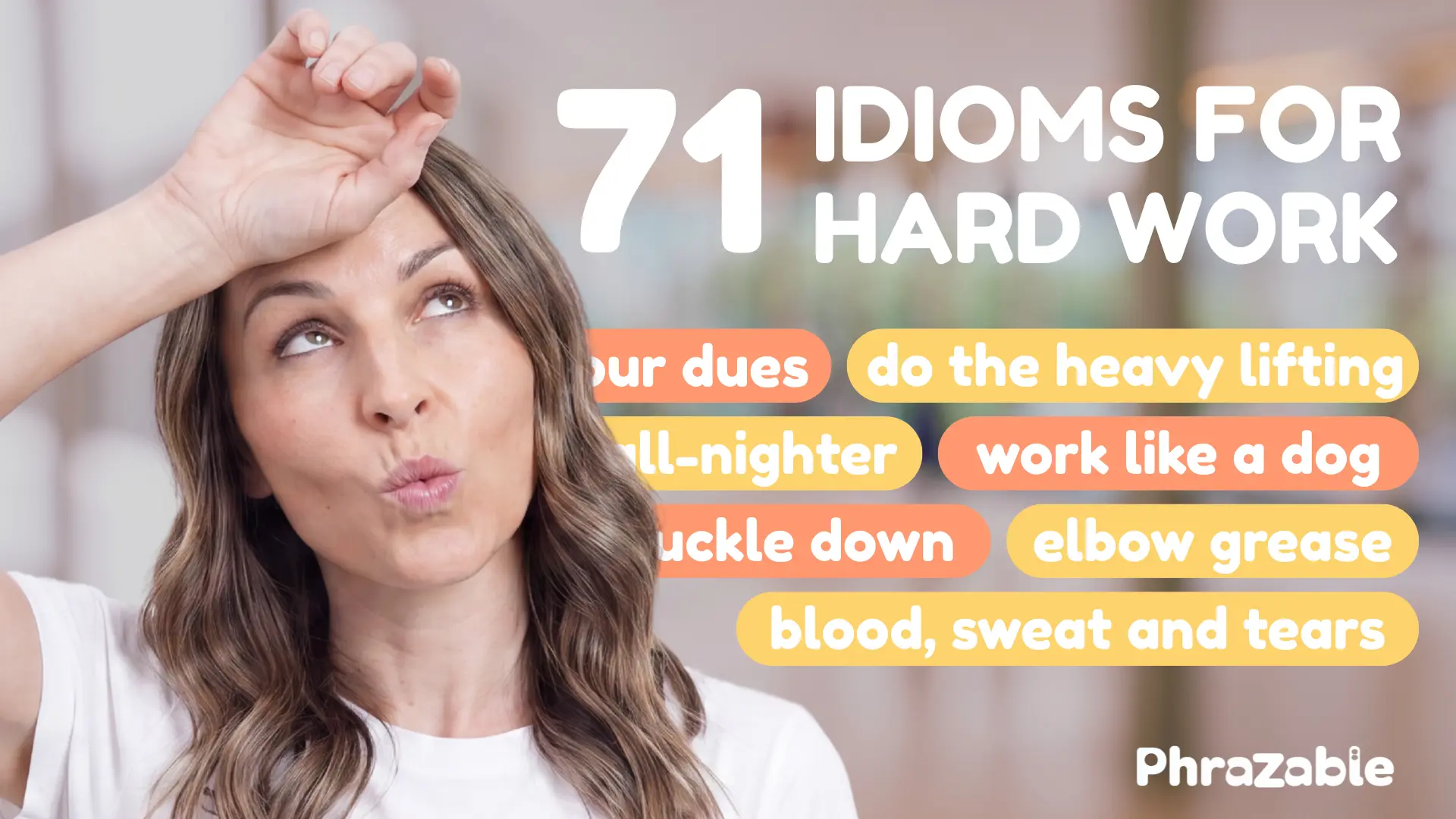
71 Idioms for Hard Work in English (With Meanings & Examples)
Popular idioms for hard work include burn the midnight oil, pull your weight, and go the extra mile. Here are...
Continue Reading →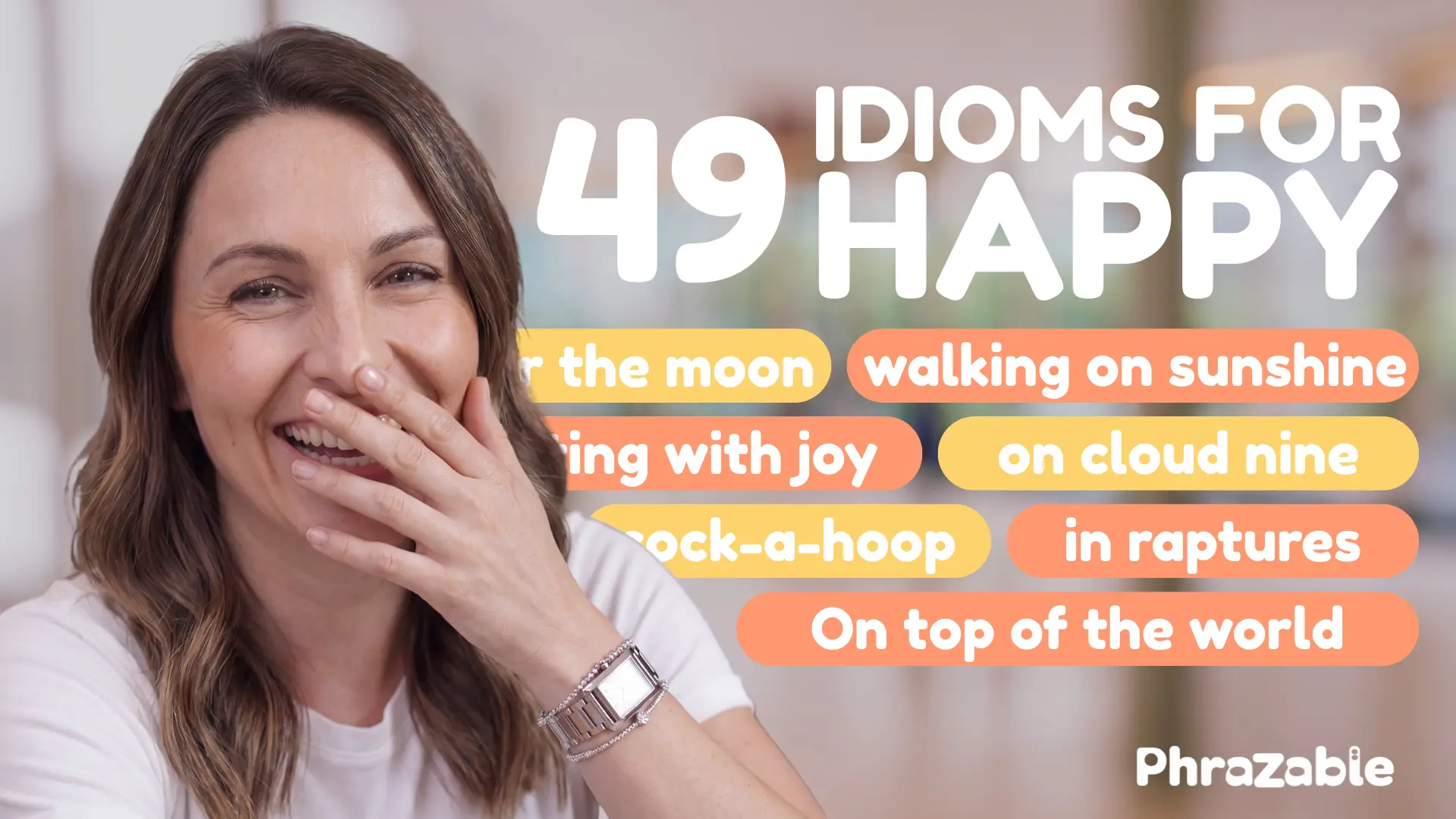
49 Idioms for Happy in English (With Meanings & Examples)
Popular idioms for happy include on cloud nine, over the moon, and in seventh heaven. Here are 49 English expressions...
Continue Reading →
199+ Cat Puns & Jokes That Are Paws-itively Hilarious
Get your daily dose of meow-mentum with 199+ cat puns and jokes that are paws-itively hilarious, clever, and irresistibly shareable.
Continue Reading →Subscribe to
Our Newsletter
Join a growing community of more than 1,000+ friendly readers.


Each week, I share actionable productivity tips, practical life advice, and highlights from my favourite books, directly to your inbox. It’s free to join, and always will be.
By submitting this form, you’ll be signed up to my free newsletter, which sometimes includes mentions of my books, apps and courses. You can opt-out at any time with no hard feelings 😉 Here’s our privacy policy if you like reading.
Each week, I share practical idioms, real-life example sentences, and simple tips to help you sound more like a native speaker. It’s free to join, and always will be.
By submitting this form, you’ll be signed up to my free newsletter, which sometimes includes mentions of my books, apps and courses. You can opt-out at any time with no hard feelings 😉 Here’s our privacy policy if you like reading.