


Idioms for easy include a piece of cake, plain sailing, and second nature. Each suits a different kind of easy....
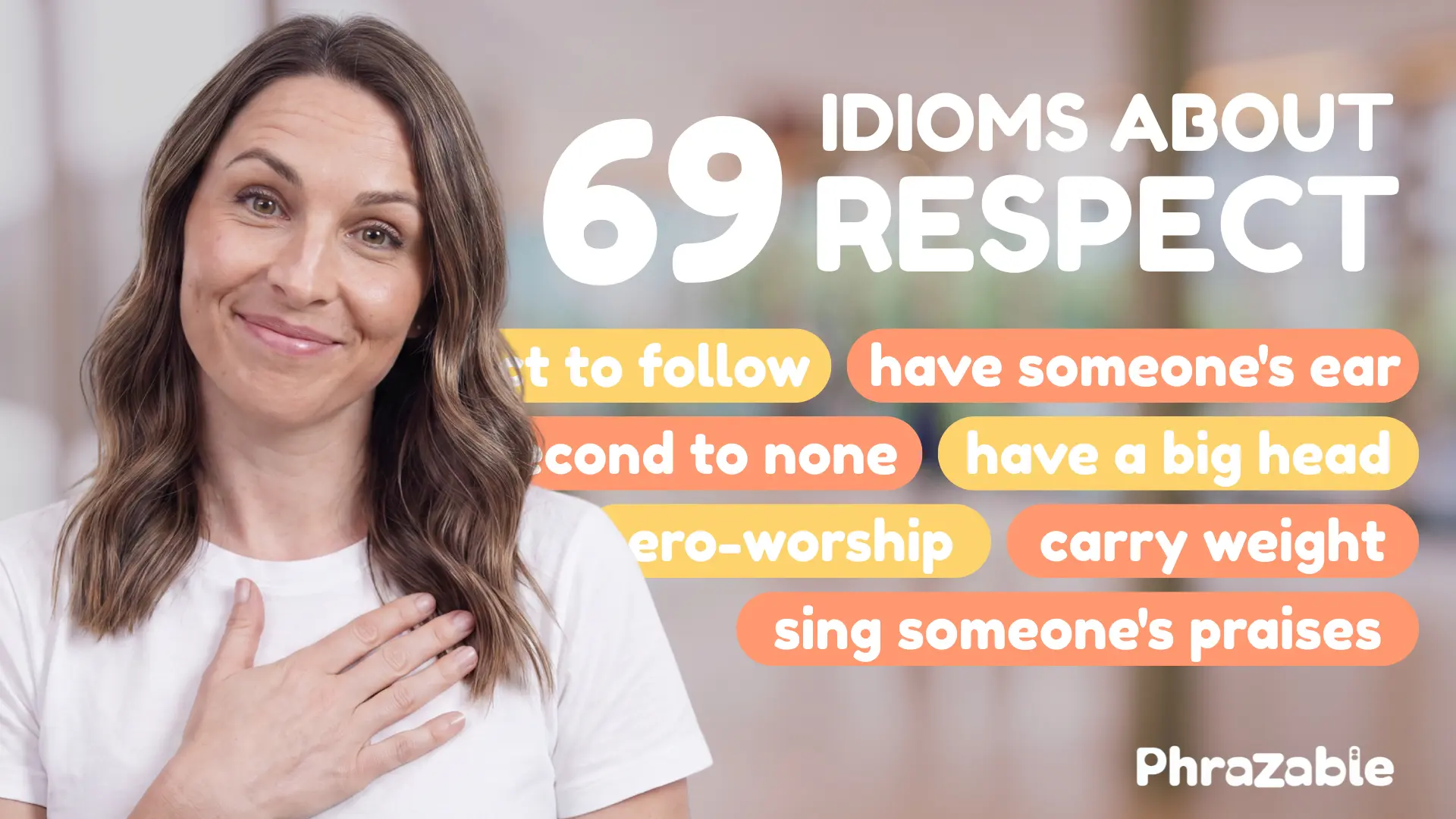
Continue Reading →69 Idioms about Respect in English (With Meanings & Examples)
⚡️ Key Takeaways
The most common respect idioms are look up to someone, hats off to you, give credit where credit is due, command respect and hold someone in high regard.
In English-speaking workplaces, respect is shown by listening, not by deferring. “He does not respect me” usually means he did not listen to my idea, not he did not use my title.
Put someone on a pedestal is not a compliment. It is a warning that the admiration is unrealistic and will collapse.
Damn with faint praise is the most elegant insult in English. It looks like respect and is the opposite.
Here is something that catches out learners from more hierarchical cultures, and it catches them out badly.
In many languages, respect is shown through deference. You use the correct title. You do not interrupt. You do not disagree with a senior person in front of others. You wait to be asked.
In English-speaking workplaces, that behaviour is frequently read as something else entirely: as having no opinion, no confidence, or nothing to contribute. Meanwhile, an English speaker who says “he does not respect me” very rarely means he did not use my title. They mean he did not listen to my idea. They mean he talked over me, talked down to me, or took the credit.
English shows respect by giving someone the floor, hearing them out, giving credit where credit is due, and taking someone’s word for it. It withholds respect by talking down to people, walking all over them, and not giving them the time of day.
So the idioms below are not decoration. They describe a whole set of behaviours that decide, quietly and permanently, how seriously you are taken at work. Here are 69 of them, with a short meaning, a longer explanation, three examples and three alternatives for each.
What Is an Idiom for Respect?
An idiom is a group of words whose meaning you cannot work out from the words themselves. “Hats off to you” has nothing to do with hats. It means you have done something admirable.
That said, the hat is real. For centuries, removing your hat in front of someone was the physical act of showing respect, and English kept the gesture long after the hats disappeared. Take your hat off to someone. Tip your hat. Doff your cap.
The rest come from equally physical places: height (look up to someone, look down on someone, put someone on a pedestal, get on your high horse), weight (his opinion carries weight, throw your weight around), and space (give someone the floor, walk all over someone, put someone in their place).
69 Idioms About Respect (With Meanings and Examples)
Here is the full list at a glance. The detail follows underneath.
| Idiom | In short | |
|---|---|---|
| 1 | Look up to someone | Admire and respect someone. |
| 2 | Hold someone in high regard | Respect someone greatly. |
| 3 | Think highly of someone | Have a good opinion of someone. |
| 4 | Have a lot of time for someone | Genuinely like and respect someone. |
| 5 | Speak highly of someone | Praise someone to other people. |
| 6 | Sing someone's praises | Praise someone enthusiastically and publicly. |
| 7 | Take your hat off to someone | Admire what someone has done. |
| 8 | Tip your hat to someone | Acknowledge someone's achievement. |
| 9 | Give credit where credit is due | Acknowledge someone's contribution honestly. |
| 10 | Give someone their due | Acknowledge what someone deserves, even reluctantly. |
| 11 | Pay tribute to someone | Publicly honour someone. |
| 12 | Give the devil his due | Acknowledge the good qualities of someone you dislike. |
| 13 | Command respect | Naturally cause people to respect you. |
| 14 | Earn respect | Gain respect through your actions. |
| 15 | Carry weight | Have influence, so that your opinion matters. |
| 16 | Have clout | Have real influence or power. |
| 17 | Have someone's ear | Be listened to by someone important. |
| 18 | Second to none | Better than everyone else. |
| 19 | In a league of their own | So good that comparison is pointless. |
| 20 | A class act | Someone who behaves with skill and dignity. |
| 21 | A tough act to follow | So good that whoever comes next will struggle to match them. |
| 22 | A legend | Someone widely admired and talked about. |
| 23 | Held in high esteem | Widely and formally respected. |
| 24 | Hear someone out | Listen to someone's full argument before responding. |
| 25 | Give someone a fair hearing | Listen to someone properly and without prejudice. |
| 26 | Give someone the floor | Let someone speak, uninterrupted. |
| 27 | Give someone the benefit of the doubt | Assume the best about someone when you are not sure. |
| 28 | Take someone's word for it | Believe someone without needing proof. |
| 29 | Defer to someone | Accept someone else's judgement as better than yours. |
| 30 | Bow to someone's judgement | Accept someone else's decision. |
| 31 | Look someone in the eye | Face someone honestly and directly. |
| 32 | Mind your Ps and Qs | Be careful to behave politely. |
| 33 | Respect your elders | Show deference to older people. |
| 34 | Put someone on a pedestal | Admire someone unrealistically. |
| 35 | Hero-worship | Admire someone excessively and uncritically. |
| 36 | Kowtow to someone | Be excessively, humiliatingly deferential. |
| 37 | Bow and scrape | Behave with excessive, servile politeness. |
| 38 | Suck up to someone | Flatter someone in authority for personal gain. |
| 39 | A yes-man | Someone who agrees with the boss about everything. |
| 40 | A bootlicker | Someone who flatters authority shamelessly. |
| 41 | Stand on ceremony | Insist on formal manners and procedure. |
| 42 | Look down on someone | Consider someone inferior. |
| 43 | Look down your nose at someone | Show visible contempt for someone. |
| 44 | Talk down to someone | Speak to someone as if they are less intelligent. |
| 45 | Treat someone like dirt | Treat someone with contempt. |
| 46 | Walk all over someone | Take advantage of someone who does not resist. |
| 47 | Take someone for granted | Stop appreciating someone who is reliable. |
| 48 | Not give someone the time of day | Refuse to acknowledge someone at all. |
| 49 | Give someone the cold shoulder | Deliberately ignore someone you know. |
| 50 | Snub someone | Ignore or dismiss someone publicly. |
| 51 | Give someone short shrift | Dismiss someone or something quickly and without sympathy. |
| 52 | Sell someone short | Underestimate someone's value. |
| 53 | Damn with faint praise | Criticise someone by praising them only mildly. |
| 54 | Turn your nose up at something | Reject something as not good enough for you. |
| 55 | Do someone a disservice | Treat or describe someone unfairly. |
| 56 | Get too big for your boots | Become arrogant about your own importance. |
| 57 | Get above yourself | Behave as though you are more important than you are. |
| 58 | Have a big head | Be conceited. |
| 59 | Get on your high horse | Become self-righteous and morally superior. |
| 60 | Lord it over someone | Behave as though you are superior to someone. |
| 61 | Throw your weight around | Use your authority aggressively. |
| 62 | Pull rank | Use your seniority to force a decision. |
| 63 | Put someone in their place | Sharply remind someone of their status. |
| 64 | Take someone down a peg or two | Humble someone who is arrogant. |
| 65 | Respect is earned, not given | You get respect through your actions, not your title. |
| 66 | You get the respect you give | Respect is reciprocal. |
| 67 | Do unto others as you would have them do unto you | Treat people the way you want to be treated. |
| 68 | Familiarity breeds contempt | Knowing someone too well can reduce your respect for them. |
| 69 | Manners maketh man | How you treat people defines who you are. |
1. Look up to someone
Meaning
In short: Admire and respect someone.
In detail: Neutral and warm, and it usually involves an age or experience gap. It is the standard phrase for admiring a parent, a teacher or a mentor.
Examples in a sentence
- I have always looked up to my older sister.
- The younger staff look up to her.
- He is someone people look up to, and he knows it.
Other ways to say it: admire, hold in high regard, respect.
2. Hold someone in high regard
Meaning
In short: Respect someone greatly.
In detail: Formal and slightly distant. It is common in references, speeches and professional writing, and it is exactly the phrase for a colleague you admire but do not know well.
Examples in a sentence
- She is held in high regard across the industry.
- I hold him in the highest regard.
- The team is held in high regard by our clients.
Other ways to say it: hold in high esteem, think highly of, respect greatly.
3. Think highly of someone
Meaning
In short: Have a good opinion of someone.
In detail: Neutral and versatile, and safe in speech and writing. It is quieter than “look up to” and just as sincere.
Examples in a sentence
- I think very highly of her work.
- He thinks highly of you, though he would never say so.
- They think highly of the new manager.
Other ways to say it: rate someone, hold in high regard, respect.
4. Have a lot of time for someone
Meaning
In short: Genuinely like and respect someone.
In detail: British and warm. It is understated in the way British compliments usually are, and it means more than it sounds.
Examples in a sentence
- I have a lot of time for her.
- He has a lot of time for the apprentices, which says everything.
- I have no time for people who talk over others.
Other ways to say it: rate someone, have respect for, be fond of.
5. Speak highly of someone
Meaning
In short: Praise someone to other people.
In detail: Neutral and important, because it happens when the person is not in the room. That is what makes it a true measure of respect.
Examples in a sentence
- She speaks very highly of you.
- Everyone speaks highly of that team.
- He spoke highly of her at the board meeting.
Other ways to say it: sing someone’s praises, praise, recommend.
6. Sing someone’s praises
Meaning
In short: Praise someone enthusiastically and publicly.
In detail: Informal and generous. It is louder than “speak highly of”, and it suggests real enthusiasm.
Examples in a sentence
- He has been singing your praises all week.
- The client sang our praises to the whole conference.
- She sings his praises, and he deserves it.
Other ways to say it: speak highly of, rave about, big someone up.
7. Take your hat off to someone
Meaning
In short: Admire what someone has done.
In detail: Informal and generous, and often used about a rival or someone you disagree with. That is what makes it powerful: it is respect given away for free.
Examples in a sentence
- I take my hat off to her. That was not easy.
- You have to take your hat off to them.
- Hats off to the whole team.
Other ways to say it: hats off, tip your hat, give credit.
8. Tip your hat to someone
Meaning
In short: Acknowledge someone’s achievement.
In detail: Neutral and slightly old-fashioned, and it is a smaller gesture than taking your hat off. It is a nod, not an ovation.
Examples in a sentence
- I tip my hat to whoever wrote that.
- We should tip our hats to the night shift.
- He tipped his hat to the competition, graciously.
Other ways to say it: take your hat off to, acknowledge, salute.
9. Give credit where credit is due
Meaning
In short: Acknowledge someone’s contribution honestly.
In detail: Neutral and essential. It is often said before praising someone you do not otherwise like, which is exactly when it matters.
Examples in a sentence
- Give credit where credit is due. She saved that project.
- I do not like his methods, but credit where credit is due.
- Always give credit where it is due, especially to juniors.
Other ways to say it: give someone their due, acknowledge the work, be fair.
10. Give someone their due
Meaning
In short: Acknowledge what someone deserves, even reluctantly.
In detail: Neutral, and it usually appears as “to give him his due”, introducing a concession about someone you have been criticising.
Examples in a sentence
- To give him his due, he did apologise.
- Give her her due, she never took a day off.
- To give them their due, the response was fast.
Other ways to say it: give credit where it is due, be fair to someone, admit it.
11. Pay tribute to someone
Meaning
In short: Publicly honour someone.
In detail: Formal and often ceremonial. It is used in speeches, obituaries and retirement events.
Examples in a sentence
- The chief executive paid tribute to her thirty years of service.
- We are here to pay tribute to a remarkable teacher.
- He paid tribute to the volunteers by name.
Other ways to say it: honour, salute, acknowledge publicly.
12. Give the devil his due
Meaning
In short: Acknowledge the good qualities of someone you dislike.
In detail: A saying, and one of the fairest phrases in English. It is what a person of real integrity says about their opponent.
Examples in a sentence
- Give the devil his due, the man can negotiate.
- I cannot stand him, but give the devil his due.
- Give the devil his due. The strategy worked.
Other ways to say it: give credit where it is due, be fair, admit it.
13. Command respect
Meaning
In short: Naturally cause people to respect you.
In detail: Neutral and strong. It describes respect that is given without being asked for, which is the only kind worth having.
Examples in a sentence
- She commands respect the moment she enters a room.
- He commands respect without ever raising his voice.
- Titles do not command respect. Behaviour does.
Other ways to say it: earn respect, be respected, carry authority.
14. Earn respect
Meaning
In short: Gain respect through your actions.
In detail: Neutral and central to English-speaking work culture, where respect is treated as something you build, not something your position grants you.
Examples in a sentence
- He earned the team’s respect in his first month.
- Respect is earned, not given.
- She earned it the hard way.
Other ways to say it: win respect, prove yourself, command respect.
15. Carry weight
Meaning
In short: Have influence, so that your opinion matters.
In detail: Neutral and practical. It is about how seriously your words are taken, and it is one of the most useful phrases in this article for professional life.
Examples in a sentence
- Her opinion carries a lot of weight with the board.
- His recommendation carries weight in the industry.
- A complaint from that client carries real weight.
Other ways to say it: have influence, have clout, be taken seriously.
16. Have clout
Meaning
In short: Have real influence or power.
In detail: Informal and blunt. It is about power more than respect, and the two are not the same thing.
Examples in a sentence
- She has serious clout in the department.
- We need someone with clout to make the call.
- He has the title and none of the clout.
Other ways to say it: carry weight, have pull, have influence.
17. Have someone’s ear
Meaning
In short: Be listened to by someone important.
In detail: Neutral and political. It describes access, which in most organisations is the real currency of respect.
Examples in a sentence
- She has the director’s ear.
- If you have his ear, tell him about the delays.
- He has the ear of everyone who matters.
Other ways to say it: be listened to, have access, be trusted.
18. Second to none
Meaning
In short: Better than everyone else.
In detail: Neutral and emphatic, and common in professional praise. It is a strong compliment about quality.
Examples in a sentence
- Her attention to detail is second to none.
- Their after-sales service is second to none.
- He is second to none in that field.
Other ways to say it: the best there is, unmatched, in a league of their own.
19. In a league of their own
Meaning
In short: So good that comparison is pointless.
In detail: Informal and admiring, from sport. It says the person is not competing with the rest, they are somewhere else.
Examples in a sentence
- As a negotiator, she is in a league of her own.
- That team is in a league of its own.
- He is in a different league entirely.
Other ways to say it: second to none, on another level, incomparable.
20. A class act
Meaning
In short: Someone who behaves with skill and dignity.
In detail: Informal and warm, and it is about behaviour as much as ability. It is often said about how someone handled a defeat.
Examples in a sentence
- She congratulated the winner personally. A class act.
- He is a class act, on and off the pitch.
- That apology was a class act.
Other ways to say it: a gentleman, first class, all class.
21. A tough act to follow
Meaning
In short: So good that whoever comes next will struggle to match them.
In detail: Neutral and complimentary, from the theatre. It is usually said about a predecessor.
Examples in a sentence
- She is a tough act to follow.
- Whoever takes over has a tough act to follow.
- The previous head was a tough act to follow, and he managed it.
Other ways to say it: hard to match, big shoes to fill, a high bar.
22. A legend
Meaning
In short: Someone widely admired and talked about.
In detail: Informal and modern, and used both seriously and casually. Calling a colleague “an absolute legend” for buying coffee is entirely normal.
Examples in a sentence
- She stayed until midnight to help. Absolute legend.
- He is a legend in that industry.
- Thanks for covering. You are a legend.
Other ways to say it: a hero, a star, one of the greats.
23. Held in high esteem
Meaning
In short: Widely and formally respected.
In detail: Formal and often used in writing about institutions and professionals. It is the most official phrase on this list.
Examples in a sentence
- The professor is held in high esteem by his peers.
- Their work is held in high esteem internationally.
- She is held in high esteem, and rightly.
Other ways to say it: hold in high regard, be respected, be revered.
24. Hear someone out
Meaning
In short: Listen to someone’s full argument before responding.
In detail: Neutral and important. In English-speaking workplaces, this is the primary way respect is shown, and refusing to do it is the primary way it is withheld.
Examples in a sentence
- Hear me out before you say no.
- She heard him out and then disagreed with everything.
- At least hear the man out.
Other ways to say it: listen properly, give someone a fair hearing, let someone finish.
25. Give someone a fair hearing
Meaning
In short: Listen to someone properly and without prejudice.
In detail: Neutral and slightly formal, and common in disputes and disciplinary settings. It is about fairness of process.
Examples in a sentence
- Everybody deserves a fair hearing.
- She was not given a fair hearing.
- Give the proposal a fair hearing before you reject it.
Other ways to say it: hear someone out, listen fairly, give someone a chance.
26. Give someone the floor
Meaning
In short: Let someone speak, uninterrupted.
In detail: Neutral and formal, from meetings and debates. It is a small act of respect with an outsized effect, especially on quieter people.
Examples in a sentence
- Let us give Sara the floor.
- He gave the floor to the junior researcher, which nobody expected.
- I would like to give the floor to our guest.
Other ways to say it: hand over to someone, let someone speak, invite someone in.
27. Give someone the benefit of the doubt
Meaning
In short: Assume the best about someone when you are not sure.
In detail: Neutral and generous. It is one of the most respectful things you can do, and it is the default position of a fair person.
Examples in a sentence
- I will give him the benefit of the doubt this once.
- She was given the benefit of the doubt and she deserved it.
- After the third time, the benefit of the doubt runs out.
Other ways to say it: assume good faith, give someone a chance, think the best.
28. Take someone’s word for it
Meaning
In short: Believe someone without needing proof.
In detail: Neutral and trusting. It is a genuine mark of respect, because it says you do not need to check.
Examples in a sentence
- I will take your word for it.
- Do not take my word for it. Look at the numbers.
- She took his word for it, and she was right to.
Other ways to say it: trust someone, believe someone, accept it.
29. Defer to someone
Meaning
In short: Accept someone else’s judgement as better than yours.
In detail: Neutral and formal. It is respectful when it is based on expertise, and it looks weak when it is based only on rank.
Examples in a sentence
- I defer to her on anything technical.
- He deferred to the surgeon’s judgement.
- The committee deferred to the chair.
Other ways to say it: bow to someone’s judgement, yield to, follow someone’s lead.
30. Bow to someone’s judgement
Meaning
In short: Accept someone else’s decision.
In detail: Slightly formal and gracious, and it is what you say when you have lost the argument and want to lose it well.
Examples in a sentence
- You know the market better than I do. I bow to your judgement.
- She bowed to his judgement on the pricing.
- I will bow to the team’s judgement.
Other ways to say it: defer to someone, accept their view, concede.
31. Look someone in the eye
Meaning
In short: Face someone honestly and directly.
In detail: Neutral and culturally important. In most English-speaking cultures, eye contact signals honesty and respect, and avoiding it can be read as evasiveness. This is not universal, and it catches out many learners.
Examples in a sentence
- Look me in the eye and say that.
- He could not look her in the eye afterwards.
- She looked the whole board in the eye and told them the truth.
Other ways to say it: face someone, be straight with someone, meet someone’s gaze.
32. Mind your Ps and Qs
Meaning
In short: Be careful to behave politely.
In detail: British and slightly old-fashioned. It is usually said before a situation where manners will be noticed.
Examples in a sentence
- Mind your Ps and Qs at your grandmother’s.
- He minded his Ps and Qs for the whole interview.
- Mind your Ps and Qs. These are important clients.
Other ways to say it: mind your manners, be on your best behaviour, behave.
33. Respect your elders
Meaning
In short: Show deference to older people.
In detail: A saying, and worth flagging. It is a real English phrase, and it carries far less weight in English-speaking cultures than in many others. Age alone earns less automatic respect here.
Examples in a sentence
- We were raised to respect our elders.
- Respect your elders, my grandmother said, and she was terrifying.
- The idea that you should respect your elders is not universal any more.
Other ways to say it: honour your elders, show deference, be respectful.
34. Put someone on a pedestal
Meaning
In short: Admire someone unrealistically.
In detail: Not a compliment. It is a warning. The pedestal is too high, the admiration is not based on the real person, and the fall is coming.
Examples in a sentence
- She put him on a pedestal and he was never going to stay there.
- Do not put your mentors on a pedestal.
- He was on a pedestal for two years, and then he was not.
Other ways to say it: idolise, hero-worship, over-idealise.
35. Hero-worship
Meaning
In short: Admire someone excessively and uncritically.
In detail: Mildly critical. It suggests the admiration has replaced judgement.
Examples in a sentence
- There is a lot of hero-worship around that founder.
- He hero-worshipped his older brother.
- Admiration is healthy. Hero-worship is not.
Other ways to say it: idolise, put on a pedestal, worship.
36. Kowtow to someone
Meaning
In short: Be excessively, humiliatingly deferential.
In detail: Critical, from the Chinese practice of bowing to the ground. In English it is always negative, and it implies loss of dignity.
Examples in a sentence
- I am not going to kowtow to him.
- The whole department kowtows to the new director.
- She refused to kowtow, and it cost her.
Other ways to say it: grovel, bow and scrape, defer excessively.
37. Bow and scrape
Meaning
In short: Behave with excessive, servile politeness.
In detail: Critical and old-fashioned. It describes deference that has become embarrassing to watch.
Examples in a sentence
- The staff bow and scrape whenever he visits.
- I will be polite, but I will not bow and scrape.
- There was a great deal of bowing and scraping.
Other ways to say it: kowtow, grovel, fawn.
38. Suck up to someone
Meaning
In short: Flatter someone in authority for personal gain.
In detail: Informal and insulting. Everyone in the room can see it happening, which is what makes it so damaging to the person doing it.
Examples in a sentence
- He sucks up to the boss constantly.
- Stop sucking up. It is not working.
- She never sucked up to anyone and she still got promoted.
Other ways to say it: brown-nose, butter someone up, curry favour.
39. A yes-man
Meaning
In short: Someone who agrees with the boss about everything.
In detail: Critical and dismissive. It says the person has no independent judgement, and it is a serious criticism of a senior person.
Examples in a sentence
- He has surrounded himself with yes-men.
- Nobody wants to be the yes-man in the room.
- A board full of yes-men is a board with no board.
Other ways to say it: a pushover, a sycophant, a rubber stamp.
40. A bootlicker
Meaning
In short: Someone who flatters authority shamelessly.
In detail: Informal and contemptuous. It is stronger and cruder than “yes-man”, and it is a real insult.
Examples in a sentence
- The office is full of bootlickers.
- He is a bootlicker and everyone knows it.
- Nobody respects a bootlicker, including the boss they are flattering.
Other ways to say it: a sycophant, a brown-noser, a toady.
41. Stand on ceremony
Meaning
In short: Insist on formal manners and procedure.
In detail: Neutral, and usually used in the negative to put people at ease: “do not stand on ceremony”.
Examples in a sentence
- Do not stand on ceremony. Sit down and eat.
- He does not stand on ceremony, which people appreciate.
- There is no need to stand on ceremony here.
Other ways to say it: be formal, be stiff, insist on protocol.
42. Look down on someone
Meaning
In short: Consider someone inferior.
In detail: Neutral in form and serious in judgement. It is about class, education and status as often as anything else.
Examples in a sentence
- He looks down on anyone who did not go to university.
- She has never looked down on a single person.
- I could feel him looking down on me.
Other ways to say it: look down your nose at, feel superior to, disdain.
43. Look down your nose at someone
Meaning
In short: Show visible contempt for someone.
In detail: Informal and vivid. The physical image is the point: the head tilts back and the person becomes smaller.
Examples in a sentence
- She looks down her nose at the whole department.
- Do not look down your nose at people who work harder than you.
- They looked down their noses at the local staff.
Other ways to say it: look down on, sneer at, be snobbish.
44. Talk down to someone
Meaning
In short: Speak to someone as if they are less intelligent.
In detail: Informal and one of the most common complaints in workplaces. It is a specific, recognisable behaviour, and people rarely forgive it.
Examples in a sentence
- Do not talk down to me.
- He talks down to everyone below him and wonders why they leave.
- She never talks down to the students.
Other ways to say it: patronise, condescend, speak down to.
45. Treat someone like dirt
Meaning
In short: Treat someone with contempt.
In detail: Informal and severe. It is a serious accusation about how someone behaves.
Examples in a sentence
- They treated the cleaning staff like dirt.
- He treated her like dirt for years.
- Nobody should be treated like dirt at work.
Other ways to say it: treat someone badly, walk all over someone, show contempt.
46. Walk all over someone
Meaning
In short: Take advantage of someone who does not resist.
In detail: Informal and critical of both sides. It describes the person doing it, and it quietly criticises the person letting it happen.
Examples in a sentence
- They walk all over him because he never says no.
- Do not let them walk all over you.
- She let people walk all over her for a decade and then stopped.
Other ways to say it: take advantage of, trample over, exploit.
47. Take someone for granted
Meaning
In short: Stop appreciating someone who is reliable.
In detail: Neutral and painful. It usually describes the slow erosion of respect within families and long partnerships.
Examples in a sentence
- She has been taken for granted for years.
- Do not take your good people for granted.
- I took him for granted and I regret it.
Other ways to say it: fail to appreciate, undervalue, overlook.
48. Not give someone the time of day
Meaning
In short: Refuse to acknowledge someone at all.
In detail: Informal and cold. It describes complete social dismissal, and it is one of the harshest forms of disrespect.
Examples in a sentence
- He would not give me the time of day.
- She does not give the junior staff the time of day.
- After the argument, they would not give each other the time of day.
Other ways to say it: ignore, snub, blank someone.
49. Give someone the cold shoulder
Meaning
In short: Deliberately ignore someone you know.
In detail: Informal and specific. It is a punishment, and the person receiving it always knows exactly what is happening.
Examples in a sentence
- She has been giving me the cold shoulder all week.
- He got the cold shoulder from the whole team.
- The cold shoulder is not a management strategy.
Other ways to say it: freeze someone out, blank someone, snub.
50. Snub someone
Meaning
In short: Ignore or dismiss someone publicly.
In detail: Neutral and clear. The public element is essential, because a snub is meant to be seen.
Examples in a sentence
- He snubbed her in front of the whole conference.
- The invitation was a snub to the rest of the team.
- She was snubbed for the promotion.
Other ways to say it: slight someone, cut someone, ignore publicly.
51. Give someone short shrift
Meaning
In short: Dismiss someone or something quickly and without sympathy.
In detail: British and slightly formal. It is about the speed of the dismissal, which is what makes it disrespectful.
Examples in a sentence
- The proposal was given short shrift.
- He gave my objection short shrift.
- Expect short shrift from that committee.
Other ways to say it: dismiss out of hand, brush aside, reject quickly.
52. Sell someone short
Meaning
In short: Underestimate someone’s value.
In detail: Neutral and common, and often used about yourself: “do not sell yourself short”.
Examples in a sentence
- Do not sell yourself short in that interview.
- The report sells the whole team short.
- She has been sold short by every manager she has had.
Other ways to say it: underestimate, undervalue, do someone a disservice.
53. Damn with faint praise
Meaning
In short: Criticise someone by praising them only mildly.
In detail: The most elegant insult in English. “She was perfectly adequate” and “he tried very hard” are both damning. The words are positive and the message is not, and it is devastating in a reference.
Examples in a sentence
- Calling her “reliable” and nothing else damns her with faint praise.
- The review damns the film with faint praise.
- He damned the whole department with faint praise in one sentence.
Other ways to say it: praise weakly, criticise by omission, offer a backhanded compliment.
54. Turn your nose up at something
Meaning
In short: Reject something as not good enough for you.
In detail: Informal and slightly snobbish. It is about rejecting an offer, a job or a meal in a way that insults whoever offered it.
Examples in a sentence
- He turned his nose up at the offer.
- Do not turn your nose up at honest work.
- She turned her nose up at the whole thing.
Other ways to say it: reject scornfully, look down on, be too good for.
55. Do someone a disservice
Meaning
In short: Treat or describe someone unfairly.
In detail: Formal and precise. It is a polite way to say that somebody has been badly represented, and it is very useful in professional disagreement.
Examples in a sentence
- That summary does her a disservice.
- We do the team a disservice by describing it as lucky.
- I would be doing you a disservice if I agreed.
Other ways to say it: sell someone short, misrepresent, be unfair to.
56. Get too big for your boots
Meaning
In short: Become arrogant about your own importance.
In detail: British and informal, and it is one of the great British criticisms. It is said about people who have forgotten where they came from.
Examples in a sentence
- He is getting too big for his boots since the promotion.
- She got too big for her boots and the team stopped covering for her.
- One good year and he is too big for his boots.
Other ways to say it: get above yourself, get a big head, get ideas.
57. Get above yourself
Meaning
In short: Behave as though you are more important than you are.
In detail: British and slightly old-fashioned, and it carries a whiff of class. It is a rebuke, and a sharp one.
Examples in a sentence
- Do not get above yourself.
- He got above himself and was quietly reminded of his position.
- She was accused of getting above herself, which says more about them.
Other ways to say it: get too big for your boots, overreach, forget your place.
58. Have a big head
Meaning
In short: Be conceited.
In detail: Informal and mild. It is often said affectionately about someone who has just been praised.
Examples in a sentence
- Do not let it go to your head.
- He has had a big head since the article came out.
- She is brilliant and she has no big head about it.
Other ways to say it: be big-headed, be conceited, be full of yourself.
59. Get on your high horse
Meaning
In short: Become self-righteous and morally superior.
In detail: Informal and critical. It is about moral arrogance specifically, not general vanity.
Examples in a sentence
- Get off your high horse. You did the same thing last year.
- He got on his high horse about punctuality.
- She rides a very high horse for someone who arrives at ten.
Other ways to say it: be self-righteous, preach, be sanctimonious.
60. Lord it over someone
Meaning
In short: Behave as though you are superior to someone.
In detail: Critical and clear. It is what a person does with a small amount of power, and it is deeply resented.
Examples in a sentence
- He lords it over the junior staff.
- She got a title and immediately lorded it over everyone.
- Do not lord it over people who have no choice but to listen.
Other ways to say it: throw your weight around, pull rank, act superior.
61. Throw your weight around
Meaning
In short: Use your authority aggressively.
In detail: Informal and critical. It describes power used for its own sake, and it destroys respect rather than creating it.
Examples in a sentence
- He came in throwing his weight around and lasted six months.
- She never throws her weight around, which is why people listen.
- Throwing your weight around is what you do when you have no authority.
Other ways to say it: pull rank, lord it over people, bully.
62. Pull rank
Meaning
In short: Use your seniority to force a decision.
In detail: Neutral in form and usually negative. It ends the discussion, and it usually costs the person some respect.
Examples in a sentence
- She pulled rank and made the call.
- He hates pulling rank, so he almost never does.
- If you have to pull rank, you have already lost the argument.
Other ways to say it: use your authority, overrule, throw your weight around.
63. Put someone in their place
Meaning
In short: Sharply remind someone of their status.
In detail: Critical, and it can be satisfying or cruel depending on who did what. It is often said approvingly about someone arrogant being humbled.
Examples in a sentence
- She put him in his place in one sentence.
- He tried to interrupt her and was put in his place.
- Somebody needed to put that man in his place.
Other ways to say it: take someone down a peg, humble someone, check someone.
64. Take someone down a peg or two
Meaning
In short: Humble someone who is arrogant.
In detail: Informal and slightly gleeful. The satisfaction is part of the meaning.
Examples in a sentence
- That result took them down a peg or two.
- He needs taking down a peg.
- She was taken down a peg and it did her good.
Other ways to say it: put someone in their place, humble someone, deflate someone.
65. Respect is earned, not given
Meaning
In short: You get respect through your actions, not your title.
In detail: A saying, and close to a founding principle in English-speaking work culture. It explains why deference to rank alone earns you very little here.
Examples in a sentence
- He expects respect because of his title. Respect is earned, not given.
- Respect is earned, not given, and she earned every bit of it.
- Nobody owes you respect. It is earned.
Other ways to say it: you have to earn it, titles mean nothing, prove yourself.
66. You get the respect you give
Meaning
In short: Respect is reciprocal.
In detail: A saying, and useful in conflict. It is the standard reply to someone demanding respect while giving none.
Examples in a sentence
- You get the respect you give, and he gives none.
- Treat the team properly. You get the respect you give.
- She gives respect to everyone, and she gets it back.
Other ways to say it: respect goes both ways, it is a two-way street, treat others well.
67. Do unto others as you would have them do unto you
Meaning
In short: Treat people the way you want to be treated.
In detail: A saying, biblical, and known as the golden rule. It is old, plain and hard to argue with.
Examples in a sentence
- Do unto others. That is the whole policy.
- He lives by do unto others, and it shows.
- Treat people as you would want to be treated. It is not complicated.
Other ways to say it: the golden rule, treat others well, put yourself in their shoes.
68. Familiarity breeds contempt
Meaning
In short: Knowing someone too well can reduce your respect for them.
In detail: A saying, and slightly cynical. It is used to explain why leaders sometimes keep a distance.
Examples in a sentence
- He keeps his distance from the team. Familiarity breeds contempt.
- Familiarity breeds contempt, and so does hiding in your office.
- Living together for thirty years, familiarity breeds a certain amount of contempt.
Other ways to say it: distance preserves authority, keep some mystery, do not overshare.
69. Manners maketh man
Meaning
In short: How you treat people defines who you are.
In detail: A saying, British, old and formal. It is the motto of a famous school and college, and it survives in speeches and in the mouths of grandparents.
Examples in a sentence
- Manners maketh man, as my grandfather never stopped saying.
- Manners maketh man, and his are appalling.
- Manners maketh man. Character shows in small things.
Other ways to say it: manners matter, character shows in behaviour, how you treat people is who you are.
For more idioms that behave the same way, see our lists of animal idioms, colorful idioms and emotional English idioms.
Tips for Using These Idioms Naturally
In English, respect is shown by listening. Hear someone out, give them the floor, give credit where credit is due, take their word for it. If you come from a culture where respect means silence and deference, learn these first, because staying quiet will not be read as respect. It will be read as having nothing to say.
Put someone on a pedestal is a warning, not a compliment. It means the admiration is unrealistic. If you want to praise your mentor, say you look up to them.
Damn with faint praise is the sharpest weapon here. “He was perfectly adequate.” “She always tried hard.” Every word is positive and the meaning is fatal. Learn to hear it, especially in references and reviews.
Deference to rank alone buys very little. Respect is earned, not given is close to a founding belief in English-speaking workplaces. Titles open the door. Behaviour decides what happens after that.
Watch the region. Have a lot of time for someone, too big for your boots, get above yourself, short shrift and mind your Ps and Qs are British. A class act, have clout and pull rank are common in both. Speaking with native English speakers or in conversational English lessons is the fastest way to build an ear for it, and our business English guide covers what is safe to say at work.
Practice What You Learned
Three quick exercises. Answer everything, then hit "Check my answers" for your score.
1. Fill in the blank
Choose the idiom that completes each sentence.
2. Pick the right idiom
Which idiom fits the situation best?
3. Sounds nice. Is it?
Some of these are genuine praise. Others only look like it. Tap what each one really is.
Subscribe to
Our Newsletter
Join over 370,000 readers enjoying my free, weekly (ish) email newsletter where I share what I’m reading and what I’ve learned in the worlds of productivity, business and life.
By submitting this form, you’ll be signed up to my free newsletter. I may also send you other emails about my courses. You can opt-out at any time. For more information, see our privacy policy.
In this article:
- 1) What Is an Idiom for Respect?
- 2) 69 Idioms About Respect (With Meanings and Examples)
- 3) Tips for Using These Idioms Naturally
- 4) Practice What You Learned

Audrey Kinslow
Read Next

59 Idioms for Death in English (With Meanings & Examples)
Idioms for death include pass away, kick the bucket, and six feet under. Some are gentle and some are jokes....
Continue Reading →
70 Idioms about Resilience in English (With Meanings & Examples)
Idioms for resilience include roll with the punches, dig deep, and bounce back. English splits resilience into three skills. Here...
Continue Reading →
67 Idioms for Loyalty in English (With Meanings & Examples)
Idioms 67 Idioms for Loyalty in English (With Meanings & Examples) Audrey Kinslow / July 29, 2026 / Share: X-twitter...
Continue Reading →
67 Idioms for Being Stuck in English (With Meanings & Examples)
Idioms for being stuck include stuck in a rut, in limbo, and a catch-22. Each names a different kind of...
Continue Reading →69 Idioms about Respect in English (With Meanings & Examples)
Idioms about respect include look up to someone, command respect, and hear someone out. In English, respect is shown by...
Continue Reading →
62 Idioms about Regret in English (With Meanings & Examples)
Idioms about regret include kick yourself, miss the boat, and burn your bridges. Some name what you did, others what...
Continue Reading →
60 Idioms for Rough in English (With Meanings & Examples)
Idioms for rough include a rough patch, rough around the edges, and take the rough with the smooth. Here are...
Continue Reading →
74 Idioms about Winning in English (With Meanings & Examples)
Idioms about winning include win hands down, come out on top, and in the bag. Some celebrate and some gloat....
Continue Reading →
71 Idioms for Hard Work in English (With Meanings & Examples)
Popular idioms for hard work include burn the midnight oil, pull your weight, and go the extra mile. Here are...
Continue Reading →
49 Idioms for Happy in English (With Meanings & Examples)
Popular idioms for happy include on cloud nine, over the moon, and in seventh heaven. Here are 49 English expressions...
Continue Reading →
199+ Cat Puns & Jokes That Are Paws-itively Hilarious
Get your daily dose of meow-mentum with 199+ cat puns and jokes that are paws-itively hilarious, clever, and irresistibly shareable.
Continue Reading →Subscribe to
Our Newsletter
Join a growing community of more than 1,000+ friendly readers.


Each week, I share actionable productivity tips, practical life advice, and highlights from my favourite books, directly to your inbox. It’s free to join, and always will be.
By submitting this form, you’ll be signed up to my free newsletter, which sometimes includes mentions of my books, apps and courses. You can opt-out at any time with no hard feelings 😉 Here’s our privacy policy if you like reading.
Each week, I share practical idioms, real-life example sentences, and simple tips to help you sound more like a native speaker. It’s free to join, and always will be.
By submitting this form, you’ll be signed up to my free newsletter, which sometimes includes mentions of my books, apps and courses. You can opt-out at any time with no hard feelings 😉 Here’s our privacy policy if you like reading.