

Idioms for easy include a piece of cake, plain sailing, and second nature. Each suits a different kind of easy....
Continue Reading →70 Idioms about Resilience in English (With Meanings & Examples)
⚡️ Key Takeaways
The most common resilience idioms are bounce back, roll with the punches, dig deep, tough as nails and pick yourself up.
Resilience is not one skill. English keeps three separate ones apart: taking the hit, staying standing, and getting back up. Every idiom belongs to one of them.
Water off a duck’s back is not resilience. It means the blow never landed. That is a different thing entirely.
Throwing in the towel is not cowardice. In boxing, the trainer throws it, to protect the fighter.
Watch what happens when somebody has a very bad year, and listen to how English describes it afterwards.
First, the blow lands. She took it on the chin. She rolled with the punches. She weathered the storm and did not crack under pressure.
Then, the long middle. She dug deep. She held her nerve, held it together, stuck it out, kept her head above water, and soldiered on when nobody would have blamed her for stopping.
And only then, at the end, the part everybody remembers. She bounced back. She picked herself up, dusted herself off and got back in the saddle.
Three completely different skills, and English gives each of them its own vocabulary. Absorbing the hit. Enduring the middle. Recovering at the end.
Most people are good at one of the three and quietly terrible at the others. There are people who take a blow beautifully and then fall apart six weeks later, when everybody has stopped asking. There are people who endure anything and never recover, and end up permanently braced. And there are people who bounce back from everything because they never let anything land in the first place, which is not resilience at all.
Knowing which one you are is genuinely useful. So here are 70 real idioms about resilience, sorted by the moment they belong to, each with a short meaning, a longer explanation, three examples and three alternatives.
What Is an Idiom for Resilience?
An idiom is a group of words whose meaning you cannot work out from the words themselves. “Roll with the punches” has nothing to do with fighting. It means adapting to difficulty instead of resisting it.
The boxing image is precise, and it is worth understanding. A fighter who braces against a punch takes the full force of it. A fighter who moves with the punch takes far less. So rolling with the punches is not passivity. It is a technique for surviving impacts you cannot avoid, and it is one of the best pieces of advice in the language.
Almost all of this vocabulary comes from four places: boxing (take it on the chin, down but not out, throw in the towel), ships (weather the storm, batten down the hatches, keep your head above water), horses (get back in the saddle), and rubber (bounce back).
70 Idioms for Resilience (With Meanings and Examples)
Here is the full list at a glance. The detail follows underneath.
| Idiom | In short | |
|---|---|---|
| 1 | Brace yourself | Prepare for something difficult. |
| 2 | Steel yourself | Harden your resolve before something painful. |
| 3 | Batten down the hatches | Protect what you have before the trouble arrives. |
| 4 | Prepare for the worst | Plan for the most damaging outcome. |
| 5 | Hold your nerve | Stay calm and committed under pressure. |
| 6 | Take it on the chin | Accept bad news or criticism without complaining. |
| 7 | Roll with the punches | Adapt to difficulty instead of resisting it. |
| 8 | Take a beating | Suffer heavy damage or defeat. |
| 9 | Take a hit | Absorb a loss. |
| 10 | Weather the storm | Survive a difficult period. |
| 11 | Ride out the storm | Wait for a difficult period to pass. |
| 12 | Bend but don't break | Give way under pressure without collapsing. |
| 13 | Have a thick skin | Not be easily hurt by criticism. |
| 14 | Water off a duck's back | Criticism that has no effect on you at all. |
| 15 | Shrug it off | Dismiss something without letting it affect you. |
| 16 | Rise above it | Refuse to be dragged down to somebody else's level. |
| 17 | Dig deep | Find strength you did not know you had. |
| 18 | Hold it together | Keep functioning when you are close to falling apart. |
| 19 | Keep your head above water | Just about survive. |
| 20 | Soldier on | Continue despite difficulty or discomfort. |
| 21 | Stick it out | Endure something unpleasant to the end. |
| 22 | Tough it out | Endure something hard until it passes. |
| 23 | Grit your teeth | Force yourself through something unpleasant. |
| 24 | Push through | Force yourself past the point where you wanted to stop. |
| 25 | Hang in there | Keep going through a difficult time. |
| 26 | Keep your chin up | Stay brave in a difficult time. |
| 27 | Hold the fort | Keep things running while others are away or while it is hard. |
| 28 | Take it one day at a time | Deal with the present day only. |
| 29 | Never say die | Never give up, whatever the odds. |
| 30 | Keep the faith | Keep believing it will work out. |
| 31 | Keep a stiff upper lip | Hide your feelings and endure quietly. |
| 32 | Put on a brave face | Hide your distress and appear fine. |
| 33 | Bounce back | Recover quickly after a setback. |
| 34 | Pick yourself up | Recover from a failure and carry on. |
| 35 | Dust yourself off | Recover your dignity and continue. |
| 36 | Get back on your feet | Recover after a serious setback. |
| 37 | Get back in the saddle | Return to something after a fall or a break. |
| 38 | Come back stronger | Return in better shape than before. |
| 39 | Turn a corner | Begin to improve after a bad period. |
| 40 | Get your second wind | Find new energy after being exhausted. |
| 41 | Claw your way back | Recover slowly and painfully, through great effort. |
| 42 | Come back from the brink | Recover from the very edge of total failure. |
| 43 | Rise from the ashes | Come back from total destruction. |
| 44 | Pick up the pieces | Rebuild your life after something goes wrong. |
| 45 | Come out the other side | Survive a difficult period and reach the end of it. |
| 46 | Live to fight another day | Survive a defeat so that you can try again. |
| 47 | Tough as nails | Extremely strong and hard to hurt. |
| 48 | Tough as old boots | Extremely durable. |
| 49 | Made of stern stuff | Stronger in character than most people. |
| 50 | Have backbone | Have the courage to stand firm. |
| 51 | True grit | Determination that survives real hardship. |
| 52 | Have staying power | Be able to last when others fade. |
| 53 | Have nine lives | Survive things that should have finished you. |
| 54 | Battle-hardened | Made tougher by long experience of difficulty. |
| 55 | A survivor | Someone who comes through everything. |
| 56 | Down but not out | Beaten for now, but not finished. |
| 57 | Been through the mill | Been through a long, punishing experience. |
| 58 | Been to hell and back | Survived something terrible. |
| 59 | Crack under pressure | Fail because the strain became too much. |
| 60 | Buckle under pressure | Give way under strain. |
| 61 | Go to pieces | Lose control emotionally. |
| 62 | Fall apart | Stop being able to cope. |
| 63 | Burn out | Exhaust yourself until you cannot continue. |
| 64 | Throw in the towel | Give up. |
| 65 | Call it quits | Stop, and accept that it is over. |
| 66 | Fall down seven times, stand up eight | What matters is getting up one more time than you fall. |
| 67 | This too shall pass | Nothing lasts forever, including this. |
| 68 | Tomorrow is another day | Today was bad, and tomorrow starts again. |
| 69 | You can't keep a good man down | A genuinely good person will always recover. |
| 70 | What doesn't kill you makes you stronger | Difficulty builds character. |
1. Brace yourself
Meaning
In short: Prepare for something difficult.
In detail: Neutral and physical. It is a warning, usually delivered seconds before bad news.
Examples in a sentence
- Brace yourself. The numbers are worse than we thought.
- We braced ourselves and opened the letter.
- Brace yourself. This will take a while.
Other ways to say it: steel yourself, prepare for it, get ready.
2. Steel yourself
Meaning
In short: Harden your resolve before something painful.
In detail: Slightly formal and internal. It is about preparing your mind rather than your position.
Examples in a sentence
- She steeled herself and walked in.
- He steeled himself for the conversation.
- I steeled myself and opened the results.
Other ways to say it: brace yourself, gather your courage, prepare mentally.
3. Batten down the hatches
Meaning
In short: Protect what you have before the trouble arrives.
In detail: Neutral and nautical, from securing a ship before a storm. It is common in business before a downturn.
Examples in a sentence
- Batten down the hatches. This winter will be hard.
- The company battened down the hatches and survived.
- We battened down the hatches and waited it out.
Other ways to say it: prepare for the storm, tighten up, brace for impact.
4. Prepare for the worst
Meaning
In short: Plan for the most damaging outcome.
In detail: Neutral and practical. The full advice usually adds: and hope for the best.
Examples in a sentence
- Prepare for the worst and hope for the best.
- We prepared for the worst and got something better.
- Preparing for the worst is not pessimism. It is planning.
Other ways to say it: plan for the worst, expect trouble, have a contingency.
5. Hold your nerve
Meaning
In short: Stay calm and committed under pressure.
In detail: Neutral and admiring. It happens at exactly the moment most people would panic and change their minds.
Examples in a sentence
- She held her nerve and refused to lower the price.
- Hold your nerve. They will blink first.
- He lost his nerve at the last minute.
Other ways to say it: keep your nerve, stay calm, keep your head.
6. Take it on the chin
Meaning
In short: Accept bad news or criticism without complaining.
In detail: British and admiring, from boxing. It is a compliment about dignity, not about strength.
Examples in a sentence
- He took the criticism on the chin.
- She took it on the chin and got back to work.
- Take it on the chin and move on.
Other ways to say it: accept it gracefully, take the hit, face it.
7. Roll with the punches
Meaning
In short: Adapt to difficulty instead of resisting it.
In detail: Informal and admiring. It describes intelligent flexibility, and it is one of the best things you can say about a colleague.
Examples in a sentence
- You have to roll with the punches in this industry.
- She rolls with the punches better than anyone I know.
- We rolled with the punches and stayed open.
Other ways to say it: go with the flow, adapt, take it as it comes.
8. Take a beating
Meaning
In short: Suffer heavy damage or defeat.
In detail: Informal and figurative more often than literal. It is used about share prices, reputations and confidence.
Examples in a sentence
- Our share price took a beating.
- His confidence has taken a beating.
- The team took a beating and learned from it.
Other ways to say it: take a hit, take a battering, get hammered.
9. Take a hit
Meaning
In short: Absorb a loss.
In detail: Neutral and businesslike. It is a decision as often as an accident: sometimes you choose to take a hit.
Examples in a sentence
- We took a hit on the price to keep the client.
- Her reputation took a hit and recovered.
- Somebody has to take the hit.
Other ways to say it: absorb the loss, take a beating, swallow it.
10. Weather the storm
Meaning
In short: Survive a difficult period.
In detail: Neutral and admiring. It emphasises endurance rather than victory, and it is very common in business writing.
Examples in a sentence
- The company weathered the storm and came out smaller.
- They weathered the storm together.
- We can weather this if we are careful.
Other ways to say it: ride out the storm, come through it, survive it.
11. Ride out the storm
Meaning
In short: Wait for a difficult period to pass.
In detail: Neutral and slightly more passive than weathering it. It suggests holding on rather than fighting.
Examples in a sentence
- We are riding out the storm and hoping for spring.
- He rode it out and kept his job.
- Sometimes you just ride it out.
Other ways to say it: weather the storm, sit it out, wait it out.
12. Bend but don’t break
Meaning
In short: Give way under pressure without collapsing.
In detail: Neutral and structural. It describes the ideal shape of resilience, and it is used in sport and engineering alike.
Examples in a sentence
- The defence bent but did not break.
- Our finances bent but did not break.
- The whole point is to bend and not break.
Other ways to say it: flex without failing, hold under pressure, give a little.
13. Have a thick skin
Meaning
In short: Not be easily hurt by criticism.
In detail: Neutral and practical, and a requirement in some jobs. It is a compliment, though it can also describe somebody who no longer feels very much.
Examples in a sentence
- You need a thick skin in politics.
- She has a thick skin and a long memory.
- He is thin-skinned, and it makes him hard to manage.
Other ways to say it: be thick-skinned, be hard to offend, not take it personally.
14. Water off a duck’s back
Meaning
In short: Criticism that has no effect on you at all.
In detail: Not the same as bouncing back. This is not recovery. The insult simply never landed, and there was nothing to recover from.
Examples in a sentence
- They can say what they like. It is water off a duck’s back.
- Criticism is water off a duck’s back to her.
- After twenty years of this, it is all water off a duck’s back.
Other ways to say it: it bounces off me, it does not touch me, I let it wash over me.
15. Shrug it off
Meaning
In short: Dismiss something without letting it affect you.
In detail: Informal and casual. It works for insults, injuries and setbacks, and it suggests the person moved on quickly.
Examples in a sentence
- He shrugged off the criticism and carried on.
- She shrugged off the injury and finished the match.
- I would like to shrug it off, and I cannot.
Other ways to say it: brush it off, let it go, dismiss it.
16. Rise above it
Meaning
In short: Refuse to be dragged down to somebody else’s level.
In detail: Neutral and dignified. It is advice as often as description, and it is what you say to somebody being provoked.
Examples in a sentence
- Do not reply to him. Rise above it.
- She rose above the whole campaign and said nothing.
- Rising above it is harder than it sounds.
Other ways to say it: take the high road, stay above it, ignore it.
17. Dig deep
Meaning
In short: Find strength you did not know you had.
In detail: Informal and encouraging, and common in sport. It implies the effort is nearly beyond you, which is exactly when it is needed.
Examples in a sentence
- We had to dig deep in the final twenty minutes.
- Dig deep. You are nearly there.
- She dug deep and finished the race.
Other ways to say it: find something extra, give it everything, reach inside.
18. Hold it together
Meaning
In short: Keep functioning when you are close to falling apart.
In detail: Informal and human. It acknowledges how close the person came to breaking, which is what makes it kind.
Examples in a sentence
- She held it together through the whole funeral.
- I am just about holding it together.
- He held it together at work and cried in the car.
Other ways to say it: keep it together, keep going, stay standing.
19. Keep your head above water
Meaning
In short: Just about survive.
In detail: Neutral and exhausting, from swimming. It implies constant effort and no progress at all, which is the truth of a hard year.
Examples in a sentence
- The shop is keeping its head above water, just.
- We kept our heads above water through the whole recession.
- He is keeping his head above water and no more.
Other ways to say it: stay afloat, get by, survive.
20. Soldier on
Meaning
In short: Continue despite difficulty or discomfort.
In detail: Neutral and quietly admiring. It suggests carrying on when most people would stop, often while ill or discouraged.
Examples in a sentence
- He had flu and soldiered on to the end of the shift.
- We lost two team members and soldiered on.
- She soldiered on for months with no support.
Other ways to say it: press on, keep going, plough on.
21. Stick it out
Meaning
In short: Endure something unpleasant to the end.
In detail: Informal and stoic. It says you will not quit, and it says nothing at all about enjoying it.
Examples in a sentence
- We stuck it out for another six months.
- She stuck it out and finished the course.
- Stick it out until Christmas and then decide.
Other ways to say it: see it through, tough it out, hang on.
22. Tough it out
Meaning
In short: Endure something hard until it passes.
In detail: Informal and determined. It is the plainest version of endurance.
Examples in a sentence
- We toughed it out for a year.
- She toughed it out and finished.
- Sometimes you just tough it out.
Other ways to say it: stick it out, grit your teeth, see it through.
23. Grit your teeth
Meaning
In short: Force yourself through something unpleasant.
In detail: Neutral and physical. It describes determination with no pleasure in it whatsoever.
Examples in a sentence
- I gritted my teeth and finished the meeting.
- We gritted our teeth and got through the winter.
- She gritted her teeth and said nothing.
Other ways to say it: tough it out, bear it, push through.
24. Push through
Meaning
In short: Force yourself past the point where you wanted to stop.
In detail: Informal and physical. It is common about pain, exhaustion and very long projects.
Examples in a sentence
- I pushed through the last two hours on coffee alone.
- She pushed through the pain and finished.
- Push through this week and it gets easier.
Other ways to say it: power through, press on, force yourself on.
25. Hang in there
Meaning
In short: Keep going through a difficult time.
In detail: Informal and warm. It asks nothing of the person except survival, which is why it is one of the kindest things you can say.
Examples in a sentence
- Hang in there. It gets easier.
- She is hanging in there.
- Hang in there. You are nearly through it.
Other ways to say it: keep going, stay strong, stick with it.
26. Keep your chin up
Meaning
In short: Stay brave in a difficult time.
In detail: Warm and encouraging, and safe to say to almost anybody.
Examples in a sentence
- Keep your chin up. Something will come along.
- Chin up. It is not over yet.
- She kept her chin up through all of it.
Other ways to say it: hang in there, stay strong, keep going.
27. Hold the fort
Meaning
In short: Keep things running while others are away or while it is hard.
In detail: Neutral and practical. It is one of the most useful workplace phrases here, and it is a genuine compliment to whoever did it.
Examples in a sentence
- Can you hold the fort while I am at the hospital?
- She held the fort alone for three months.
- Somebody has to hold the fort over Christmas.
Other ways to say it: keep things going, cover, keep the lights on.
28. Take it one day at a time
Meaning
In short: Deal with the present day only.
In detail: Warm and practical, and central to recovery from almost anything. It is the only workable advice when the whole picture is unbearable.
Examples in a sentence
- Take it one day at a time.
- She is taking it one day at a time and doing well.
- One day at a time. That is all anybody can do.
Other ways to say it: one step at a time, day by day, do not look too far ahead.
29. Never say die
Meaning
In short: Never give up, whatever the odds.
In detail: Informal and slightly old-fashioned. It describes a spirit rather than an action, and it is often used about teams.
Examples in a sentence
- This team has a never-say-die attitude.
- Never say die. There are ten minutes left.
- Her never-say-die spirit carried the whole family.
Other ways to say it: never give up, keep fighting, refuse to quit.
30. Keep the faith
Meaning
In short: Keep believing it will work out.
In detail: Informal and warm. It is encouragement rather than instruction, and it often ends a message.
Examples in a sentence
- Keep the faith. The results will come.
- She kept the faith when the rest of us had given up.
- Keep the faith, and keep applying.
Other ways to say it: stay hopeful, keep believing, hang in there.
31. Keep a stiff upper lip
Meaning
In short: Hide your feelings and endure quietly.
In detail: British and culturally loaded. It is admired by some and criticised by others, because hiding distress is not the same as surviving it.
Examples in a sentence
- He kept a stiff upper lip throughout.
- A whole generation was raised on the stiff upper lip.
- A stiff upper lip is not a mental health strategy.
Other ways to say it: keep it in, put on a brave face, show no emotion.
32. Put on a brave face
Meaning
In short: Hide your distress and appear fine.
In detail: Neutral and sympathetic. It acknowledges the effort involved, which is why noticing it out loud is a kindness.
Examples in a sentence
- She put on a brave face for the children.
- He is putting on a brave face and struggling.
- I put on a brave face at work and cried in the car.
Other ways to say it: keep up appearances, hide it, soldier on.
33. Bounce back
Meaning
In short: Recover quickly after a setback.
In detail: Neutral and positive, and the single most common word for resilience in ordinary English. It works for people, teams, economies and health.
Examples in a sentence
- She bounced back faster than anyone expected.
- Children bounce back quickly.
- The business bounced back after a terrible year.
Other ways to say it: recover, come back stronger, get back on your feet.
34. Pick yourself up
Meaning
In short: Recover from a failure and carry on.
In detail: Informal and encouraging, from somebody who has fallen over. The full phrase usually adds “dust yourself off, and start all over again”.
Examples in a sentence
- I picked myself up and applied for twenty more jobs.
- You pick yourself up and you dust yourself off. That is all you can do.
- She picked herself up and started again at forty-five.
Other ways to say it: dust yourself off, get back up, start again.
35. Dust yourself off
Meaning
In short: Recover your dignity and continue.
In detail: Informal and warm. It is the second half of picking yourself up, and it is about pride as much as effort.
Examples in a sentence
- Dust yourself off and go again.
- He dusted himself off and said nothing about it.
- She dusted herself off and applied for the same job the following year.
Other ways to say it: pick yourself up, recover, get going again.
36. Get back on your feet
Meaning
In short: Recover after a serious setback.
In detail: Neutral and practical, and it usually involves money, health or both.
Examples in a sentence
- It took two years to get back on our feet.
- The loan helped him get back on his feet.
- She is back on her feet and working again.
Other ways to say it: recover, rebuild, get going again.
37. Get back in the saddle
Meaning
In short: Return to something after a fall or a break.
In detail: Informal and encouraging, from horse riding, where getting back on immediately is the traditional advice.
Examples in a sentence
- After six months off, he is back in the saddle.
- Get back in the saddle. The longer you wait, the harder it gets.
- She got back in the saddle a week after the surgery.
Other ways to say it: get back on the horse, return to it, start again.
38. Come back stronger
Meaning
In short: Return in better shape than before.
In detail: Neutral and positive, and common in sport. It claims the difficulty added something, which is not always true and is always good to hear.
Examples in a sentence
- He came back stronger after the injury.
- We will come back stronger next season.
- She came back stronger and slightly more careful.
Other ways to say it: bounce back, return in better shape, come back fighting.
39. Turn a corner
Meaning
In short: Begin to improve after a bad period.
In detail: Neutral and hopeful. It marks the first sign of recovery, not the end of it, which is why it matters so much.
Examples in a sentence
- We have turned a corner. The numbers are up.
- He has turned a corner since the treatment.
- The business turned a corner last year.
Other ways to say it: be on the mend, be over the worst, start to improve.
40. Get your second wind
Meaning
In short: Find new energy after being exhausted.
In detail: Neutral and physical, from running. It describes the surprising return of energy when you expected none.
Examples in a sentence
- I got my second wind at about ten o’clock.
- She got a second wind and finished the whole report.
- The team found a second wind in the last twenty minutes.
Other ways to say it: find fresh energy, come back to life, revive.
41. Claw your way back
Meaning
In short: Recover slowly and painfully, through great effort.
In detail: Vivid and hard-earned. It emphasises the cost of the recovery, which is what separates it from bouncing back.
Examples in a sentence
- They clawed their way back from bankruptcy.
- She clawed her way back into the team.
- We clawed our way back to level by the second half.
Other ways to say it: fight your way back, drag yourself back, scrape back.
42. Come back from the brink
Meaning
In short: Recover from the very edge of total failure.
In detail: Dramatic and serious. It is used about businesses, health and countries, and it means the situation was nearly lost.
Examples in a sentence
- The company came back from the brink of collapse.
- He came back from the brink and does not talk about it.
- They came back from the brink twice in one year.
Other ways to say it: pull back from the edge, survive it, recover from disaster.
43. Rise from the ashes
Meaning
In short: Come back from total destruction.
In detail: Dramatic and literary, from the phoenix. It is reserved for genuine ruin, and it sounds absurd about a bad quarter.
Examples in a sentence
- The city rose from the ashes.
- The company rose from the ashes of the old one.
- She rose from the ashes of that marriage and built a life.
Other ways to say it: come back from nothing, rebuild, be reborn.
44. Pick up the pieces
Meaning
In short: Rebuild your life after something goes wrong.
In detail: Neutral and sympathetic. It describes the slow, practical, unglamorous work that follows a disaster.
Examples in a sentence
- She is picking up the pieces after the divorce.
- Somebody has to pick up the pieces.
- It took a year to pick up the pieces.
Other ways to say it: rebuild, get back on your feet, start again.
45. Come out the other side
Meaning
In short: Survive a difficult period and reach the end of it.
In detail: Neutral and hopeful. It is what you say to somebody who is in the middle of something terrible, and it is a promise that there is an end.
Examples in a sentence
- You will come out the other side. Everyone does.
- We came out the other side, changed.
- She has come out the other side and she is stronger.
Other ways to say it: get through it, make it through, survive it.
46. Live to fight another day
Meaning
In short: Survive a defeat so that you can try again.
In detail: Neutral and strategic. It reframes a retreat as sensible rather than shameful, and it is genuinely wise.
Examples in a sentence
- We withdrew the bid and lived to fight another day.
- Sometimes you cut your losses and live to fight another day.
- He lost the vote and lived to fight another day.
Other ways to say it: survive it, retreat and regroup, save yourself for next time.
47. Tough as nails
Meaning
In short: Extremely strong and hard to hurt.
In detail: Informal and admiring. It describes character, not muscle, and it is very often said about small, quiet people.
Examples in a sentence
- My grandmother was tough as nails.
- She is tough as nails and half his size.
- You have to be tough as nails to do that job.
Other ways to say it: hard as nails, tough as old boots, made of stern stuff.
48. Tough as old boots
Meaning
In short: Extremely durable.
In detail: British and affectionate, and it is also used about meat, which people enjoy pointing out.
Examples in a sentence
- He is eighty-two and tough as old boots.
- She is tough as old boots and never complains.
- That dog is tough as old boots.
Other ways to say it: tough as nails, hardy, built to last.
49. Made of stern stuff
Meaning
In short: Stronger in character than most people.
In detail: Slightly formal and old-fashioned, and a genuine compliment. It is often said with a hint of surprise.
Examples in a sentence
- She is made of stern stuff.
- Anyone who survives that is made of stern stuff.
- He is made of sterner stuff than his brother.
Other ways to say it: have backbone, be tough, have real character.
50. Have backbone
Meaning
In short: Have the courage to stand firm.
In detail: Neutral and moral. It is about courage under social pressure rather than physical endurance.
Examples in a sentence
- She has the backbone to say no to him.
- The committee lacks backbone.
- It takes backbone to report something like that.
Other ways to say it: have guts, have spine, be brave.
51. True grit
Meaning
In short: Determination that survives real hardship.
In detail: Neutral and admiring, and “grit” is now used seriously in psychology and education. It means effort sustained over years, not one brave moment.
Examples in a sentence
- She showed true grit throughout the recovery.
- The whole team has grit.
- Talent is common. Grit is not.
Other ways to say it: determination, staying power, guts.
52. Have staying power
Meaning
In short: Be able to last when others fade.
In detail: Neutral and practical. It is used about people, businesses and songs, and it is entirely about the long term.
Examples in a sentence
- He has real staying power.
- The brand has staying power, whatever the trends do.
- Talent gets you started. Staying power keeps you there.
Other ways to say it: endurance, stamina, longevity.
53. Have nine lives
Meaning
In short: Survive things that should have finished you.
In detail: Informal and slightly comic, from cats. It suggests improbable, repeated survival.
Examples in a sentence
- That man has nine lives.
- The company has nine lives. This is the fourth crisis it has survived.
- She has nine lives, and she is on about number seven.
Other ways to say it: be a survivor, be unkillable, lead a charmed life.
54. Battle-hardened
Meaning
In short: Made tougher by long experience of difficulty.
In detail: Neutral and slightly military. It describes people whom difficulty no longer surprises.
Examples in a sentence
- The team is battle-hardened after this year.
- She is a battle-hardened negotiator.
- Battle-hardened staff do not panic.
Other ways to say it: experienced, seasoned, hardened.
55. A survivor
Meaning
In short: Someone who comes through everything.
In detail: Neutral and respectful. Used about character it is a compliment, and it usually implies the person has had far more than their share.
Examples in a sentence
- Whatever happens, she is a survivor.
- He is a survivor. He always has been.
- This company is a survivor.
Other ways to say it: a fighter, tough, resilient.
56. Down but not out
Meaning
In short: Beaten for now, but not finished.
In detail: Informal, from boxing, where a fighter can be knocked down and still stand before the count ends. It is a statement of defiance.
Examples in a sentence
- We are down but not out.
- The party is down but not out.
- He is down, and he is certainly not out.
Other ways to say it: not finished, still in it, knocked down not knocked out.
57. Been through the mill
Meaning
In short: Been through a long, punishing experience.
In detail: British and sympathetic. It suggests somebody was ground down by the process and came out the other side anyway.
Examples in a sentence
- He has been through the mill with that treatment.
- She has been through the mill and it shows.
- We have all been through the mill this year.
Other ways to say it: been through the wringer, had a hard time, been to hell and back.
58. Been to hell and back
Meaning
In short: Survived something terrible.
In detail: Informal and emphatic. It describes suffering that is now over, and it is said with respect.
Examples in a sentence
- She has been to hell and back and she is still here.
- That family has been to hell and back.
- I have been to hell and back this year, and I am all right.
Other ways to say it: been through it, survived the worst, been through the wringer.
59. Crack under pressure
Meaning
In short: Fail because the strain became too much.
In detail: Neutral in form and unforgiving in use. It is what people say about somebody who could not hold their nerve.
Examples in a sentence
- He cracked under pressure in the final.
- She never cracks under pressure.
- The system cracks under pressure every December.
Other ways to say it: buckle, fall apart, lose your nerve.
60. Buckle under pressure
Meaning
In short: Give way under strain.
In detail: Neutral and structural, from metal bending. It is slightly gentler than cracking, because buckling implies the load was simply too heavy.
Examples in a sentence
- The team buckled in the last ten minutes.
- She refused to buckle.
- The department buckled under an impossible workload.
Other ways to say it: crack, give way, collapse.
61. Go to pieces
Meaning
In short: Lose control emotionally.
In detail: Neutral and sympathetic. It describes a genuine collapse, and it is not usually said as a criticism.
Examples in a sentence
- She went to pieces after the news.
- He went to pieces in the witness box.
- I went to pieces and my sister took over.
Other ways to say it: fall apart, break down, come undone.
62. Fall apart
Meaning
In short: Stop being able to cope.
In detail: Informal and human. It is used about people and about plans, and both are common.
Examples in a sentence
- I fell apart for about a week and then I got up.
- The whole plan fell apart in a day.
- She is falling apart and nobody has noticed.
Other ways to say it: go to pieces, break down, collapse.
63. Burn out
Meaning
In short: Exhaust yourself until you cannot continue.
In detail: Serious and now medical. Burnout is a recognised condition, so this is not a phrase to use lightly about a busy week.
Examples in a sentence
- He burned out in his first two years at the firm.
- Slow down or you will burn out.
- She left the job before she burned out completely.
Other ways to say it: run yourself into the ground, exhaust yourself, collapse.
64. Throw in the towel
Meaning
In short: Give up.
In detail: Informal, from boxing, where the trainer throws the towel in to stop the fight. It is an act of protection, not cowardice, and that matters.
Examples in a sentence
- After two years, they threw in the towel.
- I am not throwing in the towel yet.
- Sometimes throwing in the towel is the sensible decision.
Other ways to say it: give up, call it quits, wave the white flag.
65. Call it quits
Meaning
In short: Stop, and accept that it is over.
In detail: Informal and neutral. It can be defeat or wisdom, and it works for jobs, projects and relationships.
Examples in a sentence
- We called it quits after ten years.
- Let us call it quits for today.
- They called it quits and stayed friends.
Other ways to say it: throw in the towel, walk away, stop.
66. Fall down seven times, stand up eight
Meaning
In short: What matters is getting up one more time than you fall.
In detail: A saying, originally Japanese, and one of the better ones, because it counts the standing rather than the falling.
Examples in a sentence
- Fall down seven times, stand up eight.
- She lives by fall down seven, stand up eight.
- Seven falls, eight stands. That is the whole job.
Other ways to say it: get back up, never stay down, keep rising.
67. This too shall pass
Meaning
In short: Nothing lasts forever, including this.
In detail: A saying, ancient and genuinely comforting. It applies to suffering and to success, which is what makes it wise.
Examples in a sentence
- It is a terrible week. This too shall pass.
- She repeated it every morning. This too shall pass.
- This too shall pass, and so will the good bits, so pay attention.
Other ways to say it: it will not last, it gets better, nothing is permanent.
68. Tomorrow is another day
Meaning
In short: Today was bad, and tomorrow starts again.
In detail: A saying, gentle and forgiving. It is a way of putting a bad day down and going to bed.
Examples in a sentence
- Go to bed. Tomorrow is another day.
- We lost. Tomorrow is another day.
- Tomorrow is another day, and today can end now.
Other ways to say it: start again tomorrow, a fresh start, put it behind you.
69. You can’t keep a good man down
Meaning
In short: A genuinely good person will always recover.
In detail: A saying, warm and admiring, and used about women just as often. It is what people say when somebody bounces back yet again.
Examples in a sentence
- He is back already. You cannot keep a good man down.
- You cannot keep a good woman down.
- Three setbacks and she is still here. You cannot keep a good one down.
Other ways to say it: she always comes back, they never stay down, resilience wins.
70. What doesn’t kill you makes you stronger
Meaning
In short: Difficulty builds character.
In detail: A saying, and a complicated one. It is true sometimes, and it is cruel at the wrong moment, and it is said far more often by people watching than by people suffering.
Examples in a sentence
- What does not kill you makes you stronger, apparently.
- She came through it. What does not kill you makes you stronger.
- Do not say that to somebody who is still in it.
Other ways to say it: it builds character, you learn from it, adversity teaches you.
Tips for Using These Idioms Naturally
- Resilience is three skills, not one. Taking the hit (roll with the punches, take it on the chin). Enduring the middle (dig deep, hold it together, keep your head above water). Getting back up (bounce back, pick yourself up). Most people are good at one of them. Know which.
- Water off a duck’s back is not resilience. It means the blow never landed. Describing a grieving person that way is not a compliment, it is an accusation of coldness.
- Throwing in the towel is not cowardice. In boxing, the trainer throws it to protect the fighter. Knowing when to stop is part of resilience, not the opposite of it.
- The stiff upper lip is no longer universally admired. In Britain, hiding your feelings used to be a virtue and is now widely questioned. Use it descriptively, not as advice.
- Watch the region. Tough as old boots, soldier on, keep a stiff upper lip, been through the mill and take it on the chin are British. Get back in the saddle, true grit and bounce back are common in both.
Practice What You Learned
Three quick exercises. Answer everything, then hit "Check my answers" for your score.
1. Fill in the blank
Choose the idiom that completes each sentence.
2. Pick the right idiom
Which idiom fits the situation best?
3. Which skill is it?
Resilience is three skills, not one. Tap the moment each idiom belongs to.
Subscribe to
Our Newsletter
Join over 370,000 readers enjoying my free, weekly (ish) email newsletter where I share what I’m reading and what I’ve learned in the worlds of productivity, business and life.
By submitting this form, you’ll be signed up to my free newsletter. I may also send you other emails about my courses. You can opt-out at any time. For more information, see our privacy policy.
In this article:
- 1) What Is an Idiom for Resilience?
- 2) 70 Idioms for Resilience (With Meanings and Examples)
- 3) Tips for Using These Idioms Naturally
- 4) Practice What You Learned

Audrey Kinslow
Read Next
59 Idioms for Death in English (With Meanings & Examples)
Idioms for death include pass away, kick the bucket, and six feet under. Some are gentle and some are jokes....
Continue Reading →70 Idioms about Resilience in English (With Meanings & Examples)
Idioms for resilience include roll with the punches, dig deep, and bounce back. English splits resilience into three skills. Here...
Continue Reading →
67 Idioms for Loyalty in English (With Meanings & Examples)
Idioms 67 Idioms for Loyalty in English (With Meanings & Examples) Audrey Kinslow / July 29, 2026 / Share: X-twitter...
Continue Reading →
67 Idioms for Being Stuck in English (With Meanings & Examples)
Idioms for being stuck include stuck in a rut, in limbo, and a catch-22. Each names a different kind of...
Continue Reading →
69 Idioms about Respect in English (With Meanings & Examples)
Idioms about respect include look up to someone, command respect, and hear someone out. In English, respect is shown by...
Continue Reading →
62 Idioms about Regret in English (With Meanings & Examples)
Idioms about regret include kick yourself, miss the boat, and burn your bridges. Some name what you did, others what...
Continue Reading →
60 Idioms for Rough in English (With Meanings & Examples)
Idioms for rough include a rough patch, rough around the edges, and take the rough with the smooth. Here are...
Continue Reading →
74 Idioms about Winning in English (With Meanings & Examples)
Idioms about winning include win hands down, come out on top, and in the bag. Some celebrate and some gloat....
Continue Reading →
71 Idioms for Hard Work in English (With Meanings & Examples)
Popular idioms for hard work include burn the midnight oil, pull your weight, and go the extra mile. Here are...
Continue Reading →
49 Idioms for Happy in English (With Meanings & Examples)
Popular idioms for happy include on cloud nine, over the moon, and in seventh heaven. Here are 49 English expressions...
Continue Reading →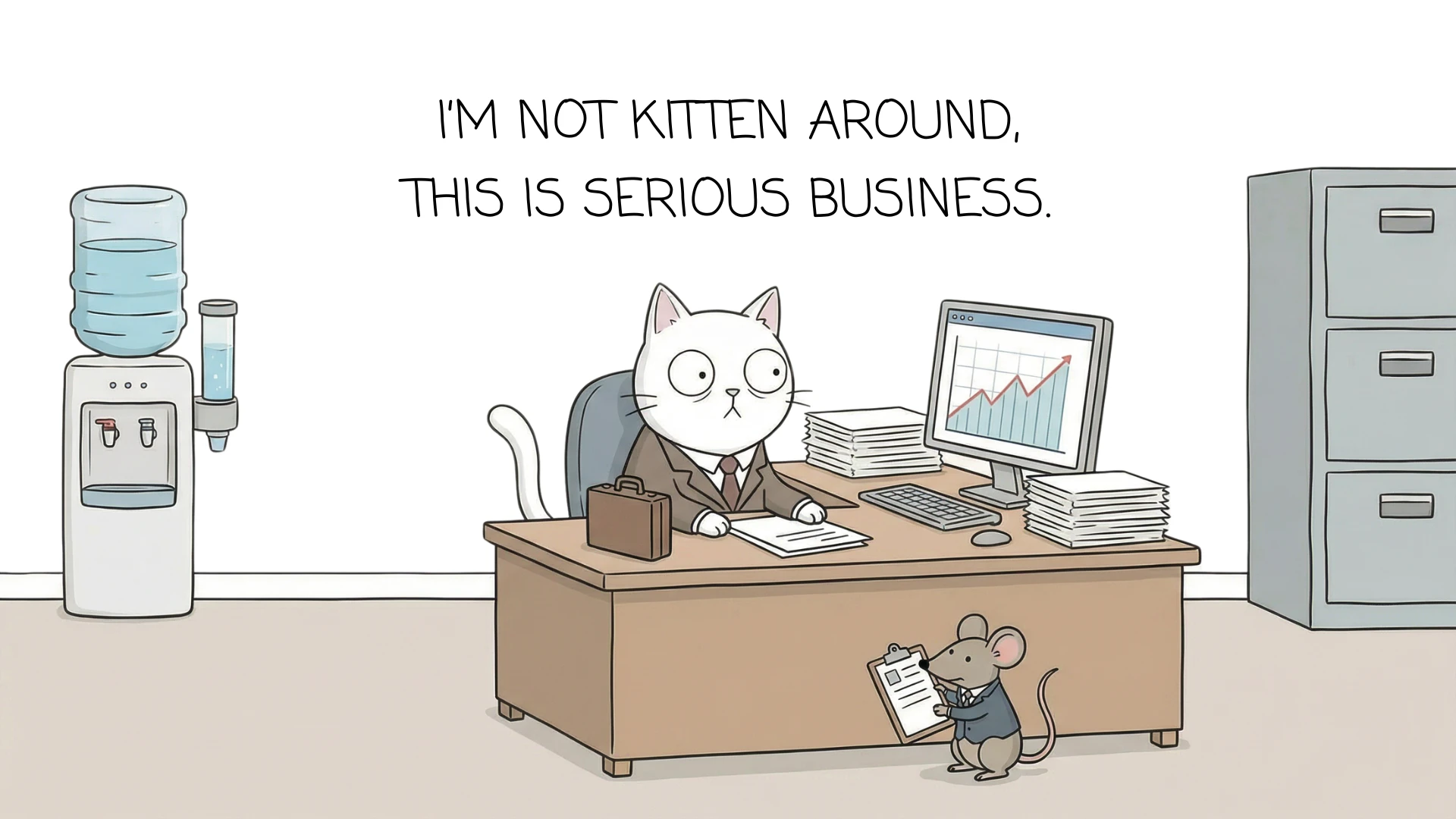
199+ Cat Puns & Jokes That Are Paws-itively Hilarious
Get your daily dose of meow-mentum with 199+ cat puns and jokes that are paws-itively hilarious, clever, and irresistibly shareable.
Continue Reading →Subscribe to
Our Newsletter
Join a growing community of more than 1,000+ friendly readers.


Each week, I share actionable productivity tips, practical life advice, and highlights from my favourite books, directly to your inbox. It’s free to join, and always will be.
By submitting this form, you’ll be signed up to my free newsletter, which sometimes includes mentions of my books, apps and courses. You can opt-out at any time with no hard feelings 😉 Here’s our privacy policy if you like reading.
Each week, I share practical idioms, real-life example sentences, and simple tips to help you sound more like a native speaker. It’s free to join, and always will be.
By submitting this form, you’ll be signed up to my free newsletter, which sometimes includes mentions of my books, apps and courses. You can opt-out at any time with no hard feelings 😉 Here’s our privacy policy if you like reading.