
Idioms for easy include a piece of cake, plain sailing, and second nature. Each suits a different kind of easy....
Continue Reading →

59 Idioms for Death in English (With Meanings & Examples)
Idioms for death include pass away, kick the bucket, and six feet under. Some are gentle and some are jokes....
Continue Reading →
70 Idioms about Resilience in English (With Meanings & Examples)
Idioms for resilience include roll with the punches, dig deep, and bounce back. English splits resilience into three skills. Here...
Continue Reading →
67 Idioms for Loyalty in English (With Meanings & Examples)
Idioms 67 Idioms for Loyalty in English (With Meanings & Examples) Audrey Kinslow / July 29, 2026 / Share: X-twitter...
Continue Reading →
67 Idioms for Being Stuck in English (With Meanings & Examples)
Idioms for being stuck include stuck in a rut, in limbo, and a catch-22. Each names a different kind of...
Continue Reading →
69 Idioms about Respect in English (With Meanings & Examples)
Idioms about respect include look up to someone, command respect, and hear someone out. In English, respect is shown by...
Continue Reading →
62 Idioms about Regret in English (With Meanings & Examples)
Idioms about regret include kick yourself, miss the boat, and burn your bridges. Some name what you did, others what...
Continue Reading →
60 Idioms for Rough in English (With Meanings & Examples)
Idioms for rough include a rough patch, rough around the edges, and take the rough with the smooth. Here are...
Continue Reading →
74 Idioms about Winning in English (With Meanings & Examples)
Idioms about winning include win hands down, come out on top, and in the bag. Some celebrate and some gloat....
Continue Reading →
71 Idioms for Hard Work in English (With Meanings & Examples)
Popular idioms for hard work include burn the midnight oil, pull your weight, and go the extra mile. Here are...
Continue Reading →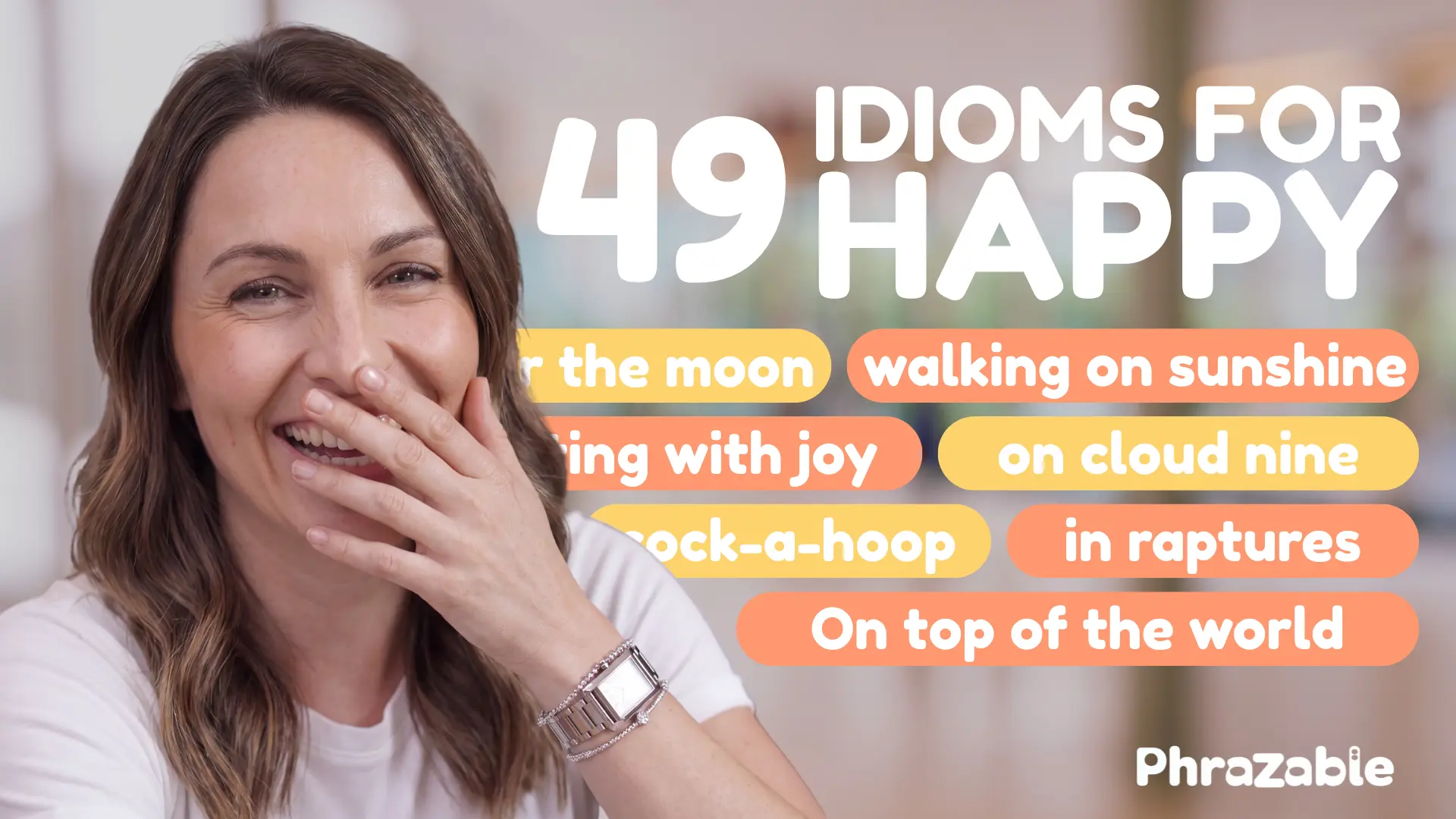
49 Idioms for Happy in English (With Meanings & Examples)
Popular idioms for happy include on cloud nine, over the moon, and in seventh heaven. Here are 49 English expressions...
Continue Reading →