

Idioms for easy include a piece of cake, plain sailing, and second nature. Each suits a different kind of easy....
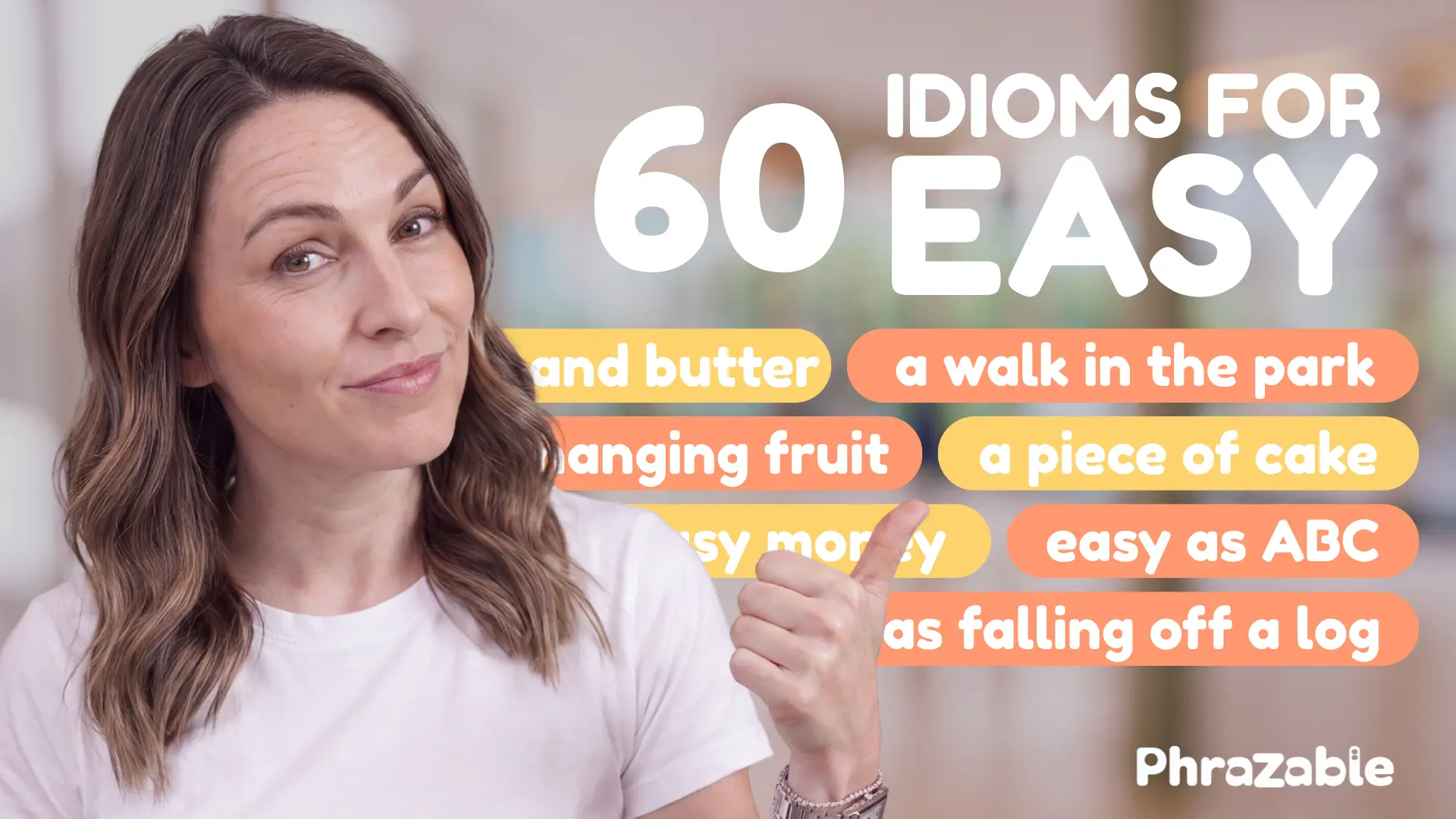
Continue Reading →60 Idioms for Easy in English (With Meanings & Examples)
⚡️ Key Takeaways
The most common idioms for easy are a piece of cake, a walk in the park, plain sailing, a breeze and a no-brainer.
They are not interchangeable. Second nature means easy because you are skilled. A piece of cake means easy for anyone, and saying it about someone else’s job can sound insulting.
Some describe an easy task, some an easy decision, some an easy life, and a few describe winning so easily that it was unfair.
In a job interview, the wrong one makes you sound arrogant. The right one makes you sound experienced.
Idioms for easy include a piece of cake, a walk in the park, plain sailing, child’s play, a breeze and a no-brainer. English has dozens, and they are not all safe to use in the same room.
A student of mine found the edge of that the hard way. She was a database engineer interviewing for a senior role in Dublin, and the panel asked how she would handle a difficult system migration. She wanted to say I have done this many times and I am confident. What she said was, “Oh, that would be a piece of cake.” The room cooled. Three engineers had spent eight months on that migration. She had just called their hardest year a cake.
She did not get the job. The phrase she wanted was second nature, which says the task is easy for her, because she has done it before. A piece of cake says the task is easy for anyone, which quietly insults whoever struggled with it.
So here are 60 real idioms for easy, with a short meaning, a longer explanation, three examples and three alternatives for each. The tone notes are where the value is.
What Is an Idiom for Easy?
An idiom is a group of words whose meaning you cannot work out from the words themselves. “A piece of cake” has nothing to do with cake. It means something is very easy.
English builds most of these idioms from three ideas: food and childhood (a piece of cake, easy as pie, child’s play), movement without effort (a walk in the park, plain sailing, a breeze), and the absence of thought (a no-brainer, not rocket science, do it in your sleep).
Take plain sailing. It comes from sailing in open water with no rocks and no bad weather. In real English, it describes a process that goes forward without problems, and it is usually used about what comes after the difficult part.
60 Idioms for Easy (With Meanings and Examples)
Here is the full list at a glance. The detail follows underneath.
| Idiom | In short | |
|---|---|---|
| 1 | A piece of cake | Very easy. |
| 2 | Easy as pie | Very easy. |
| 3 | Easy as ABC | Extremely simple. |
| 4 | Easy peasy | Very easy. |
| 5 | Child's play | So easy that a child could do it. |
| 6 | A walk in the park | Easy and pleasant. |
| 7 | A cakewalk | An easy victory or an easy task. |
| 8 | A breeze | Very easy. |
| 9 | A doddle | Very easy. |
| 10 | A cinch | Something very easy, or a certainty. |
| 11 | A snap | Very easy. |
| 12 | Duck soup | Very easy. |
| 13 | Easy as falling off a log | So easy that no skill is required. |
| 14 | Nothing to it | Simpler than it looks. |
| 15 | No sweat | No difficulty at all. |
| 16 | Money for old rope | Money earned for almost no work. |
| 17 | Like taking candy from a baby | Very easy, and slightly unfair. |
| 18 | Like shooting fish in a barrel | So easy that it is hardly a fair contest. |
| 19 | A walkover | An easy, uncontested win. |
| 20 | Low-hanging fruit | The easiest gains, taken first. |
| 21 | Easy money | Money earned with little effort. |
| 22 | Second nature | So familiar that you do it without thinking. |
| 23 | Have it down pat | Know something perfectly. |
| 24 | Do it in your sleep | Do something without needing to think. |
| 25 | With your eyes closed | Do something effortlessly. |
| 26 | With one hand tied behind your back | Do something well even with a disadvantage. |
| 27 | Do it standing on your head | Do something very easily. |
| 28 | Like riding a bike | Once learned, never really forgotten. |
| 29 | Bread and butter | Your routine, reliable work. |
| 30 | Like a hot knife through butter | Through something with no resistance at all. |
| 31 | Plain sailing | Smooth progress with no problems. |
| 32 | Smooth sailing | Smooth progress with no problems. |
| 33 | Go like clockwork | Run perfectly, exactly to plan. |
| 34 | Go off without a hitch | Happen with no problems at all. |
| 35 | Go swimmingly | Go extremely well. |
| 36 | Fall into place | Come together easily, often after confusion. |
| 37 | Breeze through something | Complete something easily. |
| 38 | Sail through something | Pass or finish something with ease. |
| 39 | Coast through something | Succeed without really trying. |
| 40 | Walk it | Win easily. |
| 41 | A no-brainer | A decision that requires no thought. |
| 42 | Not rocket science | Not complicated. |
| 43 | Not brain surgery | Not complicated. |
| 44 | Open and shut | Obvious and easily settled. |
| 45 | Cut and dried | Already decided and simple. |
| 46 | Plain as day | Completely obvious. |
| 47 | In the bag | Already certain. |
| 48 | A slam dunk | A guaranteed success. |
| 49 | On easy street | Living comfortably, with no money worries. |
| 50 | A cushy job | An easy, well-paid job. |
| 51 | An easy ride | Gentle treatment, or an easy time of it. |
| 52 | Get off lightly | Escape with a smaller punishment than expected. |
| 53 | The path of least resistance | The easiest available route. |
| 54 | Home and dry | Safely finished, with the hard part behind you. |
| 55 | Easy come, easy go | What arrives easily is easily lost. |
| 56 | Easy does it | Go gently and carefully. |
| 57 | Take it easy | Relax, or do not work too hard. |
| 58 | Easier said than done | Harder in practice than it sounds in theory. |
| 59 | No picnic | Not easy at all. |
| 60 | Take the easy way out | Choose the easier option instead of the better one. |
1. A piece of cake
Meaning
In short: Very easy.
In detail: The most famous idiom on this list, informal and neutral in itself. The danger is who you say it about. Used about your own task it sounds confident. Used about someone else’s difficult work, it sounds dismissive.
Examples in a sentence
- The exam was a piece of cake.
- I thought the drive would be a nightmare, but it was a piece of cake.
- For someone with her experience, this project is a piece of cake.
Other ways to say it: a breeze, a walk in the park, a doddle.
2. Easy as pie
Meaning
In short: Very easy.
In detail: Informal, warm and slightly old-fashioned, and more common in American English. Note that it means easy to do, not easy to make, which confuses a lot of learners.
Examples in a sentence
- Setting up the account was easy as pie.
- Once you know the trick, it is easy as pie.
- She said the recipe was easy as pie, and she was right.
Other ways to say it: a piece of cake, easy as ABC, a cinch.
3. Easy as ABC
Meaning
In short: Extremely simple.
In detail: Neutral and common, and it suggests something as basic as the alphabet. Also heard as “easy as one, two, three”.
Examples in a sentence
- Follow the steps and it is easy as ABC.
- The new system is easy as ABC.
- Booking a lesson is as easy as ABC.
Other ways to say it: easy as one, two, three, child’s play, nothing to it.
4. Easy peasy
Meaning
In short: Very easy.
In detail: Playful and childish, often extended to “easy peasy lemon squeezy”. Adults use it lightly, but never in a professional setting.
Examples in a sentence
- Two clicks and you are done. Easy peasy.
- The homework was easy peasy.
- Easy peasy. I finished it in ten minutes.
Other ways to say it: a piece of cake, a doddle, no sweat.
5. Child’s play
Meaning
In short: So easy that a child could do it.
In detail: Neutral, and it usually compares one task to a harder one. It can be dismissive about someone else’s work, so use it about tasks rather than people.
Examples in a sentence
- After the first climb, the second one was child’s play.
- Fixing the bike was child’s play for him.
- Compared with the final exam, the mock was child’s play.
Other ways to say it: a piece of cake, easy as ABC, a walk in the park.
6. A walk in the park
Meaning
In short: Easy and pleasant.
In detail: Neutral and extremely common, and it carries a hint of enjoyment as well as ease. It is also very common in the negative: “it was no walk in the park”.
Examples in a sentence
- The interview was a walk in the park.
- Six months of night shifts was no walk in the park.
- After that hill, the rest of the route was a walk in the park.
Other ways to say it: a breeze, a piece of cake, plain sailing.
7. A cakewalk
Meaning
In short: An easy victory or an easy task.
In detail: American and informal, and it often describes a competition that was won without effort. It carries a whiff of overconfidence, so it is frequently used when someone expected an easy win and did not get one.
Examples in a sentence
- They expected a cakewalk and lost by two goals.
- The negotiation was a cakewalk.
- Do not treat this as a cakewalk. They are better than they look.
Other ways to say it: a walkover, a piece of cake, a breeze.
8. A breeze
Meaning
In short: Very easy.
In detail: Informal, positive and safe. It is one of the most natural sounding options on this list, and it works about tasks, journeys and exams.
Examples in a sentence
- The test was a breeze.
- Installing it was a breeze.
- With the new tool, the whole job is a breeze.
Other ways to say it: a piece of cake, a doddle, a snap.
9. A doddle
Meaning
In short: Very easy.
In detail: British and informal. It is used constantly in the UK and Ireland and will simply confuse an American listener.
Examples in a sentence
- Honestly, the exam was a doddle.
- Parking here is a doddle on a Sunday.
- The recipe looked hard, but it was a doddle.
Other ways to say it: a breeze, a piece of cake, easy peasy.
10. A cinch
Meaning
In short: Something very easy, or a certainty.
In detail: American and informal. It carries confidence, so it often appears as “it’s a cinch” before something that then goes wrong in comedies.
Examples in a sentence
- Getting there by six is a cinch.
- The repair was a cinch with the right tools.
- She is a cinch to win the election.
Other ways to say it: a snap, a breeze, a no-brainer.
11. A snap
Meaning
In short: Very easy.
In detail: American and informal, from something done as fast as a snap of the fingers. Rare in British English.
Examples in a sentence
- The setup was a snap.
- With her help, the paperwork was a snap.
- It looks complicated, but it is a snap once you start.
Other ways to say it: a cinch, a breeze, a piece of cake.
12. Duck soup
Meaning
In short: Very easy.
In detail: American and dated. Most younger speakers will not use it, though many recognise it from old films. Safe to know, unnecessary to say.
Examples in a sentence
- For a mechanic like him, that engine was duck soup.
- The quiz was duck soup.
- She made it look like duck soup.
Other ways to say it: a cinch, a snap, a piece of cake.
13. Easy as falling off a log
Meaning
In short: So easy that no skill is required.
In detail: Informal and slightly comic. The image is of something that happens by itself, so it stresses the lack of effort rather than the lack of difficulty.
Examples in a sentence
- Once you have done it once, it is as easy as falling off a log.
- Selling those tickets was as easy as falling off a log.
- He made the trick look as easy as falling off a log.
Other ways to say it: child’s play, a piece of cake, nothing to it.
14. Nothing to it
Meaning
In short: Simpler than it looks.
In detail: Informal and reassuring, and it is usually said to someone who is nervous. It is a kind phrase rather than a boastful one.
Examples in a sentence
- Do not worry about the presentation. There is nothing to it.
- Once she showed me, I realised there was nothing to it.
- Nothing to it. Press this, then this.
Other ways to say it: no sweat, not rocket science, a piece of cake.
15. No sweat
Meaning
In short: No difficulty at all.
In detail: Informal and American in origin, and it is often used as a reply meaning “of course, no problem”. It is one of the friendliest options here.
Examples in a sentence
- Can you have it done by Friday? No sweat.
- We finished early, no sweat.
- Fixing that was no sweat for him.
Other ways to say it: no problem, nothing to it, a breeze.
16. Money for old rope
Meaning
In short: Money earned for almost no work.
In detail: British and informal, and slightly cynical. It suggests the payment is generous for the effort involved, and it is often said with a touch of envy.
Examples in a sentence
- Two hours of easy work for that fee. Money for old rope.
- Renting out the flat is money for old rope.
- He calls consulting money for old rope, which is unfair.
Other ways to say it: easy money, a cushy number, a licence to print money.
17. Like taking candy from a baby
Meaning
In short: Very easy, and slightly unfair.
In detail: Informal, and it carries a note of guilt. It suggests you had an unfair advantage, so it is not a compliment about your skill.
Examples in a sentence
- Beating him at chess was like taking candy from a baby.
- The scam was like taking candy from a baby, which is what made it so cruel.
- Winning that contract was like taking candy from a baby.
Other ways to say it: like shooting fish in a barrel, a walkover, too easy.
18. Like shooting fish in a barrel
Meaning
In short: So easy that it is hardly a fair contest.
In detail: Informal and vivid, and it is usually used when you feel slightly bad about how easy it was. It suits an unequal competition rather than a simple task.
Examples in a sentence
- Selling coats in a cold snap is like shooting fish in a barrel.
- Debating him was like shooting fish in a barrel.
- A crowd this friendly? Like shooting fish in a barrel.
Other ways to say it: like taking candy from a baby, a walkover, an easy target.
19. A walkover
Meaning
In short: An easy, uncontested win.
In detail: Neutral and common in sport and politics. It describes the result rather than the effort, and it can imply the other side barely tried.
Examples in a sentence
- The final was a walkover.
- Nobody stood against her, so the election was a walkover.
- We expected a fight and got a walkover.
Other ways to say it: a cakewalk, a slam dunk, an easy win.
20. Low-hanging fruit
Meaning
In short: The easiest gains, taken first.
In detail: Neutral and extremely common at work. It describes the tasks that give a quick result for little effort, and it usually implies the hard work is still waiting.
Examples in a sentence
- Let us start with the low-hanging fruit and fix the obvious bugs.
- We picked the low-hanging fruit in month one, and growth slowed after that.
- That is low-hanging fruit. The real problem is the pricing.
Other ways to say it: quick wins, easy targets, the obvious gains.
21. Easy money
Meaning
In short: Money earned with little effort.
In detail: Informal, and it can be neutral or suspicious. Depending on tone, it means either a good deal or something a little dishonest.
Examples in a sentence
- Two hundred euros for an afternoon. Easy money.
- He was tempted by the promise of easy money and lost everything.
- Weekend work like that is easy money.
Other ways to say it: money for old rope, a quick buck, free money.
22. Second nature
Meaning
In short: So familiar that you do it without thinking.
In detail: Neutral, respectful and the safest way to say something is easy for you. This is the phrase my student needed in that interview, because it credits your experience instead of dismissing the task.
Examples in a sentence
- After twenty years, reading these scans is second nature to her.
- Driving on the left became second nature within a month.
- Speaking English is second nature to him now.
Other ways to say it: have it down pat, do it in your sleep, come naturally.
23. Have it down pat
Meaning
In short: Know something perfectly.
In detail: Informal and American in origin. It suggests practice and repetition rather than natural talent.
Examples in a sentence
- She has the presentation down pat.
- I have the recipe down pat now.
- He has his routine down pat.
Other ways to say it: second nature, know it inside out, have it nailed.
24. Do it in your sleep
Meaning
In short: Do something without needing to think.
In detail: Informal and confident. It is safe about your own work and can sound arrogant about someone else’s, so keep it in the first person.
Examples in a sentence
- I have done this route so often I could do it in my sleep.
- She could run that meeting in her sleep.
- After a decade, he could do the job in his sleep.
Other ways to say it: second nature, with your eyes closed, standing on your head.
25. With your eyes closed
Meaning
In short: Do something effortlessly.
In detail: Informal, and interchangeable with “in your sleep” in most sentences. Also heard as “blindfolded”.
Examples in a sentence
- He can assemble it with his eyes closed.
- I could find that street with my eyes closed.
- She solved it with her eyes closed.
Other ways to say it: do it in your sleep, standing on your head, blindfolded.
26. With one hand tied behind your back
Meaning
In short: Do something well even with a disadvantage.
In detail: Informal and boastful, so it is common in sport and in banter. It says you had ability to spare.
Examples in a sentence
- He could beat me with one hand tied behind his back.
- They won with one hand tied behind their backs.
- I could do that job with one hand tied behind my back.
Other ways to say it: standing on your head, with your eyes closed, without breaking a sweat.
27. Do it standing on your head
Meaning
In short: Do something very easily.
In detail: Informal and comic, and slightly old-fashioned. It is boastful, so it works best as a joke.
Examples in a sentence
- I could do that exam standing on my head.
- She could run this department standing on her head.
- Give him a week and he will do it standing on his head.
Other ways to say it: with one hand tied behind your back, in your sleep, with your eyes closed.
28. Like riding a bike
Meaning
In short: Once learned, never really forgotten.
In detail: Neutral and warm, and it is about returning to a skill rather than doing something for the first time. It is the standard reassurance for someone who is out of practice.
Examples in a sentence
- I had not skied for fifteen years, but it is like riding a bike.
- Public speaking is like riding a bike. It comes back.
- Do not worry about your French. It is like riding a bike.
Other ways to say it: it comes back to you, second nature, muscle memory.
29. Bread and butter
Meaning
In short: Your routine, reliable work.
In detail: Neutral, and it describes the work you do easily and repeatedly, usually the work that pays. It is a noun, not an adjective.
Examples in a sentence
- Family law is our bread and butter.
- Small repairs are his bread and butter.
- Weddings are the bread and butter of the business.
Other ways to say it: your speciality, your day-to-day work, your core business.
30. Like a hot knife through butter
Meaning
In short: Through something with no resistance at all.
In detail: Vivid and neutral. It describes movement through difficulty, so it fits a team beating opposition or a machine cutting material.
Examples in a sentence
- The new saw went through it like a hot knife through butter.
- She got through the objections like a hot knife through butter.
- Their attack cut through our defence like a hot knife through butter.
Other ways to say it: straight through, with no resistance, effortlessly.
31. Plain sailing
Meaning
In short: Smooth progress with no problems.
In detail: British and neutral. It almost always follows a difficult part, as in “once we got the visa, it was plain sailing”.
Examples in a sentence
- Once the paperwork was approved, it was plain sailing.
- The first year was hard. After that, plain sailing.
- Do not expect plain sailing. This will take work.
Other ways to say it: smooth sailing, go like clockwork, a smooth ride.
32. Smooth sailing
Meaning
In short: Smooth progress with no problems.
In detail: The American twin of “plain sailing”. Identical in meaning and use.
Examples in a sentence
- After the merger closed, it was smooth sailing.
- The first draft was hard, the edit was smooth sailing.
- It has not been smooth sailing, but we are still here.
Other ways to say it: plain sailing, go without a hitch, go swimmingly.
33. Go like clockwork
Meaning
In short: Run perfectly, exactly to plan.
In detail: Neutral and admiring. It emphasises precision and timing, so it fits events and operations rather than easy tasks.
Examples in a sentence
- The whole evacuation went like clockwork.
- The wedding went like clockwork.
- Their kitchen runs like clockwork.
Other ways to say it: go off without a hitch, run smoothly, go to plan.
34. Go off without a hitch
Meaning
In short: Happen with no problems at all.
In detail: Neutral, and used about planned events. A “hitch” is a small problem, so this says not even a small one appeared.
Examples in a sentence
- The launch went off without a hitch.
- We expected chaos, and it went off without a hitch.
- The move went off without a hitch, somehow.
Other ways to say it: go like clockwork, go smoothly, go to plan.
35. Go swimmingly
Meaning
In short: Go extremely well.
In detail: British, slightly old-fashioned and cheerful. It is often used ironically, so listen to the tone before copying it.
Examples in a sentence
- The meeting went swimmingly.
- Everything was going swimmingly until the power cut.
- It all went swimmingly, right up to the moment it did not.
Other ways to say it: go like clockwork, go smoothly, plain sailing.
36. Fall into place
Meaning
In short: Come together easily, often after confusion.
In detail: Neutral and satisfying. It describes the moment when things arrange themselves, and it works for plans and for understanding.
Examples in a sentence
- Once she explained it, everything fell into place.
- The plan finally fell into place last week.
- Keep going. It will fall into place.
Other ways to say it: come together, click, work itself out.
37. Breeze through something
Meaning
In short: Complete something easily.
In detail: Informal and positive, and very common about exams, interviews and stages of a competition.
Examples in a sentence
- She breezed through the interview.
- He breezed through the first two rounds.
- I breezed through the reading and got stuck on the writing.
Other ways to say it: sail through something, walk it, coast through.
38. Sail through something
Meaning
In short: Pass or finish something with ease.
In detail: Neutral and very close to “breeze through”. Slightly more common in British English, and often used about tests and approvals.
Examples in a sentence
- The bill sailed through parliament.
- He sailed through his driving test.
- She sailed through the audition.
Other ways to say it: breeze through, walk it, pass with flying colours.
39. Coast through something
Meaning
In short: Succeed without really trying.
In detail: Neutral in form, mildly critical in tone. It suggests you could have done more, so a teacher saying it about a student is not entirely pleased.
Examples in a sentence
- He coasted through school on natural ability.
- You cannot coast through this course.
- She coasted through the first year and struggled in the second.
Other ways to say it: cruise through, do the minimum, get by.
40. Walk it
Meaning
In short: Win easily.
In detail: British and informal, mainly used in sport and competition. It is short and confident, and it is often said before the event, which makes it a hostage to fortune.
Examples in a sentence
- With that squad, they will walk it.
- She walked it in the final.
- We thought we would walk it and we lost.
Other ways to say it: a walkover, a cakewalk, win at a canter.
41. A no-brainer
Meaning
In short: A decision that requires no thought.
In detail: Informal and extremely common at work. It is about decisions, not tasks, so it never means the work will be easy.
Examples in a sentence
- Free delivery and a lower price? It is a no-brainer.
- Hiring her was a no-brainer.
- Taking the job was a no-brainer for me.
Other ways to say it: an obvious choice, a slam dunk, an easy call.
42. Not rocket science
Meaning
In short: Not complicated.
In detail: Informal, and often slightly impatient. It is frequently used when someone has failed to understand something the speaker thinks is simple, so it can sound rude.
Examples in a sentence
- Come on, it is not rocket science. Read the instructions.
- Running a good meeting is not rocket science.
- This is not rocket science, but it does take care.
Other ways to say it: not brain surgery, nothing to it, hardly complicated.
43. Not brain surgery
Meaning
In short: Not complicated.
In detail: The twin of “not rocket science”, and used the same way, with the same risk of sounding condescending.
Examples in a sentence
- Filling in the form is not brain surgery.
- It is not brain surgery, it just takes patience.
- Assembling the shelf was not brain surgery, but it took two hours.
Other ways to say it: not rocket science, straightforward, simple enough.
44. Open and shut
Meaning
In short: Obvious and easily settled.
In detail: Neutral and legal in origin. It is almost always attached to “case”, and it means there is nothing left to argue.
Examples in a sentence
- With that evidence, it is an open and shut case.
- The insurance claim was open and shut.
- I thought it was open and shut, and then the witness changed her story.
Other ways to say it: cut and dried, clear-cut, straightforward.
45. Cut and dried
Meaning
In short: Already decided and simple.
In detail: Neutral, and often used in the negative to say a situation is more complicated than it looks: “it is not as cut and dried as that”.
Examples in a sentence
- The rules are cut and dried. There is no room for interpretation.
- I wish it were cut and dried, but it is not.
- His view of the world is very cut and dried.
Other ways to say it: open and shut, black and white, clear-cut.
46. Plain as day
Meaning
In short: Completely obvious.
In detail: Neutral and warm. It describes something easy to see or understand, and it is often used when other people have missed it.
Examples in a sentence
- The mistake was plain as day once she pointed at it.
- It is plain as day that he is exhausted.
- The answer was plain as day and I still got it wrong.
Other ways to say it: clear as day, obvious, staring you in the face.
47. In the bag
Meaning
In short: Already certain.
In detail: Informal and confident. It is used before the result is official, which is why it so often appears just before someone loses.
Examples in a sentence
- With ten minutes left and three goals ahead, the match was in the bag.
- Do not act like the promotion is in the bag.
- The deal is in the bag.
Other ways to say it: a slam dunk, a certainty, as good as done.
48. A slam dunk
Meaning
In short: A guaranteed success.
In detail: American and informal, from basketball. It is common in business and politics, and it describes certainty rather than ease of effort.
Examples in a sentence
- The case is a slam dunk.
- This campaign is not the slam dunk they promised.
- Getting funding for it was a slam dunk.
Other ways to say it: in the bag, a no-brainer, a sure thing.
49. On easy street
Meaning
In short: Living comfortably, with no money worries.
In detail: American and informal, and slightly dated. It describes a whole life rather than a task.
Examples in a sentence
- After the sale, they were on easy street.
- One good contract does not put you on easy street.
- He thought the lottery win would land him on easy street.
Other ways to say it: sitting pretty, comfortably off, set for life.
50. A cushy job
Meaning
In short: An easy, well-paid job.
In detail: Informal, and usually said with a little envy or disapproval. Nobody describes their own job as cushy without a smile.
Examples in a sentence
- He has a cushy job in the head office.
- It looks like a cushy number, but there is more to it.
- She left a cushy job to start her own thing.
Other ways to say it: a cushy number, an easy ride, money for old rope.
51. An easy ride
Meaning
In short: Gentle treatment, or an easy time of it.
In detail: Informal, and very often used in the negative. To “give someone an easy ride” is to go gently on them, and it is usually a criticism of the person being gentle.
Examples in a sentence
- The interviewer gave him an easy ride.
- Do not expect an easy ride in this department.
- She has not had an easy ride, and she never complains.
Other ways to say it: a soft ride, gentle treatment, an easy time.
52. Get off lightly
Meaning
In short: Escape with a smaller punishment than expected.
In detail: Neutral and common. It always implies you deserved worse, so it is not a compliment.
Examples in a sentence
- A warning and a fine? He got off lightly.
- We got off lightly compared with the other team.
- She crashed the car and got off lightly with a broken wrist.
Other ways to say it: get off easy, escape the worst, be let off.
53. The path of least resistance
Meaning
In short: The easiest available route.
In detail: Neutral in form and usually critical in tone. It implies the easy choice was not the right one.
Examples in a sentence
- He always takes the path of least resistance.
- Choosing the same supplier again was the path of least resistance.
- Water and people both follow the path of least resistance.
Other ways to say it: the easy way out, the line of least resistance, the soft option.
54. Home and dry
Meaning
In short: Safely finished, with the hard part behind you.
In detail: British and informal, and it describes the end rather than the ease. The American version is “home free”.
Examples in a sentence
- Once the contract is signed, we are home and dry.
- Two more payments and we are home and dry.
- They thought they were home and dry, then the appeal came.
Other ways to say it: home free, in the clear, over the line.
55. Easy come, easy go
Meaning
In short: What arrives easily is easily lost.
In detail: A saying, usually about money, and usually a shrug rather than a lesson. It is used to accept a loss without drama.
Examples in a sentence
- I won it on a bet and lost it the same night. Easy come, easy go.
- He spends it as fast as he earns it. Easy come, easy go.
- Easy come, easy go, as my father used to say about everything.
Other ways to say it: what goes around comes around, no great loss, that is life.
56. Easy does it
Meaning
In short: Go gently and carefully.
In detail: Careful here. This one does not mean something is easy. It is an instruction to slow down, and it is used when someone is lifting something heavy or losing their temper.
Examples in a sentence
- Easy does it. Lift with your knees.
- Easy does it, we do not want to scratch the paint.
- Easy does it. There is no need to shout.
Other ways to say it: gently does it, take your time, steady.
57. Take it easy
Meaning
In short: Relax, or do not work too hard.
In detail: Also not about difficulty. It is an instruction to rest, and in American English it is also a friendly way of saying goodbye.
Examples in a sentence
- You have been ill. Take it easy this week.
- Take it easy, we have plenty of time.
- See you Monday. Take it easy.
Other ways to say it: rest up, go gently, slow down.
58. Easier said than done
Meaning
In short: Harder in practice than it sounds in theory.
In detail: Neutral and extremely common. It is the standard reply to advice that is simple to give and hard to follow.
Examples in a sentence
- Just stop worrying? Easier said than done.
- Saving half your salary is easier said than done.
- Learning a language in a year is easier said than done, but it is possible.
Other ways to say it: simpler in theory, harder than it looks, not that simple.
59. No picnic
Meaning
In short: Not easy at all.
In detail: Informal, and the negative of the easy idioms. It is the natural way to say something was difficult without complaining loudly.
Examples in a sentence
- Raising three children alone is no picnic.
- The first winter here was no picnic.
- Night shifts are no picnic.
Other ways to say it: no walk in the park, hard going, tough.
60. Take the easy way out
Meaning
In short: Choose the easier option instead of the better one.
In detail: Always critical. It describes avoiding difficulty at the cost of doing the right thing, so it is never a compliment.
Examples in a sentence
- He took the easy way out and resigned by email.
- Do not take the easy way out. Talk to her.
- She could have taken the easy way out and did not.
Other ways to say it: take the path of least resistance, cop out, duck the issue.
Tips for Using These Idioms Naturally
- Say it about your own work, not someone else’s. A piece of cake, child’s play and not rocket science are fine about a task you did. Aimed at work that somebody else found hard, they insult that person. This is the mistake that cost my student the job.
- When you mean “easy for me”, say second nature. It credits your experience instead of dismissing the task. In an interview it is the single most useful phrase on this page.
- Three of these are not about difficulty at all. Easy does it means slow down. Take it easy means relax. No picnic means the opposite of easy. Learners mix these up constantly.
- Get the preposition and the shape right. You breeze through something, coast through something, get off lightly, and something falls into place. Change the small word and it stops working.
- Watch the region. A doddle, plain sailing, money for old rope, walk it and home and dry are British. A snap, a cinch, duck soup, smooth sailing, a slam dunk and on easy street are American.
Practice What You Learned
Three quick exercises. Answer everything, then hit "Check my answers" for your score.
1. Fill in the blank
Choose the idiom that completes each sentence.
2. Pick the right idiom
Which idiom fits the situation best?
3. Easy, or something else entirely?
Not everything with easy in it means easy. Tap what each one really means.
Subscribe to
Our Newsletter
Join over 370,000 readers enjoying my free, weekly (ish) email newsletter where I share what I’m reading and what I’ve learned in the worlds of productivity, business and life.
By submitting this form, you’ll be signed up to my free newsletter. I may also send you other emails about my courses. You can opt-out at any time. For more information, see our privacy policy.
In this article:
- 1) What Is an Idiom for Easy?
- 2) 60 Idioms for Easy (With Meanings and Examples)
- 3) Tips for Using These Idioms Naturally
- 4) Practice What You Learned

Audrey Kinslow
Read Next
59 Idioms for Death in English (With Meanings & Examples)
Idioms for death include pass away, kick the bucket, and six feet under. Some are gentle and some are jokes....
Continue Reading →
70 Idioms about Resilience in English (With Meanings & Examples)
Idioms for resilience include roll with the punches, dig deep, and bounce back. English splits resilience into three skills. Here...
Continue Reading →
67 Idioms for Loyalty in English (With Meanings & Examples)
Idioms 67 Idioms for Loyalty in English (With Meanings & Examples) Audrey Kinslow / July 29, 2026 / Share: X-twitter...
Continue Reading →
67 Idioms for Being Stuck in English (With Meanings & Examples)
Idioms for being stuck include stuck in a rut, in limbo, and a catch-22. Each names a different kind of...
Continue Reading →
69 Idioms about Respect in English (With Meanings & Examples)
Idioms about respect include look up to someone, command respect, and hear someone out. In English, respect is shown by...
Continue Reading →
62 Idioms about Regret in English (With Meanings & Examples)
Idioms about regret include kick yourself, miss the boat, and burn your bridges. Some name what you did, others what...
Continue Reading →
60 Idioms for Rough in English (With Meanings & Examples)
Idioms for rough include a rough patch, rough around the edges, and take the rough with the smooth. Here are...
Continue Reading →
74 Idioms about Winning in English (With Meanings & Examples)
Idioms about winning include win hands down, come out on top, and in the bag. Some celebrate and some gloat....
Continue Reading →
71 Idioms for Hard Work in English (With Meanings & Examples)
Popular idioms for hard work include burn the midnight oil, pull your weight, and go the extra mile. Here are...
Continue Reading →
49 Idioms for Happy in English (With Meanings & Examples)
Popular idioms for happy include on cloud nine, over the moon, and in seventh heaven. Here are 49 English expressions...
Continue Reading →
199+ Cat Puns & Jokes That Are Paws-itively Hilarious
Get your daily dose of meow-mentum with 199+ cat puns and jokes that are paws-itively hilarious, clever, and irresistibly shareable.
Continue Reading →Subscribe to
Our Newsletter
Join a growing community of more than 1,000+ friendly readers.


Each week, I share actionable productivity tips, practical life advice, and highlights from my favourite books, directly to your inbox. It’s free to join, and always will be.
By submitting this form, you’ll be signed up to my free newsletter, which sometimes includes mentions of my books, apps and courses. You can opt-out at any time with no hard feelings 😉 Here’s our privacy policy if you like reading.
Each week, I share practical idioms, real-life example sentences, and simple tips to help you sound more like a native speaker. It’s free to join, and always will be.
By submitting this form, you’ll be signed up to my free newsletter, which sometimes includes mentions of my books, apps and courses. You can opt-out at any time with no hard feelings 😉 Here’s our privacy policy if you like reading.